


 July 17, 2024


The transcript of AI & I with Steph Smith is below for paying subscribers.
Timestamps
- Introduction: 00:00:46
- How Steph uses Midjourney to find her aesthetic: 00:09:08
- Steph predicts how creating on the internet will evolve with AI: 00:20:45
- Rapid-fire rundown of Steph’s favorite niche creators: 00:32:51
- How Steph trains her brain on better data: 00:42:58
- The AI research tool Steph uses for health information: 00:48:19
- The future of AI tools—and one of Steph’s top picks: 00:56:25
- Dan and Steph use AI to create a simulation of the internet: 01:01:20
- How LLM hallucinations can be useful: 01:05:09
- Dan and Steph make a song about what they learned on the show: 01:12:06
Transcript
Dan Shipper (00:00:47)
Steph, welcome to the show.
Steph Smith (00:00:48)
Thanks for having me again.
Dan Shipper (00:00:49)
Yeah. You are the first repeat guest to AI & I, so it is wonderful to have you. Our last episode was so much fun.
Steph Smith (00:00:58)
Thank you.
Dan Shipper (00:00:59)
It is one of our most popular episodes ever. So, by popular demand, you are back in the studio with me.
Steph Smith (00:01:05)
You might actually have to change the name to AI & I & Steph.
Dan Shipper (00:01:09)
And Steph, yeah. “AI & Us.”
Steph Smith (00:01:10)
“& She.”
Dan Shipper (00:01:11)
So, last time, we spent a lot of time talking about using AI and other software tools to find different businesses. In the intervening period since our last recording, one of the things you’ve been using AI most for recently is Midjourney to do design. And there's a little bit of ChatGPT in there too. So I want to start there. Tell us how you're using Midjourney. How are you making images with AI?
Steph Smith (00:01:37)
Yeah. So Midjourney has been awesome. I think many people are familiar with it, but I've actually found one of the key complaints around AI has been around imagery, at least that I can't really find a style, or if If I do something, it's not going to be repetitive enough that I would actually integrate it into my brand, or things like that. But I have actually found that it's been amazing. So, basically, I should say at the outset, all of the Internet Pipes imagery, I think, has been done through Midjourney—and a little ChatGPT.
Dan Shipper (00:02:07)
And for people who don't remember, remind us what Internet Pipes is.
Steph Smith (00:02:09)
Yeah. It's just this project of mine where basically, it exists to help people make sense of data on the internet. But there are all these stations, so there's generation station and there's evaluation station, and I wanted to be able to represent those stations visually. And, I mean, I could have hired an illustrator, but since I left the shipping of that project to the last minute, I was like, I need to create imagery and I need it to look good and I need it to basically represent these ideas that are a little amorphous, right?
And so that's what I did. And so I can show you— Actually, if I just pull up the Internet Pipes slides. This was from our cohort. So you can get a sense up here.
Dan Shipper (00:02:50)
So it's a course too.
Steph Smith (00:02:51)
Yeah, but let me give you a sense of what this kind of looks like. So, for example, this was generation station, and you can see that was a piece of the overall course, you could say.
But all of these were created through Midjourney. And you can see up here at the top, these ones at the top were created through Midjourney and the ones at the bottom was an analogy that I was trying to communicate of baking a potato, which was related to baking ideas. So the one at the bottom was actually done through ChatGPT, so maybe we can actually start there and then migrate our way back to Midjourney. You know how people have shown the “make it more” trend?
Dan Shipper (00:03:31)
Yeah, that's the new meme where people are like, make a programmer who's late for their deadline. And it's like, make them even later, make them even later, or whatever.
Steph Smith (00:03:42)
I've seen such funny ones. There was one with Kelly Slater where it's like, make Kelly Slater the best surfer in the world. And then it shows him riding a really good wave. And then someone's like, no, no, no, make him better. And it's just by the end, basically it's like the gates of hell with water. And there's sharks diving all around him and he's just a badass. And so I decided to do that with ChatGPT, and so if I go to— Let's see if ChatGPT is still down. There we go. So, let’s see. Where is it? Do you see potato here? Oh, yes. “Visualize potato.” Yes, is what ChatGPT called it.
Dan Shipper (00:04:23)
A very important chat.
Steph Smith (00:04:28)
Yeah, so I just said, “Can you visualize a potato?”
Dan Shipper (00:04:31)
I just have to pause us here. When science fiction writers in the 60s were really starting to think about what humans would use AI for, I don't think that they thought the first chat would be, “Can you visualize a potato?”
Steph Smith (00:04:44)
They did not. And humans constantly surprise each other. So, yes, I said, “Can you visualize a potato?” And then they said, yes.
Dan Shipper (00:04:52)
That potato is suspiciously— I probably wouldn't have picked that potato at the market. It's a little pockmarked, but yeah. Just saying.
Steph Smith (00:05:03)
You know, human feedback—it'll learn. Then I said, “Now bake the potato.” That looks like a pretty good baked potato. “Now bake it more.” Now it's kind of turned circular, but it's still definitely baking more. I kept asking it to bake it. And this is the funny part. I just kept going, obviously. right? And then it keeps baking. And now, this is what I would expect, right? Eventually the potato turns to ash.
Dan Shipper (00:05:28)
A cremated potato.
Steph Smith (00:05:29)
Now can you guess what the next one is?
Dan Shipper (00:05:32)
The thing that immediately comes to mind is it turns into a volcano and there's lava coming out but that's just because it looks like a volcano. I have absolutely no idea what it's gonna be.
Steph Smith (00:05:44)
This was my favorite part of the exercise. It turns into a new potato. It is potato reincarnated. Baby potato coming from the ash.
Dan Shipper (00:05:55)
Rising from the ashes like a phoenix. I love it. That's so good.
Steph Smith (00:05:59)
So yeah, this was, I guess, one area where AI was helpful in basically creating imagery where I honestly couldn't have even imagined this myself, but also showing the evolution of something. So I know this is very silly, but I actually use this imagery within Internet Pipes. And then coming back to Midjourney—
Dan Shipper (00:06:17)
Wait. Before we get to Midjourney, what were you trying to show with this particular baked potato metaphor analogy thing?
Steph Smith (00:06:24)
Yeah. So it doesn't make much sense without the voiceover, but bringing this slide back up, the whole idea of Internet Pipes is not just to give people a bunch of interesting ideas and just call it a day. It's to help them ideate and then help them bake the potato, bake the idea to be like, okay now that you have an idea, who else is participating in this space, is their search volume some of the stuff we talked about last time. Yeah, and then if you were to participate, here's how you can differentiate, and so there's an evolution of—just like a potato, I think, baked—you're baking an idea to something that's actually substantial, edible, to use a potato analogy once more. Again, I felt like I needed something to be able to articulate that you're taking something that you would never eat—an actual raw potato—to something that's usable.
Dan Shipper (00:07:12)
Yeah. That's really interesting. I feel like the make it more meme is like one of the first true AI content meme formats. And I just saw that everywhere for a while. I haven't seen it as much recently. Are you still seeing it around?
Steph Smith (00:07:27)
Not so much, but I think it'll come back because, to your point, I said the same thing about that and then, I don't know if you saw some of the other specific art, there were people who were creating visual art that had imagery embedded in it. Do you remember this? It was like a picture of ancient Rome, but within ancient Rome, there was a spiral or something like that. No, you didn't see that? But that was another example of art that could not have been created without AI. And I'm very excited about whatever us humans figure out there, because that's obviously not the end of it either. But yes, I agree. This was a trend where this actually could not have been done without this tech.
Dan Shipper (00:08:06)
Yeah, totally. And so, bringing it back to Midjourney, tell us what you're using it for in the slide.
Steph Smith (00:08:13)
Yeah. So, again, these were these different stations, which, if you're not immersed in Internet Pipes won't make as much sense, but each station had an image associated with it. And the goal was really to, after idea generation, you want it to be filtered down and validate what actually matters. So the next image I chose was a funnel. And then after that it was talking about the ecosystem of what exists in that world. And so, these are all images that, again, without that context don't make sense, but there is a visual language applied to these and basically everything else within Internet Pipes. I'm trying to see if I have some other good examples down below.
Dan Shipper (00:08:56)
You're trying to get a particular visual style and aesthetic and Midjourney is helping you do that?
Steph Smith (00:09:02)
Correct. Correct. And so Midjourney also makes it really easy to do that.
Dan Shipper (00:09:08)
How do you characterize this aesthetic? Go to Internet Pipes, go to that first slide. That's actually very cool. When you're putting that aesthetic together, what goes into it?
Steph Smith (00:09:21)
So this aesthetic— I don't know if there's a term for it other than the way I describe it. It's just early internet. So it's kind of not super refined, definitely colorful, maybe kind of pixelated but maybe not as early internet in the sense that early internet, it felt like there were maybe six colors that actually showed up on a web page. And so it's like an evolution of that per se, but certainly nodding back to it.
And I actually wanted whatever Internet Pipes imagery I was going to use to kind of expand upon this imagery that you're seeing right now, and so what I did—and I don't think people do this enough—is just went to the Midjourney homepage and just scrolled because I'm not an artist or designer. So I just scrolled until I found—
Dan Shipper (00:10:08)
Wait, can I see that? 've never even seen that.
Steph Smith (00:10:12)
You’ve never been to the Midjourney homepage. The discovery page?
Dan Shipper (00:10:13)
No I didn't even— I'm still using it in Discord.
Steph Smith (00:10:20)
I do use it in Discord too, but this is where I start for inspiration. And then there's Lexica and other tools as well. But I find, on the Midjourney homepage, they do a very good job of curation. And so you can see here where there's a bunch of different art styles here. And for each one of them, if you were to click into it, I wonder how this person communicated this bag.
So for this one, I'm seeing “minimalism and flat illustration”—Will Barnet. So that's clearly an artist. Interesting. “Ballpoint drawing art style, porcelain pattern with gradient translucent glass melt.” And so, for each of these, you can search them, right? Do any of these stand out to you as interesting?
Dan Shipper (00:11:13)
Let’s see. I think— Well, let me just see what I like about the image first, and then I'll figure out what I like. So there's this sort of minimalism. I like the color palette, the sort of faded greens and yellows. I like that it's natural and organic. It looks like flowers that got pushed onto a piece of paper. I don't know what kind of art style that is, but I want more of that.
Steph Smith (00:11:39)
Yeah. So what's interesting is often, as I'm sure you know when you search something or you discover something like this on the Midjourney homepage, there's gonna be a mix of different things. And so what I find when I find something like this is I do what you did, which is great. You’re even taking a second to analyze what is interesting. And then, for the few that I think lend to that, I'll just search them. I don't know what “gilded ginkgo” is, do you?
Dan Shipper (00:12:02)
Yeah, that sounds like a good thing to check.
Steph Smith (00:12:04)
So, you can search for that, and— Oops, did I?
Dan Shipper (00:12:10)
I think that's gonna generate, right?
Steph Smith (00:12:13)
Oh, you're right. Yeah, I don't know why the search wasn't working. Let's try that again. There we go!
Dan Shipper (00:12:16)
Interesting. So I guess the ginkgo part of it is the kind of leaves that we're looking at—the ginkgo leaves.
Steph Smith (00:12:23)
Exactly. So, we've got that. Now let's go back. Let's try a different one.
Dan Shipper (00:12:26)
I like the Chinese Xuan paper texture. I wonder if that's like— Let's try the print thing. It seems like you may have to x— Yeah, there we go. Okay, so that's just the paper, but it's not the—
Steph Smith (00:12:44)
Exactly. Yeah, so you can keep doing this and we can try one more if you'd like. But I basically do this: I go to the homepage, find an image that I really like and that I can't explain, and then I'm basically giving myself—I mean, I'm sure all artists won't agree with me on this, but I'm giving myself some sort of art education around what yields the kind of imagery I like and so that's what I did with the Internet Pipes imagery, where you can see a bunch of— Cal and I share an account, but here we go— I'm doing these rare fruit tastings coming up and I wanted to continue the Internet Pipes imagery and so the continuity that comes from that original exercise I did comes from this, it comes from blind box design, popular market style, and a bunch of other things like solid background, but those are the two—specifically blind box design, and— Do you know what blind box design looks like? I didn't either. Okay. So, I'll show you. And I would never have come up with this on my own. But this is blind box design. It's some sort of Asian inspired— You've probably seen figurines kind of like this. That is blind box design.
Dan Shipper (00:13:49)
I want to look this up. What does it mean, blind box design? “Blind box economics refers to a system where a product is enclosed within a packaging that remains sealed, so concealing its contents from the consumer,” which is really interesting. So maybe it's like there's a certain segment of toys that are made in blind boxes that have that particular kind of aesthetic.
Steph Smith (00:14:17)
Yeah, I mean, I guess so and it certainly aligns with this, but it's funny. I didn't even stop to look up what it meant. But isn't that so interesting actually that type of toy and its packaging can yield a specific kind of design that you can then apply it to some 2-D internet image.
Dan Shipper (00:14:38)
That's really interesting. What was the other prompt again?
Steph Smith (00:14:40)
The other prompt was popular market style. So I guess that's a kind of— Let's see. So I stole this obviously from an image that I had seen and I can't even remember what the original image was that I found on the discover page. Okay, so see this is not what I would have expected but I guess it's taking it literally.
Dan Shipper (00:15:03)
Yeah, that's really blind box design.
Steph Smith (00:15:06)
Then you get this.
Dan Shipper (00:15:08)
Wow. Okay, and so to you, this is sort of in the early internet aesthetic or it's at least compatible with it? What do you like about this?
Steph Smith (00:15:21)
I like that it feels kind of energetic and when you add color to it, to me, it feels like this interesting merging of— If you think about early internet it's colorful and all these things but it's also so old right? And so there’s this quirkiness to it. There's this intrigue and curiosity when you see an image like that and I think this design paired with some new age colors is what I was going for. And to be honest all of this is me speaking right now. Yeah, and I don't know if there was as much intentionality other than, when I scrolled Midjourney I saw a kind of image that I liked, that I felt aligned with the kind of product that I was trying to create. And then now I just have a prompt I adjust for anything whether it's a rare fruit tasting or a next chapter or whatever it might be.
Dan Shipper (00:16:12)
Totally. I mean, I think the broader pattern here that I see as well is that AI is quite good at helping you articulate your taste. So, you see an image ,you like it. You're like, what do I like about it? And you just look at the prompt you're like, oh, it's blind box design or whatever. Yeah, and I have the same thing with writing. I've done so much of putting a bunch of my writing I like into ChatGPT or Claude and being like hey what's the common thread between these writers and it like will give me language for the kinds of things I like and that's like very powerful as someone who makes things because I can then articulate this is the kind of thing I'm trying to make and that's helpful for myself.
It's also really helpful for my team. We just rebranded this podcast and to do the podcast, I just sent you this vibes document I made. And I had to articulate here's what we're going for. And I have a bunch of references and a bunch of things that I found in AI. ChatGPT was quite helpful for helping me to articulate what I like about this and where it is going, you know?
And I think that's super important for getting a cohesive brand. One of the things that I identified is I want to have this curiosity and wonder and authenticity, but there's also this technological exploration type thing. And that the seventies feels like the era where that was most true for me. It was sort of, we're going to the moon. But, it's also still pretty close to the sixties where it's like hippies and stuff, you know? So this is awesome.
Steph Smith (00:17:53)
Have you shared this externally?
Dan Shipper (00:17:56)
I have. I tweeted it a couple of days ago.
Steph Smith (00:17:59)
Well, this is awesome because I think, as you're saying, you not only incorporated who inspires you, but precisely when they existed in that iteration of themselves. Because, let's use Steve Jobs as an example, there were so many phases. And so ,if you were to just say, I'm inspired by this person, that doesn't really get to what you probably are inspired by. And sometimes, as you're saying, using AI can get to the very pinpoint, even if it's just because they give you the wrong example, and you're like, no, not that. But I also just, while you were talking, pulled up— This is when I was doing the exercise of using that blind box design ultimately to come up with the Internet Pipes imagery. And I did this, January 24th, 12:46 a.m. I was like, this was so enjoyable, my tweet says “Damn, Midjourney is so enjoyable to brainstorm like a brain massage” because it really was like, I had this image, kind of, and then I went on to the homepage. And the combination of that inspiration mixed with the very, very muddy thought I had turned into this and I was like, yes!
Dan Shipper (00:19:09)
That's great. I mean, I actually, I think brain massage is the exact right way to describe this image for me. And it's not just Midjourney. You had to pick that aesthetic. If I use Midjourney, I don't know if it would look like a brain massage.
Steph Smith (00:19:26)
Well the brain massage was the exercise when you find your particular aesthetic, and then I don't know if you see this on the right-hand side, but you said you also prompted Discord because that's where Midjourney exists, and it's also just really fun to see what else exists there, even if it's as silly as this, which is Tucker Carlson wearing a baseball cap made of pancakes, which is actually takes us right back to your warm hat. A pancake would be a warm hat.
Dan Shipper (00:19:54)
Honestly, yeah. I mean I don't think I had considered that design but I do think pancakes do have the layering necessary for a warm hat. Might fall apart a little bit. We'll get there, we'll figure that part out. Wow, that's really interesting. I definitely also scroll through the sort of Midjourney design Discord stuff while I'm waiting for my stuff to render. And I don't think I've seen anything quite as entertaining essentially.
Steph Smith (00:20:26)
They rewarded me for my brain massage with something like that.
Dan Shipper (00:20:30)
Yeah, so, I think, sort of coming out of this Midjourney art creation. One of the things that I think you've been thinking about a lot is given these new tools, what does that mean for the evolution of creators? Both creators who are using AI tools, but also just people on the internet who are just like making stuff. Tell us what you've been exploring.
Steph Smith (00:20:58)
Yeah. So I think there's two directions I'm very excited about, and then there's going to be a very messy middle. And the first direction is actually what we just discussed not so long ago, which is what can newly be created with AI that doesn't exist today. That's very exciting. We've seen little inklings like the make it more but I don't see enough creators asking themselves that question of not just what could I have done before that I can now do more quickly, but what kind of art can I now create with AI? But then the complete other end of the spectrum is what can AI not do? And a lot of people talk about that in the job sense, but in the artistic sense, there are several facets of that. It's not just online versus offline, right? Because people think, oh I can cook offline. So, yeah, that's different. It's also—
Dan Shipper (00:21:50)
Do you see the robot that makes coffee now? So, I don’t know if that’s safe!
Steph Smith (00:21:56)
So, that actually brings me to the second point, which is what do people care about humans doing or maybe modified in a way what benefits from a human doing it in terms of the reception from another human. And so I've been following a bunch of different creators, and I'll just show you a few of them, and this is one India Rose Crawford, who— I'm just going to share the Instagram accounts. I'm sure they exist on other platforms—2.6 million followers. This person has only posted 134 times and look at what they do. They create these tiny sewn frogs that live their lives on Instagram. And it's not just stills, like you can see here. If we go to the Reels, they're honestly just so excellent. Here's one with 20.6 million views.
Dan Shipper (00:22:56)
Oh my God, I love humans.
Steph Smith (00:23:09)
Alright, so, I mean, for the listeners, you're basically just seeing a tiny frog that someone has created, living in a tiny home that the same person has created, living its life. And that's the whole video, by the way, it doesn't get any more or less exciting than what you just saw.
Dan Shipper (00:23:27)
What's really funny about this is it's sort of the cottagecore aesthetic or the trad wife-trad husband lifestyle on Instagram, but it's a knit frog—personified in frog. I think that's what makes it work. And I love this. I love that you just know accounts like this. I think your point is, it's a really good one. What will humans value from other humans? I think that that sort of gets lost a little bit. Maybe AI will be able to make a video like this at some point, but we will still value that it came from another person in the same way, like cars are faster than humans, we still watch people race each other. I think there's a lot of room for that. And it will probably increase the value of handmade writing or art or whatever.
Steph Smith (00:24:24)
Here's another example that you could call art in a way. A lot of people cite the chess example where Deep Blue beat Kasparov a long time ago—decades ago. We still watch other humans play chess, but on top of that, even though we know AIs can beat us, the chess players that are standing out today, you could say, are acting more like artists. So Magnus Carlsen recently played a game where he basically immediately sacrificed his rook for a bishop, which if you play chess, for the listeners out there, it's just a terrible thing to do. You're down basically two points immediately. And a lot of people look to Magnus, not just because he's the best in the world, but because he already knows that the calculus of chess is over. That's not what's interesting. It's the personality. He also does this thing in games where he knows basically any excellent chess player has memorized a bunch of openings and knows precisely what to do. So the first piece of the game can be really boring and I feel like he says that he doesn't want to play that game. He wants to basically see who's the best thinker, right? And that's still up for grabs. And so that there's almost the question of what is still up for grabs? And he intentionally gets people off standard openings, even if it's technically bad in order to pursue that game.
Dan Shipper (00:25:45)
That is really interesting. And I've actually heard him talk about doing that for when he plays younger players who are really used to just playing the computer. I think it's called Razorfish—
Steph Smith (00:26:01)
Stockfish. I like Rrazorfish though! Next version.
Dan Shipper (00:26:02)
We should start Razorfish. Yeah, they're so used to playing Stockfish that they don't like when he plays a weird set of openings, they don't know the branches of that tree. And so they just get lost. But he’s, I guess, played the played those enough to like be able to—
Steph Smith (00:26:24)
Well, he studied the mechanics more of how to play chess.
Dan Shipper (00:26:30)
Yeah, I do like the sort of like if you can't beat them, change the rules of the game and make it art.
Steph Smith (00:26:38)
Honestly, that's an interesting question where maybe people be like, you're getting too meta and weird, but art is a very kind of amorphic term, right? You could look at someone standing on the street and say that's art, and then you could look at 10,000 other people and say that's definitely not art. And so what makes it art? It's kind of expression, but there's an interesting question to just ask. Even creators, I would actually say not all creators are artists, but a select few are. And so how do you take what you're doing today and manipulate it in a way where you would actually feel comfortable calling it art? I think It's actually a harder question than most people would think at face value.
Dan Shipper (00:26:30)
Yeah, I think that calling what you do art is a very loaded term and it feels, I mean, to me it's like I would feel self-conscious because it feels self-aggrandizing or something like I'm taking myself too seriously. I write little newsletters about AI on the internet. It's not that big of a deal. But, I do also really care about sort of the genuine self-expression portion of what I do and I do think like all internet creators, you're sort of forced to— There's this ratio of like how much business-, like how good is it for business and how much do you actually care about it and whatever and everyone has their own ratio of yeah of the mix you know and like I guess true artists are like all the way over here and just copywriters are all the way over here, you know. Yeah, that's definitely been a thing for me to grapple with.
Steph Smith (00:28:19)
Where did you land? What's your razorfish ratio?
Dan Shipper (00:26:30)
My razorfish ratio is, let's see. I really try to only write things that I'm genuinely excited about. And I also really try to be honest about how I'm feeling in whatever moment it is I'm writing. I think I've been lucky enough that there's this weird thing like if I was into flute playing or something like that it would have been much harder for me to monetize that without being really commercial but I write about and I'm just like super curious about programming and AI and productivity and psychology and all this stuff that all kind of is in this thing where it's it is actually kind of easy to sell that. But I mean, there are always things where I'm just doing this for me.
I wrote this piece a couple months ago about the future of science and AI and specifically how AI might change areas of science. And it's been historically difficult to make progress, like psychology, for example. And I just got really nerdy about philosophy of science and predictive AI models or whatever. And, I just knew that no one would really care, but I was just like, this is for me—gotta do this. So, what I've learned to do is if you pick a specific lane, for me, I'm doing it: intersection of AI and productivity, psychology, creative tools, that, that kind of thing. You get to go out of the lane sometimes if you want to, and so you reap the benefits of having picked one, but then you can, you can give yourself the flexibility day to day to just write about what you're interested in.
Steph Smith (00:30:20)
Yeah, I think that makes sense. And almost just like having enough of a baseline where you don't have to think about optimizing fully, therefore you can go on these adventures. By the way, I listened to your episode with Reid Hoffman, and I didn't know you knew so much about philosophy. I was so lost, candidly, but it was great as a mind bender to be like, I have a lot more to learn.
Dan Shipper (00:30:39)
I gotta tell you, I was sweating so much in that interview. And honestly, the only reason I got through it is because, I mean, I studied philosophy in college and I really liked that stuff.
Steph Smith (00:30:45)
I could tell.
Dan Shipper (00:30:46)
Yeah. But, for like a couple days before that interview, I just sat with ChatGPT. And I was like, teach me about Wittgenstein. I don't remember anything.
Steph Smith (00:30:59)
That's incredible. What a great use case.
Dan Shipper (00:31:00)
Yeah, I mean, it was honestly perfect for that because Wittgenstein's work is so dense that even me just sitting there with no distractions, trying to read it for myself, it’s really hard to get through and I can just take a picture and send it to ChatGPT and be like, what does this proposition mean? And ChatGPT is like, here, here, here, here, and I'm just like, this is great. Now I can talk to Reid Hoffman.
Steph Smith (00:31:22)
You didn’t use SpongeBob?
Dan Shipper (00:31:23)
I didn't. I should have done Spongebob. You're right.
Steph Smith (00:31:26)
I thought, of all the things from last time, that would stick with you.
Dan Shipper (00:31:28)
That was a big takeaway. How have you thought about that? What's your Razorfish ratio?
Steph Smith (00:31:33)
Razorfish ratio. We're going to make that stick. I guess I've intentionally not addressed the question in the sense that I've kept a full-time job so that I don't have to make the trade off. And I think eventually I will have to figure out—
Dan Shipper (00:31:51)
I keep forgetting that you have a real job. It's so impressive that you do everything that you do and you have a real job.
Steph Smith (00:31:56)
Yeah, it's definitely a balance but that's intentional. And I've talked about this a lot so we don't have to talk about it much here. But just because I have a full-time job, that means that I can be fully creative and I'm going to only pursue the things that I want. And also it's kind of a forcing function to only do that because I have less time. So it's like, I'm only going to pursue the things that I light up about instead of having a full day. In fact, my husband, in talks, if I would ever go fully on my own, will say things like, I think you'll both love it and hate it in a way because you'll just have so much more of an open slate and way more time on your hands.
Dan Shipper (00:32:33)
That's interesting. And are there plans to do that? And if anyone from a16z is listening we can—
Steph Smith (00:32:42)
What I will say is that, and I told a16z also when I joined, that eventually I definitely do want to work on my own stuff, so that's next, but timeline TBD.
Maybe super quick, if you're open to it, we can literally rapid fire through these because I don't want to just leave people with frog figurines.
Dan Shipper (00:33:00)
No, I want more. Let's do more.
Steph Smith (00:33:01)
Okay, okay. So, let's rapid fire through some of these. So this is someone who forages online— Blackforager. That's the handle. She's wonderful. I met her at a conference and she just goes— She's forged for years. People love her. She's got around 2 million followers as well.
Dan Shipper (00:33:14)
Show us more of her stuff. What do you like about her?
Steph Smith (00:33:17)
Oh, I think this is an example where it's certainly the personality. She's just incredible, but also the kind of thing that most people don't know about. She literally goes and— Let's see what this one's about. I guess she's telling us about some: “Now this leggy boy is a tradescantia. But its cousins—Virginia spiderwort and western Spiderwort—are good. For starters, the whole plant is edible. The next secret is that the leaves are mucilaginous.”
Dan Shipper (00:33:47)
That's so good.
Steph Smith (00:33:48)
She's so good. Quick fact about her: When I met her at a conference, we were at a happy hour of speakers and she literally was like, eat this flower. To be fair, I think I asked her, but I was like, are you sure it's edible, as most people do, and she was like, oh, yeah. There was a bed of flowers of several types. She's like, every single one of these is edible.
Dan Shipper (00:34:06)
That's so good. She's in this genre of person that is so obsessed and excited with a very specific niche topic. I love those people. They're my favorite. There's this guy that I watch on YouTube and he does mechanical watch repairs. So he'll take a Rolex and from the sixties, it's damaged or whatever. And it's two hours of him just with a microscope and tweezers. It's very relaxing to go to sleep. There's another: power washers. There's another guy that does, he just does like car reviews, but that's all like 2006 like Toyota minivan. And he will do a three-hour deep dive. You know how MKBHD does it with a supercar or whatever, he'll do it with like minivans and it's the best. It's so fun.
Steph Smith (00:34:51)
And that comes back to what we said before. Are you really listening for the minivan or are you listening because this person's just so strangely enthusiastic about this thing. It's definitely the latter. So there's kind of this second bucket of things that I'm going to loop several of these people into where, yeah, they just kind of do something strange and it's their art and, you know, it definitely takes longer than any normal person would ever want to allocate to this. So I'll show you a few right now. So this one is David Zinn. He creates sidewalk chalk art. So he takes things like this—things that exist within society, and then he creates sidewalk chalk art around it, if that makes sense. You can kind of see what are some examples down below where he has— Here's an example, like a pot and he creates imagery around that. So people almost are like, what is that? As they're walking down the street like this, they're like, is that actually a mouse sitting on the side with another mouse with a window below? Obviously not.
Dan Shipper (00:35:57)
That’s so interesting.
Steph Smith (00:35:59)
So that's one. Another one is David Bird, who basically creates little sculptures with acorns and other sticks and bird things that actual birds go and visit. So he captures these cool pictures.
Dan Shipper (00:36:13)
Wait, so he makes little bird friends and then birds are like, what's going on here? Are you my buddy?
Steph Smith (00:36:21)
Yeah, the bird's asking it, are you my buddy?
Okay, so another one is this guy who does rock sculptures. So he just goes to the beach and he just finds all kinds of rocks and takes a bunch of noise and turns it into data, you could say.
Another one is— Let me find a good one. Oh, this is an example of something a little different, but someone who just does calligraphy. Just really beautiful calligraphy. And he just films it in this very simplistic, nice way, and he also has a pretty sizable growing audience.
And then maybe a few others that I'll just call out here. There's two of these here that just do things really up close.
Dan Shipper (00:37:04)
I’ve seen this one.
Steph Smith (00:37:05)
This one? Macrifying?
Dan Shipper (00:37:06)
The match.
Steph Smith (00:37:07)
Yes, exactly. The match.
Dan Shipper (00:37:08)
So cool.
Steph Smith (00:37:09)
So they have this video. Let me go to the video.
Dan Shipper (00:37:11)
I think this video is up, up, up. Yeah. On the right. Go up, go up, go up, go up. Where it says—
Steph Smith (00:37:12)
Oh, this one.
Dan Shipper (00:37:31)
That is the coolest freaking thing in the world. Do you know how they shoot this?
Steph Smith (00:37:47)
I looked it up when I first saw him, but I still don't think I came away understanding. I think it's really—
Dan Shipper (00:37:54)
Is it real or is it CGI?
Steph Smith (00:37:57)
I think it's real. They might fine tune it. Oh, here it says, Everything you see here happens in less than two seconds. I use my new ultra slow motion camera to capture everything and build a custom rig for the movement.
Dan Shipper (00:38:10)
That's incredible.
Steph Smith (00:38:11)
Yeah. And then there's another person who, basically, in a similar way, just, the whole account is taking a really hot ball—a really hot metal ball—and dropping it into things, whether it's an egg, or whether it's alcohol, or a coconut, or a tennis ball, a watermelon. You get the point.
Dan Shipper (00:38:30)
You know what this is reminding me of? I watch a couple people who just chug things on YouTube like BadlandsChugs.
Steph Smith (00:38:38)
Muckbang and stuff? Just eat a bunch of food.
Dan Shipper (00:38:40)
Yes. I don't know why, but I just love watching someone chug four gallons of soda in one go.
Steph Smith (00:38:48)
I mean, don't we all? I guess maybe there is some very simplistic takeaway, which is that humans are weird and we watch strange things. What is this one? Oh, someone who creates animal food. So like, just very cute food that looks like animals. But the one that I actually think is worth ending off on is just— Oh actually super quickly, typewriter art. Very cool.
Dan Shipper (00:39:14)
Oh, that's cool. So, every line is typed on the typewriter or how does it work?
Steph Smith (00:39:21)
Yes, you can see it here. He's using— See how that's an M or an F. And then he ends up creating this beautiful—
Dan Shipper (00:39:29)
That is really incredible. Wow, it's like ASCII art, but—
Steph Smith (00:39:35)
Yeah, exactly. But manual.
Yeah. And the final one, which is a little different from the others is: WatchMaggiePaint.
I've seen a few of these people, but they basically go to weddings and paint an image or a portrait of them getting married live at the wedding and then people on Instagram love it because they get to see the full time lapse, but this is an example of something very different to all the things we just saw of just, again, what do humans care about? Of course, you can take a way better photograph of the wedding and they still do that, but there's something special about the time element of someone physically having been there this thing was incarnated in that instance. And so, anyway, these are just examples of different things that have, all of these creators have pretty sizable growing audiences that are different.
Dan Shipper (00:40:26)
That sort of brings me back to the Magnus thing of changing the rules of the game. It's like, you're not going to out-camera the camera, but, yes, there's, if you change the rules, you can do some pretty amazing stuff.
Steph Smith (00:40:35)
Exactly. Exactly. So I don't know. I mean, I don't know what kind of creations are going to come? And like we said, there's obviously going to be new stuff. But this is all pretty simple in the sense that anyone can do a lot of this. Or at least there's some version, some parallel in someone's life that they could pursue. I think it's just interesting to think, do you have any takes on where creators go from here? You're like, a lot. I write about it every week.
Dan Shipper (00:41:04)
I think that broadly your take is exactly right. There's a certain segment of things where it's totally human-made that will become more valuable. And then I think there's going to be like a lot of new forms of art and new forms of. Just creating things that a new generation of people are going to learn how to use AI models to do, and I think we're in the process of defining what those forms are and that's why the make it more meme is so exciting to me because it's an example of, that's a form that is very AI specific. It's from this generation of creatives and that's one of the things I like about your work is you're willing to look at all these creators who are doing things that people might think are silly and that's where the really valuable stuff is. It's silly stuff. And I think it's really easy to write off AI stuff and be like, oh, it's silly or it's a rip-off or whatever. And I truly think that most of the stuff that people are making with AI that looks silly right now, the three-second videos or the make it more memes or whatever, there’s going to be a new generation of artists that gets birthed from that, and we're already seeing that. I've interviewed filmmakers, I've interviewed writers, and they're all using these tools to do new things they couldn't have done before, and that just makes me so excited.
Steph Smith (00:42:30)
Sweet. Alright, well, let's see how it goes. Now we have to evolve as creators.
Dan Shipper (00:42:34)
Yeah, now we have to evolve. Yeah, but I am curious, before we move on, why do you collect these? You're trolling around the internet, you see something like this. What is it about these people or about these accounts that gets you going?
Steph Smith (00:42:50)
Yeah, I think we talked about this a little bit last time. As you said, not to ignore the weird, or the strange, or the niche, but AI has been— Basically, whenever you interact with AI, as you said, you have to really articulate what you want, and what you find interesting, and you're evolving with it to be like, no, not this, but this. And I think what another reflection that's come from AI is that our brains— I know a lot of people will not like me saying this, but you can kind of think of us as LLMs that train and get better and pay attention to some things versus others. And so just as I've almost embodied that idea more, I'm like, I absolutely should be training my brain with better data over time. And the reason that these are interesting is because I always pay attention to something that surprises me a little bit. And it does surprise me that these are so big.
That's the surprise. It's not that someone's interested in this, but 2 million people are interested in frogs that hang around their house and I follow this person too, right? And this person's only posted 100 times, so there's much more than 2 million who would be interested in this. And so anytime I'm kind of, there's a mismatch between what I think would exist and what I'm seeing data on, that's a signal.
And I think in particular, because we're at this junction that we have talked about where do creators go from here, I'm especially paying attention when I see creations that surprise me in terms of how much people like them are engaged with them. And each one of these, like we talked about, tells me something a little different. We still have this monkey brain that just likes seeing stuff blow up or seeing stuff really up close. We still also really like seeing other humans be happy. So that comes through with the wedding videos and we like seeing humans do things. And then I think we just like cleverness too, right? That comes through in some of the sidewalk art and the typewriter art. We like seeing humans create things that almost like, there was a gap in our brain, we didn't think that could exist, and then we see it and we're like, oh how clever.
Dan Shipper (00:44:55)
Yeah, that's one of the things, that surprise thing, where it's like, I did not know 2 million people would be into these knitted frog videos. And like, it reminds me of this episode I did with Dave Clark, who's a filmmaker. He’s done a lot of stuff in Hollywood, not necessarily major motion picture type stuff, but like, he's just been in the Hollywood system for a long time. And he started making AI movies recently. And I asked him, what does it mean for him to make these movies? Is his sort of ambition to not do Hollywood stuff anymore and just do AI stuff or how does it fit together? And his take was actually that the AI stuff helps his Hollywood career a lot because for example, he wanted to make this film that's a sci-fi story about his dad in the fifties. And it's just like, there's a bunch of plot lines. It's very specific to him. And it was weird for anyone in Hollywood to fund it. And so he made like an AI short of it. It was three minutes and it went super viral. And then lots of producers were like, hey can we make this or whatever?
Steph Smith (00:46:11)
Of course. And they go to email him and they search the email and they're like, oh, because they've already gotten emails that they ignored.
Dan Shipper (00:46:17)
And I feel like, for a lot of creative stuff, it requires you to convince someone to let you make it still, it's less so for writing. For writing, for example, for a long time, you've just been able to type your stuff and put it on Twitter or whatever, but for something like filmmaking, which requires lots of people and money and technology and all this kind of stuff. If you have a zany idea, AI can kind of let you prove that it's a good idea before you have to convince anyone, which, I think, will let more people get more interesting stuff out into the world because you can take a lower risk bet on it and do it yourself and then kind of do the high production value thing afterwards once you get money and I love that.
Steph Smith (00:47:01)
Yeah, something that just dawned on me was also that a lot of artistic ideas, you almost need to create that seed for people to understand it. Think of Wes Anderson—super popular now. If he was to actually try to articulate his vision for things, maybe some producers who their LLMs are kind of trained could understand, but I couldn't. I truly would be like, that sounds kind of weird. There's a lot of panning and there's colors and close-ups and what's that going to do for the storyline? And if you actually think of The Grand Budapest Hotel—have you seen it? I watched it like 10 times on the plane. It's the best plane movie for some reason. And the plot is not there. There's no plot. This guy owns a hotel. Anyway, I'm not going to ruin it, but my point is that your idea that AI can basically see things for our artists. That's actually really important because you actually can't communicate some of those ideas without actually creating the baby potato from earlier. I'm just going to keep looping in the potato.
Dan Shipper (00:48:09)
Or maybe the warm hat. You're just not going to get the warm hat until you put it on.
Steph Smith (00:48:13)
It's true—until you figure out that it should have been a pancake.
Dan Shipper (00:48:14)
So I know one of the other sort of AI tools you've been working on or working with recently is a tool called Consensus, which you showed me a little bit like before we started filming and I'm pretty into it. Can you tell us what it is?
Steph Smith (00:48:31)
Yeah, I'll bring it up, but in order to do that, give me one science-y or really health-y idea or product that you're unsure of. So, let me give you a few examples. A lot of people talk about blue light blockers—do those really work? Is there something you've heard on Huberman?
Dan Shipper (00:48:53)
We're fact-checking all of Andrew Huberman right now. Here we go. So my big thing is I've been taking fish oil because of him. And specifically he said, I think, fish oil and I think it’s 800 milligrams of DHA, I think, has a preventative effect on depression and I want to know if that's right.
Steph Smith (00:49:18)
Okay, so I'm going to open up Consensus here. And the nice thing about Consensus, and I'm not affiliated with them, I just use it for kind of this purpose is, you can ask the research, and normally, if you think about— If you were to type this into Google Scholar, not only is it only going to search based on the specific keyword, it's just going to give you a data dump. In fact, in Google Scholar—I'm sure you can see it—17,000 papers on DHA or fish oil or whatever it is. So, how should we ask this question? Does fish oil prevent depression?
Dan Shipper (00:49:58)
That’s probably the easiest thing to ask.
Steph Smith (00:50:01)
Okay, so it's gonna search that—and it might take a second, but it's gonna give us a bunch of these papers just like Google Scholar, right? And then it's going to say no for some of these individualistically and it's going to give a summary, etc. You obviously can go to the paper itself and there's a study snapshot so you can see sample size and all this stuff. This is the part where I think they'll improve it over time in terms of the numbers, but it can give you just a quick pulse on yes or no. And when I find it interesting is if you actually play around enough with the tool sometimes you will get all it just says is, yes, it's like a 100 percent. Obviously, you should do your own research and read up more on what the yes means, but to me it's like, oh, okay, so this thing actually has some meaning in the scientific community. But what's also helpful here is you can be like, oh, in this case, 69 percent say yes, 31 percent say no. So you can actually go to those papers, right, and look at the ones that say no, and say, look at why they say no, what those particular papers are citing.
Dan Shipper (00:51:09)
Can you chat with it to be like, hey, tell me why?
Steph Smith (00:51:11)
I'm not sure. I think maybe. Let me check. So let's see. RCT—highly cited. Have you heard of Elicit? Okay, so that one you can definitely chat with the papers. So I guess you could use some sort of combination between these two. Let me look it up, because there's two you can do. There's a copilot as well. So let me see what happens.
Dan Shipper (00:51:34)
Do you pay for this by the way?
Steph Smith (00:51:35)
Yes, but there's the same kind of freemium where you get a certain number of credits and then I think it's $10 a month. So it's certainly not crazy.
Dan Shipper (00:51:48)
Got it. And what do you find yourself using this for?
Steph Smith (00:51:50)
Basically, the things that we talked about. So I was looking up air quality a lot recently. I was saying, what is the research saying? Actually, it's funny. There was a period of time where for the a16z podcast, we were going to have Huberman on and my idea was, for him at the time, it was kind of like this, as if there's a scale of zero to ten. Zero, let's say there's no scientific evidence for this thing. This is just snake oil but people are buying it anyway. Good marketers basically facilitated that. And then there's 10, which is basically everyone in the scientific community who says that this thing works and more people should be taking it. And then there's some middle ground where it's like, oh, blue light blockers, for example. Basically, my understanding is that they only work, but only at night, certainly. So anyone who's wearing any time outside of that, it's just a complete waste. So there's a middle ground. So sometimes I'll come here and just honestly, just for health information, not financial advice, come here just to get a pulse. Because I definitely am not the healthiest in terms of, I don't optimize as much as most people, partially because I feel like I question a lot of should I bother with certain things?
Dan Shipper (00:53:05)
Can I ask one more question? I'm just curious about the scientific consensus on whether dreams have meaning. I want to see how it does on something like that.
Steph Smith (00:53:17)
Let’s see. Because you think you've studied this a lot?
Dan Shipper (00:53:19)
I mean, I haven't studied it a lot. I'm just curious. I've listened to the Huberman dreams episode.
Steph Smith (00:53:28)
Okay. This is saying yes, but now I'm scared because is it a big no?
Dan Shipper (00:53:33)
It depends on what you mean by meaning.
Steph Smith (00:53:37)
Okay, Because they're saying emotional, cognitive significance, cultural, historical context, physiological bias. Okay, “Dreams have a rough continuity with awake experiences or concerns, implicit memories when considering latent contents and life events. Is that true? What's your take? What's your consensus?
Dan Shipper (00:53:59)
I don't know. I think my my rough memory of it is dreams have something to do with your your brain processing the experiences you've had during the day and so to that point, the degree they are meaningful, but they're also fairly random and I think there's a separate thing which is, is it useful to spend time trying to interpret your dreams, which I think can be. It's sort of separate from whether dreams have meaning because you can spend time interpreting almost anything and seeing what it says about yourself and that is, I think, still like a valuable exploration just as a creative artistic activity.
Steph Smith (00:54:44)
You can see some follow-up searches here. What are the different theories of dream interpretation? And then, well, do you want to do that one? Or are there cultural differences?
Dan Shipper (00:54:57)
That's a really interesting question. Yeah, I like that one.
So this is sort of outside the science at this point, right?
Steph Smith (00:55:00)
Yeah. And I think definitely my one— Again, this is not like medical or science advice. It's just increasing the number of papers that are integrated into let's see, synthesize—the consensus meter. Because for example, this is saying five, but also like— This is saying, are there— Okay, sorry. So something to keep in mind is you can ask questions here that are more open-ended, what are the differences? And then you can ask for the consensus meter, it has to have a kind of a yes, maybe no answer. So for example, here there's a paper on, can you say this word?
Dan Shipper (00:55:38)
No, I can't. Oneiromancy.
Steph Smith (00:55:43)
There's a paper on Haiti. And so maybe let's go back. And what was the other question? The different theories. Yeah. And then we can do copilot for this one. I feel like this is up your alley.
Dan Shipper (00:56:03)
Yeah, definitely. “Freudian psychoanalysis, self organization theory, union, analytical,” yeah, I mean, these are all good. I think this is more or less what I would use ChatGPT for or Wikipedia.
Steph Smith (00:56:14)
Yeah, totally. It's kind of Perplexity-esque in that you've got the citations which are helpful. But yeah, anyway, it's just another one of the AI tools. And I think maybe if there was any takeaway from this, it's interesting to see more of these tools be verticalized, right? And so you're looking for a specific thing that maybe ChatGPT is not optimized for. So, yeah.
Dan Shipper (00:56:35)
I really think that that is happening and it will continue to happen. And I think we all thought it would happen sooner than it did, but it will take 5 to 10 or 15 years to fully happen where, I think you can look at the history of SaaS software for the last 15 years as basically unbundling Excel. But there was a whole period of like 20 years before that where people had to get used to Excel first and then you have tons of people using this general purpose tool for a thing it’s not built for and then that creates a whole opportunity for SaaS.
And I think the same thing is true for ChatGPT. If you built like a prompt builder a year ago, not enough people like me even knew what prompts were but now there are enough people who are doing it day-to-day in their work in a general purpose tool that's not built for it specifically that I think there's more and more opportunity to peel things off.
Steph Smith (00:57:30)
Oh, by the way, just because it reminded me of this. Have you seen Globe?
Dan Shipper (00:57:33)
No.
Steph Smith (00:57:34)
Really?
Dan Shipper (00:57:34)
No, what is it?
Steph Smith (00:57:35)
I thought for sure you would have seen Globe Explorer. This thing is awesome. I think I've only used it for a few things.
Dan Shipper (00:57:42)
Is this that web LLM dream simulator where it's like a hallucinated internet? Have you seen that one?
Steph Smith (00:57:51)
No, That sounds way cooler. Maybe let's do that.
No, but let me just quickly show you Explorer because, I think Globe, let me fact check myself, but they have a few different tools on their hands, globe.engineer. Let's see. Yep. So they've got Explorer, translator and index. And so I've only tried Explorer. And here's an example of something that I would actually search, which was, what did I say? I said “weird quirky websites,” I think, because if I'm looking for, again, some of these creators or interesting things that— Ooh, this is not the same thing that I got last time, but the thing that I like about globe is basically what it does is it interprets your query and then groups things for you, right? And so Google kind of does that in a search engine, but then it gives you just an overall ranking. But this is almost like it's trying to interpret my query of weird quirky websites and it's saying, oh, are you looking for absurdist websites? You're looking for unconventional databases, niche interests, experimental websites?
Dan Shipper (00:59:00)
Are they taking Google results and then categorizing them for you or where are they getting the websites?
Steph Smith (00:59:09)
This is their own search engine. Actually let me pull it up. I think I linked it here. yep. Here. I went to check because when I originally searched this for, yeah, weird quirky websites, this was my original response from Globe, so it's not the same every time, because it's an LLM. You can see, same kind of thing—absurdist, interactive, satirical, and a lot of good responses, honestly. I was quite shocked that it kind of understood what I was looking for there, and then this was the response from Google.
Dan Shipper (00:59:44)
Google is taking you way more literally and just like finding things that have weird in it. Right?
Steph Smith (00:59:50)
Yeah. I really don't know because it's a mix. There are a few inklings of it understanding what I was looking for with the useless web. But then there’s “patience is a virtue,” which is like, I know that's a quote, but is that also a website? And there’s cat, horse, and yeah, my ultimate interpretation of Google understanding what I was looking for there. But anyway, I think this is just another example of a UI, to your point, of the unbundling of Excel, or people talking about the unbundling of Reddit. The unbundling of a search engine is interesting as well. However, there's also an interesting question of just, is that what people want? As in, they definitely want the results, but are they ever going to maneuver their search habits to go to a different thing? I don't know.
Dan Shipper (01:00:53)
I don't know. I like niches. You're always going to have your main chatbot or whatever. But then for your specific work use case where you're like, I'm a veterinarian. Maybe I use my horse chatbot, or whatever, for horse issues. We'll see, I want to show you websim.ai. You haven't seen this? Okay, so basically what it is is, for a language model, you can— If you ask a language model, what's on a specific part of the internet, even if that internet doesn't exist, it will like hallucinate like a whole webpage for you, it'll hallucinate all the HTML. And so Websim just renders that for you. I just DMed it to you. And so you can just type in any page on the internet. even if it doesn't actually exist and it will just make the page for you. So basically, type in any website you want to see.
Steph Smith (01:02:05)
So, something that does not exist?
Dan Shipper (01:02:06)
It doesn’t matter if it exists or doesn't exist.
Steph Smith (01:02:08)
A database of all kinds of rubber duckies.
Dan Shipper (01:02:18)
Let's see what happens. So it just makes that. And so metal duckies. So if I click it, the links work and stuff. It's crazy. And then it saves this. So you can have this hallucinated internet that you can share with other people.
Steph Smith (01:02:40)
Oh, wait. So what happens when you click one of them?
Dan Shipper (01:02:42)
So which one do you want me to click?
Steph Smith (01:02:47)
Can you do wooden duckies.
Dan Shipper (01:02:49)
Wooden duckies, okay, here we go. Oh, it's hallucinating that page too.
Steph Smith (01:02:56)
That's incredible. And then it makes an image at the top.
Dan Shipper (01:03:02)
“While, the classic rubber duck is made of, well, rubber. Many collectors prize wooden ducks for their unique craftsmanship and natural materials. Explore our comprehensive guide to rubber duckies made of wood, carved, lathe, turned, and more.”
Steph Smith (01:03:13)
So, yeah, it's the simulation internet version.
Dan Shipper (01:03:20)
Yeah, I think this is so fun. I haven't actually haven't played with it that much, but it's sort of a game. Yeah and look. Now it actually looks good.
Steph Smith (01:03:29)
Is it just improving it constantly?
Dan Shipper (01:03:32)
I don't know how this works.
Steph Smith (01:03:34)
Because we just saw three versions of it.
Dan Shipper (01:03:36)
I think basically what it does is it'll write out the page and then it'll generate the images and then it'll just render the whole thing as HTML. So it's sort of like happening in stages.
Steph Smith (01:03:49)
Yeah, because we saw just the text links at first.
Dan Shipper (01:03:54)
I like this script. I feel like this is really right for the Rubber Duckie wiki.
Steph Smith (01:03:57)
They really understood the assignment. Also, do you see podcast in the nav?
Dan Shipper (01:04:02)
Where? Where?
Steph Smith (01:04:03)
In the nav. Clubs, events, podcast.
Dan Shipper (01:04:09)
What I want to see is a warm hat e-commerce site. Warm baseball cap.
Steph Smith (01:04:17)
Oh yeah, specificity matters here.
Dan Shipper (01:04:19)
Seriously. Hatsforallweather.com. “Stay warm this spring with our insulated baseball caps.” My dreams are just coming true.
Steph Smith (01:04:32)
Oh my god. And look, they once again understood the assignment. No flaps.
Dan Shipper (01:04:36)
No flaps.
Steph Smith (01:04:38)
That was the issue last time, remember? On Amazon?
Dan Shipper (01:04:41)
Yeah, totally. I mean, the only thing that's missing is they don't have the pancake hat.
Steph Smith (01:04:44)
Yeah. See, they're not there yet, but this is V1. Baseball caps, beanies, visors. Wow, this is really impressive. It's almost doing something similar to the Globe Explorer where it's talking about hats. And then it's extrapolating like, oh, okay, so if you had hats you need, you have beanies and your visors, and whatever.
Dan Shipper (01:05:06)
It's one of the things I think LLMs are best at. I think people get afraid of, oh they could be wrong. You can't trust what they're saying. And it's like, that's actually really cool because they can make up this Thermo-lite insulated baseball cap and render it for you. Yeah, totally. And you just use it for creative purposes. It's pretty awesome.
Steph Smith (01:05:25)
Hallucination is a feature. Totally. Have you been following any of the mechanistic interpretability stuff? That stuff's also really interesting because. As I was listening to a podcast about it, it reminded me of, do you remember I had shown you this Reddit map the first time we talked? It's a very similar concept where basically they're figuring out this web that is an LLM and they’re learning about humans and the connections that you might not expect within that web. So we're also just visualizing the human consciousness in a way because people talk about that in the CSV sense But you could actually map it.
Dan Shipper (01:06:00)
Yeah, totally. Did you see Golden Gate Bridge Claude?
Steph Smith (01:06:06)
Yes! Could you make me a recipe for this thing? Yes, what was it, a douse of beach mist and two hours for walking across the bridge. It was so good.
Dan Shipper (01:06:20)
For people who don't know what we're talking about and think we're going crazy. So basically there's an AI company, Anthropic, that has a model, Claude and they came out with this paper where they were able to basically, to some degree, map Claude's brain, figure out what are the concepts in its brain and then it be able to activate different concepts. There's a thing that happens sometimes in neurosurgery where they open up your brain and they take all part of your brain and it'll make you laugh. It's sort of like doing that for a language model. And so they created this thing called Golden Gate Bridge Claude that used to actually be available. You could use it. I did use it. It was really fun, but they took it down. But it was basically like a version of Claude that only liked to talk about the Golden Gate Bridge. So you would ask it a question and I asked it, one of my favorite writers is Annie Dillard. So I was like, who is Annie Dillard? And it was like, Annie Dillard is a renowned author, poet, and bridge living in San Francisco. And then it disagreed with itself. I was like, no, she's not that she actually is, and then it went back into a bridge. It has these parts of its brain that are like disagreeing with each other. It's so cool. It's really fun. It is incredible.
Steph Smith (01:07:34)
Yeah. I mean, I'm very excited just partially because I think there's a lot that people care about from the safety side but I think coming back, we are going to learn so much about even how humans connect ideas because that is going to appear if they call them features, right? What features are closer to one another. And I mean, I think we're constantly surprised at how LLMs understand what we're looking for, even if we're not explicit about it. And so there's that.
Dan Shipper (01:08:13)
I think it's also really important for using language models as creative tools because it makes your use of them way more precise because prompts are sort of a very coarse grained mechanism for generating outputs. But if you can manipulate the underlying features, you can get much better, more concise outputs that are exactly what you want, which I think is really cool.
Steph Smith (01:08:32)
Yeah, and I'm sure they actually don't need to make headway on this. We talked about blind box design earlier. Imagine the Reddit map web version of design aesthetics. That is something absolutely worth having. And the data exists on that, right? As in where you can basically see, okay, if I like blind box design, but not quite, I can see the connectivity to other things on the web and say, oh, actually, that's where I want to go. Because right now in something like Midjourney or Lexica, you kind of have to stumble your way into what you're looking for. And I mean, hopefully Anthropic or someone will create that, not just for design, but for these concepts.
Dan Shipper (01:08:13)
I think it's coming. So we have one final party trick left which is I have been using this new tool called Granola. And if you see this, this G on my screen, that's Granola. And basically what it does is it's sitting on my computer at all times. And then when I'm in a meeting, it starts recording. And it also gives me space to take notes, which I have not been taking because I've just been focusing on the conversation. That'd be really impressive if you could do that. But I could take notes if I wanted. And what it will do is when I press end, it will then go take the notes that I've written and it will fill them in based on the transcript. So it'll turn my notes, my rough sketch of notes into a full summary of what we talked about. I didn't take notes, but I think if I press stop, it will really quickly generate a very very good concise summary of everything that we talked about. So we talked about the Internet Pipes project. We talked about Midjourney for visual design evolution of creators with AI, Consensus, Globe, websim.ai. I got all that stuff right, mechanistic interpretability. What I also really like is that, if we talked about it, it would pull out action items and to-dos. I use this for all my meetings now and you can also ask questions. So if I wasn't paying attention to something, I could be like, what did Steph say about XYZ? And we'll just answer the question. It's pretty cool.
Steph Smith (01:10:41)
That's really well done. And I think that's important because Otter and some other tools exist, but I feel as though they don't really lay things out in this way, to put it nicely.
Dan Shipper (01:10:53)
That’s the thing. In AI terms, it's not necessarily that groundbreaking, but it's just done really well. And I think there's so many opportunities for little tools like this that take the standard toolbox of things that AI can do and just do it in a beautiful high-quality way that makes it really useful.
Steph Smith (01:11:14)
That's what's important. Here's an example right? Or inspiration, really. And I never really get anything amazing. I definitely still go back to the tools for more of that workshopping process, but there are so many examples of these tools, as you're saying, they deliver on the baseline of I'm giving you what you're asking for, but they're not quite giving you what you're looking for. Right? And so I think, like you said, how do you just up-level? The standard in some of these cases is, Loom did a good job on that recently with some other SOP stuff, which exists in other tools, but just because it was just really beautifully done people seem to be adopting it more than other things.
Dan Shipper (01:12:06)
Yeah, totally. Yeah, well I think that's going to cover it for today. I'm so glad we got to do this again. I know. Thanks so much for coming out.
Steph Smith (01:12:15)
Of course. And by the way, we should take these learnings and we should throw them into one of the music generators and play a song. It’ll probably play after.
Dan Shipper (01:12:24)
Let's do it. Totally. You want me to just copy this whole thing?
Steph Smith (01:12:31)
Yeah, I think it’s pretty good at just taking—
Dan Shipper (01:12:33)
Okay. And we'll put it into Suno.
Steph Smith (01:12:35)
You can just say something like Dan and Steph just did a podcast on these topics.
Dan Shipper (01:12:42)
Yeah. Okay. And make us an outro song.
Steph Smith (01:12:49)
Do you want to give it any guidance on the kind or just let it run?
Dan Shipper (01:12:51)
Oh, I'm gonna put the topics in. I'm gonna paste the topics in.
Steph Smith (01:12:53)
No, the style of music. Do you have a vibe you're going for for the show?
Dan Shipper (01:13:02)
So basically, I mean, the vibe— Just did a podcast on the topics below. So we should do the vibes documents. So the vibes of the show are trying to evoke a sense of wonder. Curiosity, creativity, authenticity about technology. I mean, really, some of the inspirations for the show are like Carl Sagan's Cosmos original, the original version is a really big one for me. I also really like Jackson Browne music. So also Jackson Browne, basically seventies, early eighties vibes. Make as an outro. Okay, cool. I think that's good.
Steph Smith (01:13:57)
Yeah, do you think it's gonna know where the information starts and where the prompt is? I hope so.
Dan Shipper (01:14:04)
Okay, see what it does. I think I have a Suno account.
Steph Smith (01:14:12)
Hopefully it remembered your prompt. Oh, yeah, it did.
Dan Shipper (01:14:15)
I can't— Oh, we're way over the limit.
Steph Smith (01:14:21)
Okay, why don't you just say just a few of the things, we talked about creators and—
Dan Shipper (01:14:30)
Okay, I gotta cut down some of these. Oh, wow. Oh, does it not?
Steph Smith (01:14:33)
Oh, because sometimes it lets you choose lyrics?
Dan Shipper (01:14:39)
I think so.
Steph Smith (01:14:39)
You know what you could do? You could take the stuff that you just cut and put it into ChatGPT and say, come up with some lyrics.
Dan Shipper (01:14:47)
Or I could just say, compress this.
Steph Smith (01:14:52)
Compress this into 200 characters. It'll just be a rubber ducky hat creator.
Dan Shipper (01:15:00)
Compress this song prompt into 200 characters. Okay, cool. Oh, there you go. We love it. Our trusty friend ChatGPT never lets us down. Alright. Well, we'll just stick with Granola. That's all it could fit. Create. Okay, we can't use Jackson Browne. That makes sense. I'll just stick with Carl Sagan's Cosmos.
Steph Smith (01:15:31)
Granola, do we want to add anything?
Dan Shipper (01:15:32)
Oh yeah, give me one more. Let's see Internet Pipes, Midjourney, evolution of creators, fact checking, Consensus, Globe, Websim.
Steph Smith (01:15:42)
I don't know if we want to do Golden Gate Claude.
Dan Shipper (01:15:47)
Golden Gate Bridge Claude. Okay. We'll leave out the E. It'll know what we're talking about, clearly. I did this. A couple people that work at Every did this for my birthday. Oh, they made birthday songs for me. It was so fun.
Steph Smith (01:16:10)
I've seen some really good songs. Yeah. Actually, while we wait, can I play you the one from Internet Pipes? Please. Someone in the community made this. Alright, are you ready? Yeah. I'm singing out my best. That was pretty good. I like it.
Dan Shipper (01:16:34)
It's got a little bit of Lana Del Rey-ish voice. I think we may have, we may have our song generated. Let's see. See, I don't know if this will capture on the mics, probably not, but we can do some editing magic for it.
Steph Smith (01:17:02)
They definitely took the tech.
Dan Shipper (01:17:05)
I don't think they captured the authenticity. It's an arcade. Yeah. I like it.
Steph Smith (01:17:24)
It's got something.
Dan Shipper (01:17:26)
There's good stuff. I like the lyrics. You can see them on the right panel.
Steph Smith (01:17:44)
Ooh! That's a— Oh wait. Just look at this, the bridge. Can you play that part?
Dan Shipper (01:17:49)
No power secrets on phone.
Steph Smith (01:17:53)
Hey, talk to the Golden Gate.
Dan Shipper (01:17:57)
I don't know if we are, unfortunately. Oh, we're almost there. Okay.
Steph Smith (01:18:26)
You know what? It's growing on me. I like it.
Dan Shipper (01:18:28)
I think it's great. I think it's great. Excited we did this. Thanks for the suggestion.
Steph Smith (01:18:34)
Yeah, no, this is awesome.
Dan Shipper (01:18:35)
Good way to end.
Thanks to Scott Nover for editorial support.
Dan Shipper is the cofounder and CEO of Every, where he writes the Chain of Thought column and hosts the podcast AI & I. You can follow him on X at @danshipper and on LinkedIn, and Every on X at @every and on LinkedIn.
 Subscribe to read the full article
The Only Subscription
You Need to
Stay at the
Edge of AI
The essential toolkit for those shaping the future

"This might be the best value you
can get from an AI subscription."
- Jay S.
 Every Content
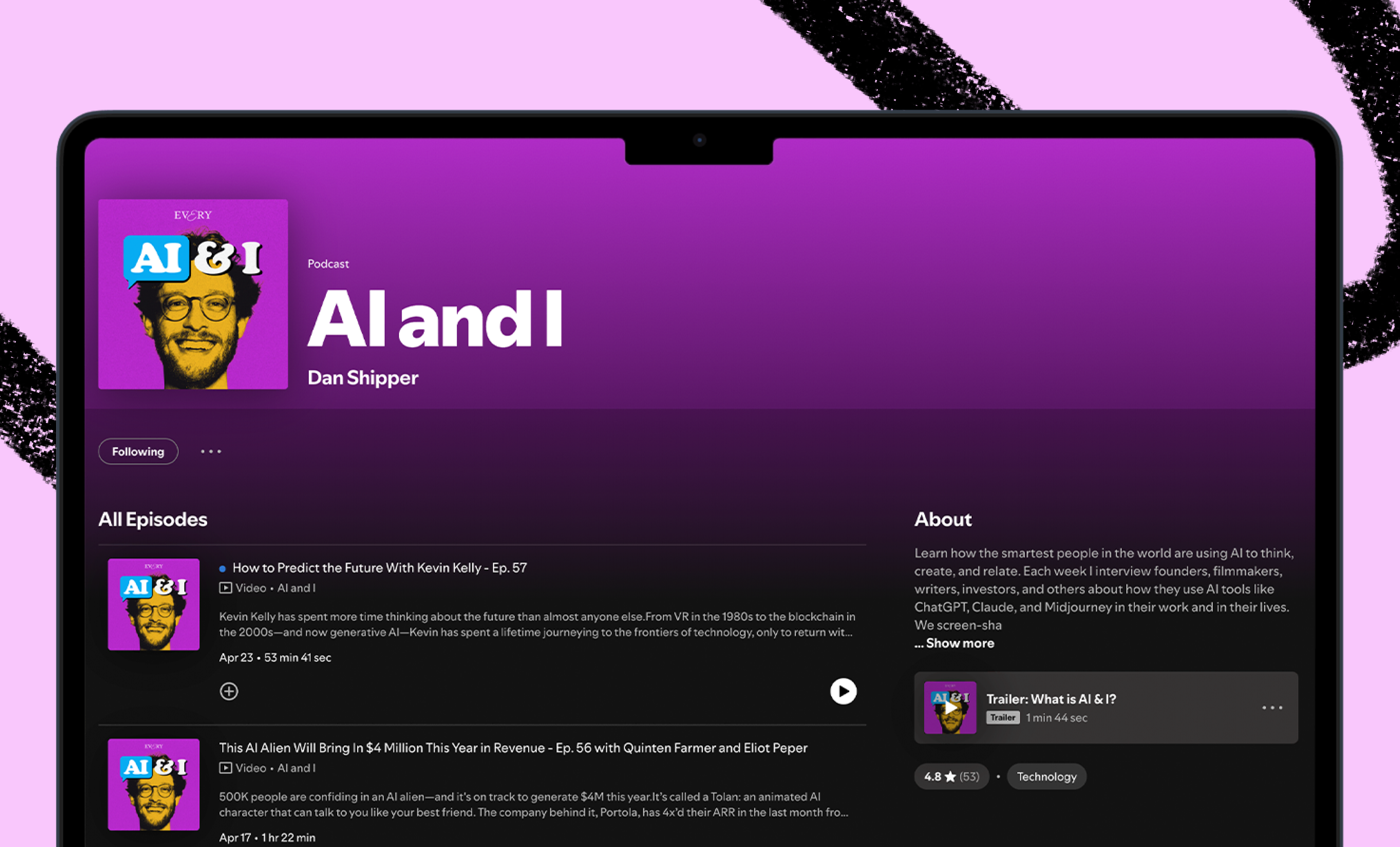
 AI&I Podcast
 Monologue
 Cora
Cora
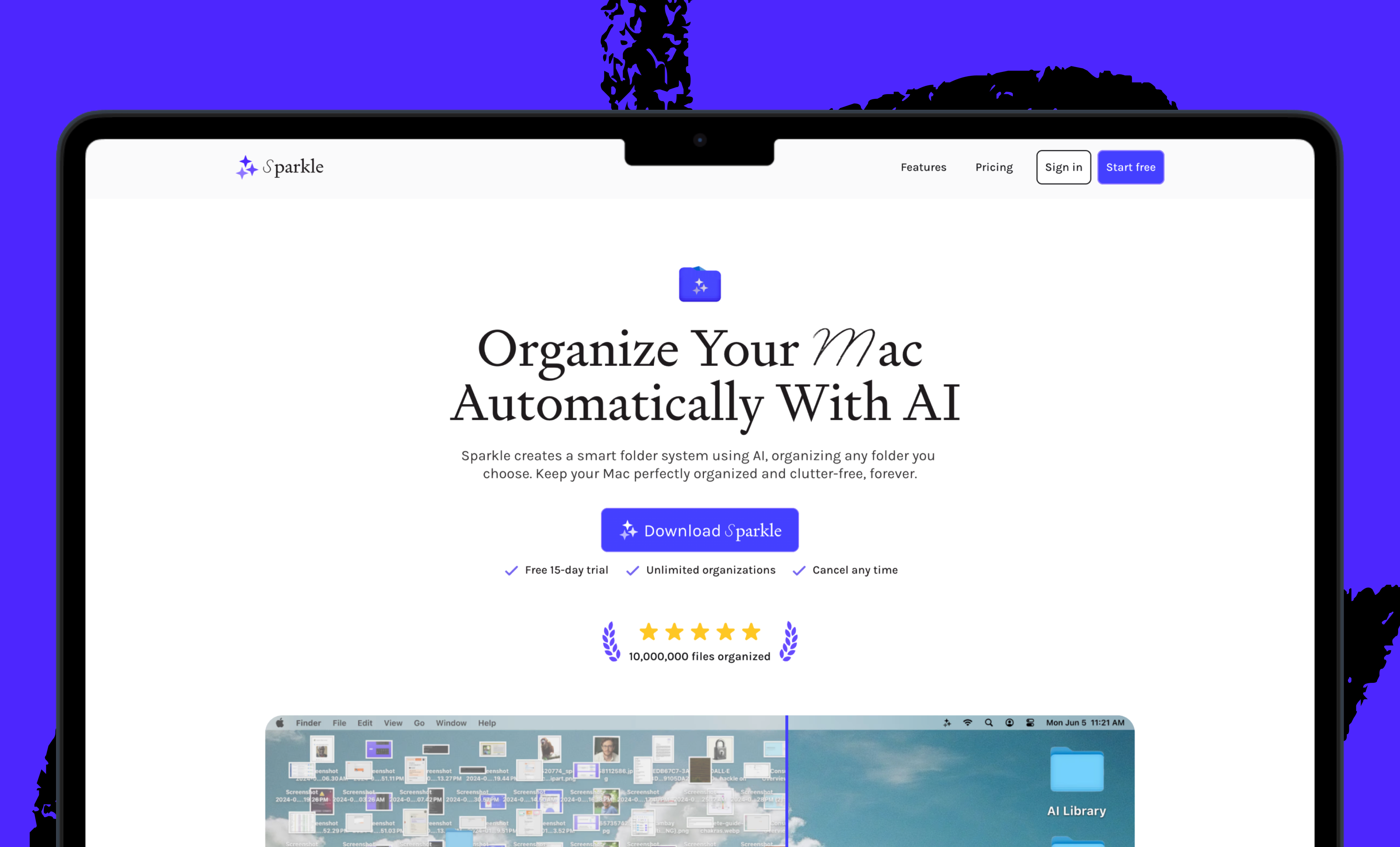
 Sparkle
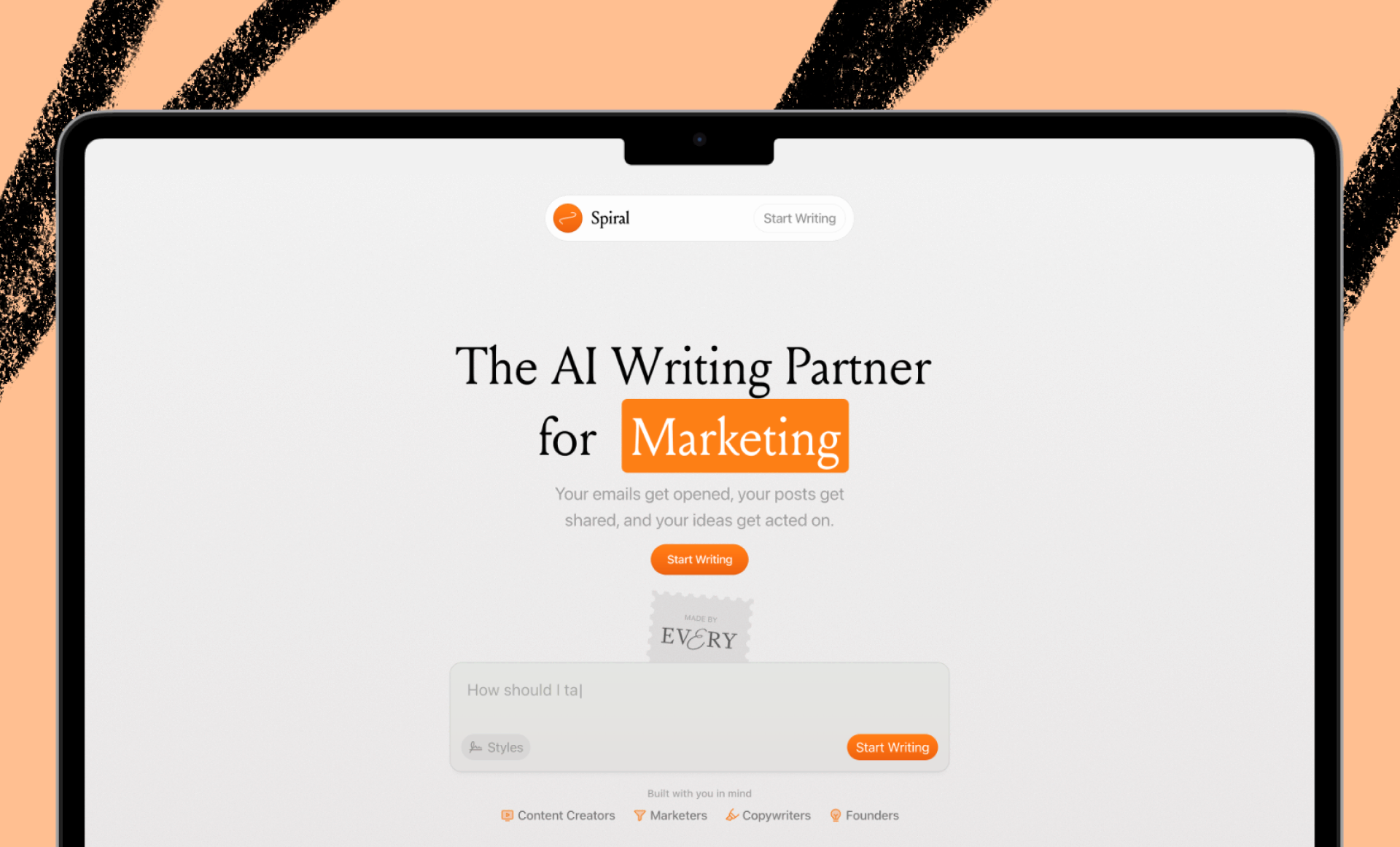
 Spiral
Join 100,000+ leaders, builders, and innovators

Email address

Already have an account? Sign in
What is included in a subscription?
Daily insights from AI pioneers + early access to powerful AI tools

 Front-row access to the future of AI
 In-depth reviews of new models on release day
Playbooks and guides for putting AI to work
Prompts and use cases for builders
In-depth reviews of new models on release day
Playbooks and guides for putting AI to work
Prompts and use cases for builders
In-depth reviews of new models on release day
Playbooks and guides for putting AI to work
Prompts and use cases for builders
In-depth reviews of new models on release day
Playbooks and guides for putting AI to work
Prompts and use cases for builders
 Bundle of AI software




 Dan Shipper
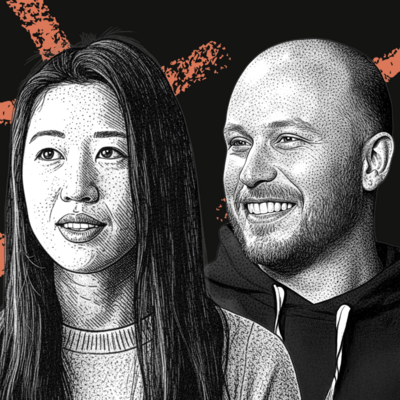
 Rhea Purohit
 Reviews of new AI models on release day