





The transcript of AI & I with Guillermo Rauch is below. Watch on X or YouTube, or listen on Spotify or Apple Podcasts.
Timestamps
- Introduction: 00:01:33
- How to spot trends early: 00:03:18
- Why you should be your own customer: 00:07:34
- How to create an ecosystem of talent and ambition: 00:14:55
- Why Guillermo doesn't identify as a coder: 00:17:29
- AI is gearing us toward an allocation economy: 00:20:50
- How Vercel’s copilot compares with other coding agents: 00:28:34
- Guillermo’s advice on having better taste: 00:40:35
- The future of AI agents is specialized: 00:42:46
- How AI startups can compete with big tech: 00:47:50
Transcript
Dan Shipper (00:01:33)
Guillermo, welcome to the show.
Guillermo Rauch (00:01:35)
Thanks for having me.
Dan Shipper (00:01:37)
So, for people who don't know, you are the cofounder and CEO of Vercel. You're also the creator of Next and Socket.io, which is very close to my heart. I told you when we met that Socket.io is the reason I could build my last company. So I appreciate all you've done for the developer ecosystem.
Guillermo Rauch (00:01:54)
Just met some folks last night that said the same. It's nice to get recognition for open-source, but I'm thankful to the people that maintain those projects.
Dan Shipper (00:02:03)
So we've a lot to talk about. I really, in general, in this conversation, I want to talk about the future of programming with AI. I want to talk about v0 and what you're doing with Vercel. But where I want to start is, before this interview, I was thinking about the kinds of things that it seems like you're interested in building, and the kind of taste that you have—and then think about how that might apply in this sort of AI era. And where I kind of came to, and I'll admit, o1 was involved a little bit in this. What I kind of came to is, it seems like you're very good at playing at the edges of what's possible technically, looking for where there's something that's new and pragmatically valuable, but still pretty messy and then coming up with a very clean opinionated zero-config solution to it. So, I would put Socket.io in that bucket, I would put Next in that bucket, I think Vercel that in that bucket. So one is, I'm curious if you feel like that's kind of—
Guillermo Rauch (00:03:12)
I mean, if o1 came up with that, it’s over. That's pretty good. I'll tell you. It's funny. I was having a conversation with one of my coworkers the other day and I was giving them the example of Socket.io as: When I started the project, WebSocket, which is the underlying technology that later became a part of web browsers— For context, maybe everyone doesn't know about Socket.io. It enables real-time chat, real-time communication. It powers websites like Perplexity. And when I created that developer tool, WebSocket was in its infancy. So, to your point, you kind of want to identify the wave when it's just a few drops of water, but you see that potential. And it's also extremely messy. So, being able to go from, I want to do something with real time, to I want to create an application, I think that's the vacuum, or the huge gap, that Socket.io filled out. And with v0, I think we saw the same thing. So models became good at writing code. Specifically, they were very good at being able to design with HTML and CSS and also writing React code. So, even when GPT-3 was out, we started thinking about, well, this could be used for revolutionizing how design and code gets emitted. How the process of bringing an idea to life could be completely disrupted, but it was really early. So to your point, there's almost a parallel between WebSocket was a draft of a specification when I started Socket.io. And when we first thought about v0, models could barely be coherent in outputting code, but there was that promise. And I think you kind of want to ride those waves when they're early.
Dan Shipper (00:04:59)
Yeah, and I think one of, one of the interesting things is, it feels like— So everything that you've done so far has been very developer-focused, and it feels like you have your finger on the vibe of what developers want.
Guillermo Rauch (00:05:12)
Well, I’ll tell you something I don't think I've shared before, which is, the company was called ZEIT, and then we renamed it to Vercel. And the reason I called it ZEIT was a few things. One, I was obsessed with this idea that if you really want to capture developers, you need to capture the zeitgeist. The zeitgeist is this idea of the collective conscience and how people are thinking about the future. And you need to really be on your toes, because things change so quickly. The vibes change so quickly, right? You see these models—one day one model is popular for developers, the next day it's another model. And another point was zeit means time in German. And I was obsessed with this idea of real time with my background in Socket.io. And what I thought is that the best way to build software would be in real time and it has two meanings. One is real time in the sense of you're just typing and you're getting feedback instantaneously from the system. I think v0 is almost like the culmination of that idea because you're literally chatting with the system and getting feedback in real time. But the other one was chatting with your customers, getting feedback from the world and adapting. I sometimes joke that for early-stage founders, their job is to chat on X with their customers and prospects, get feedback, fix things, and put a ton of quality craft and taste into their products.
Dan Shipper (00:06:38)
I want to stay with that idea of zeitgeist or paradigm or having your finger on the pulse of something. Because I think one thing that's interesting is to come up with Socket.io to come up with Next, you have to be developing stuff yourself all the time to realize that this is possible and that you want to make something but it's too hard, so you need a tool to help you do that more easily. And I'm curious how that has changed for you. I don't know how much programming you're doing right now.
Guillermo Rauch (00:07:13)
It really hasn't changed, surprisingly. So like I mentioned earlier, one of my goals is to enable Vercel to do a lot of what I did as an individual—come up with those ideas, and be able to bring them to life. And so one of the things that I mentioned is, kind of inspiring our employees with, well, you could build the next Socket.io if you think about these principles. So I think a lot about principles that I can set for the company at large. And one of them is that we're always customer zero. We dog-food our tools. We put product experiences before tools as well. I was just having a conversation with our tech lead for the AI SDK.
So AI SDK is a really interesting project, it's becoming the number one framework in the JavaScript world for how you interact with AI models. So it's almost the Socket.io or Next.js of LLMs. But it didn't come out because I was excited about AI, or because I live in San Francisco and I saw a lot of billboards about AI was, hmm, we should have an AI framework. What it came out of is us building AI products. So, we're building a lot of really cool demos of how to use Next.js with AI, we're building v0, and we realized there's an opportunity to extract out the infrastructure of those AI products and then share them with the world. And so the operating principle here is, you want to always put the product first, not the framework first. A framework in isolation without having that initial sort of patient zero is never going to be a good tool. And this actually came out of my fascination with how Meta put out React. So Next.js builds on the open-source UI infrastructure that Meta open sourced. And what I noticed is that I kind of reverse engineer why I liked React and why I was impressed with it. And I remember it first started with their product. I would go to the Facebook news feed and all of the things that they were doing that were very real time like the chat thing and the notifications badge and it just felt snappy. I actually remember a specific moment when they announced that comments were going to start trickling in in real time and I was like, that's hard because I had built something. I was like, that's really hard at that scale. It's very impressive. And then I realized, okay, you ask yourself. Okay, how did they build that? And this is actually something that a lot of people do unconsciously and is really good to tap into that sort of, it's almost like a primal instinct. When you see something good, you ask yourself, how did they build that? It's like when you walk into a studio and you're like, oh, I really like the vibe here. Well, the next thing you do— I mean, maybe not everybody, but creative people we can call them. I wonder whether they got that chair and I wonder what fabric is for this curtain. And so developers do this all the time. And so start with the product. You almost don't need to promote the tool. Because people are going to ask themselves, alright, I want a product like that. And that's how I still do it. I try to use our products, but I also am always on the lookout for really good things and then reverse engineer how you, how you get there.
Dan Shipper (00:10:25)
There's so much there to talk about. I've definitely found with Every, we have the writing and then we build software products. And a lot of the writing is about building new technology, new businesses.
Guillermo Rauch (00:10:38)
It's a marketing strategy in its own right.
Dan Shipper (00:10:40)
Yeah, honestly, the best marketing for our articles has been building great products because people are like, well, I want to know how they think about it, which has been really, really cool. And the other interesting thing that I think is sort of your ethos and also, I think uniquely valuable right now is like the sort of dog-fooding ethos. We do that too, because I feel like AI sort of changes the landscape where there's now a ton of low-hanging fruit of things to build because like there's a new technology paradigm. And so you can just wave a stick around and just think about like, okay, what are all the things that I want? And probably someone has not built that in a good way yet. Whereas, I don't know, three years ago at the apex of the B2B SaaS wave, all the low-hanging fruit.
Guillermo Rauch (00:11:20)
Yeah, there was a saturation. And that's what you see when there's a platform shift. AI is a new platform. And when a new platform emerges, it's kind of hard to even estimate how many new applications will emerge. I remember the early days of the iPhone. It wasn't clear to people that it was the new platform. In fact, it launched and there was kind of a hint that there could be apps of your own in that home screen, but it actually took quite a few years for people to be like, yeah, this is the platform. We have to, we have to claim a square in that home-screen grid—not obvious at all. And I think you can think of AI as almost like another new— It's a new home screen. And right now there's a handful of icons on that home screen: there is ChatGPT, you could have Google AI Overviews, Perplexity. And the question you should be asking yourself is like, how many more of those are there going to be in it? And my guess is probably millions. And so very exciting time for especially small teams like yours to be thinking about, what are my pains that AI can answer?
Dan Shipper (00:12:30)
I want to go back to the thing you said earlier about sort of transitioning from— Maybe in the Socket.io days, you have your finger on the pulse and you're the one who's solving your own problem, to thinking about how do I enable an entire organization of people to think that way? So you're more like thinking about the principles underneath that mode of thinking and then trying to infuse that in the culture. Tell me about how that process has been for you personally. Do you like that vs. actually coding a lot or— Tell me about that transition.
Guillermo Rauch (00:13:05)
Yeah, it's awesome. So I believe that there are seasons of a startup's life and in the early days you need to be obsessed with getting a high-quality product out into the world and you live and die by product-market fit. I think at some point you start realizing that you have it and there's other things to build to operationalize that product-market fit to make it into a machine. And I would say like, that's a transition between a startup and a scale-up and think anything when you're a scale-up, whatever that term means, but I guess like a larger, more mature startup, you realize that you no longer live or die by one individual product-market fit. You're probably thinking about becoming a platform or you are a platform and you're thinking about multiple products and so you start becoming more of a machine that outputs products. You're essentially a Y Combinator in the initial like recursive sense. And when you're creating a machine, you still apply a lot of the thinking that you apply when you design products. It's only the company itself that is the product, right? And you're still worried about all the things that you worry about when you want to create excellent products. For example, onboarding: If you're going to be hiring a ton of people, what do you want to have? You want to have an excellent onboarding experience, right? Just like when you first start using a new app. When people join Vercel, they need to be equipped with everything they need to succeed. So you start thinking about other aspects of the company. I think principles are kind of the product specifications of your company. And so thinking about what are our values, what are our ethos, what is our mission, what are the right people to pursue this mission.
In terms of a recursive product generation machine, I think a lot about what I call recursive founder mode. So there's founder mode: I believe founder mode fundamentally doesn't scale in the sense of, if your aspirations are very large, the total output and creative output of a company can not just be limited to the founder. And so, especially when you started having those ambitions of being a company that can nurture new founders within it. And so I think a lot about what is the DNA that we can incorporate into the company that is almost like the people that would start a company on their own, but they can actually kind of do that within Vercel. And so we select for specific trades. We offer very unique things. So we build a lot of cool open-source technologies. People know us for Next.js, but we also contribute to Svelte, which is a very popular web framework. We acquired it initially, but we support a tool called Turborepo that helps companies to scale huge codebases to the size of Google and Facebook. So people can come to Vercel to fulfill their dreams to reach millions of developers through open-source. And so those are kind of the things I think a lot about how I could find not just the next Socket.io, but how to create the environment that creates Socket.ios and Next.jses and the ecosystems around it.
Dan Shipper (00:16:15)
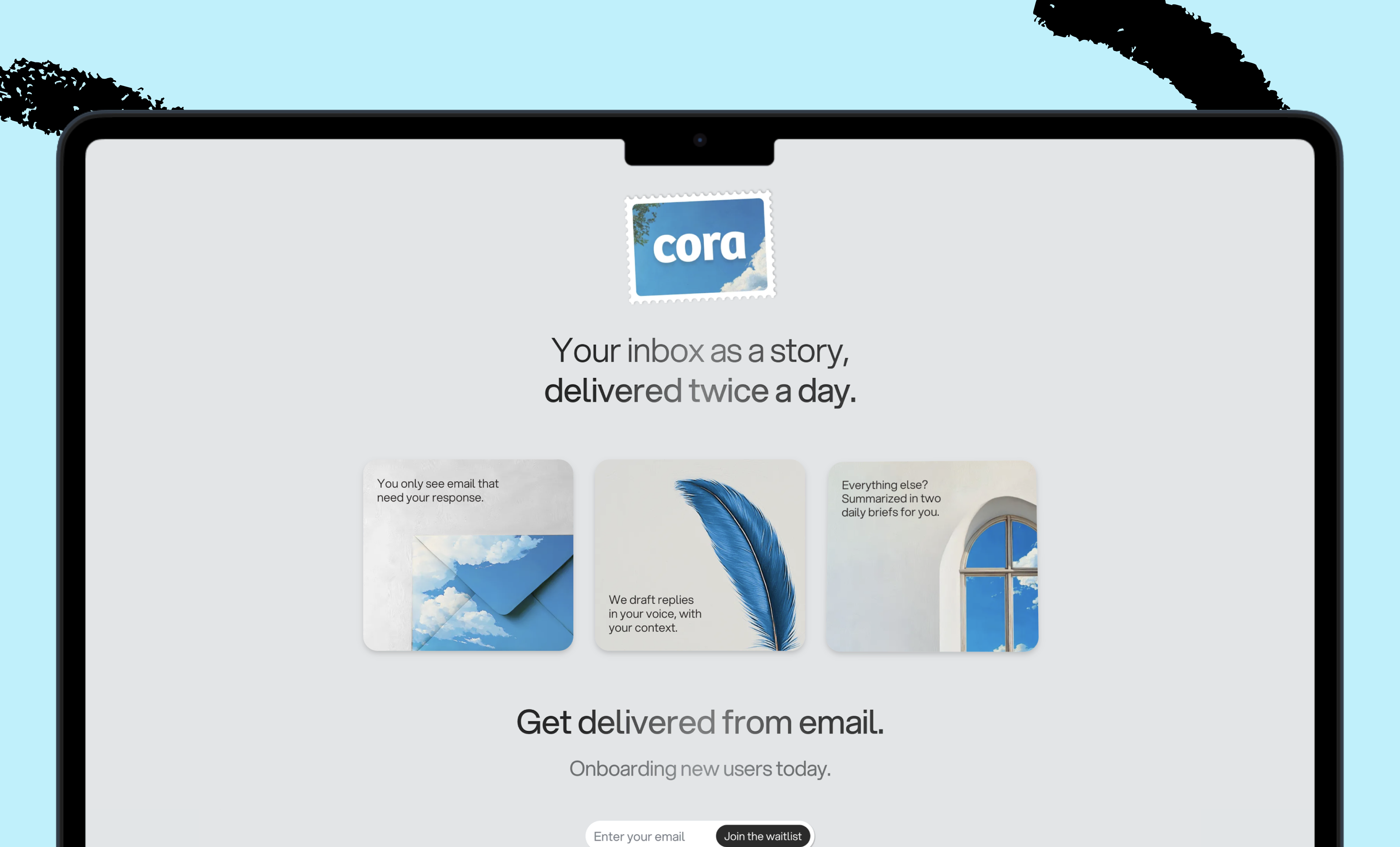
I think that's really interesting. And the reason I'm kind of keying on that journey from doing it yourself to making the machine that builds the products is it's sort of this journey of moving up layers of abstraction in an organization. And what I want to talk to you about is sort of the future of the developers in an AI world, and I think that there's something similar happening in some aspects of being a developer where, Cora, for example, we have this email product that I demoed for you. And Kieran, who built Cora, he didn't write 80 percent of that code, right? He knows how it works, but 80 to 90 percent of it was written by o1 or Claude. And I think that's a very similar up-leveling journey where the AI is actually typing the stuff and you're thinking about what are the principles and what's the architecture that you want it to write. Talk to me about that.
Guillermo Rauch (00:17:25)
Yeah, one thing that immediately comes to mind is that it does seem like people are becoming full-stack product builders. I don't think I would identify today even as a coder, even though that's what I was obsessed about for years. Since I was like 10 years old, my ego and my identity became tied up with “I code. That's my thing.” And yet I think what I was lucky to have is also that aspiration to build products. And that's what allowed for things like Socket.io to happen because it was like, I just want to make the web more real time and more interactive. It had like a product idea in mind that wasn't just only in the code. I think it's an important asset to have. And when I look at people at Vercel today, I've been noticing that they’re just more full-stack. With v0, for example, they can do design. They can bring context, data, copywriting into their creations that otherwise would have required chatting with other people and crowdsourcing ideas. So, we are going into a world where coding is a specific skill and when things are specific skills, machines tend to take them over time. If your skill when you were a kid was like, I can do math in my head really well, awesome, great asset to have, I love it. But also, there's a specific machine that can do that skill also very well, and even better than you. And so what I try to separate is, what are the meta skills that are not as easily replicated by machines that you should still nurture? And I think those tend to be more around very high-level conceptual thinking. Your engineer who automated the production of that product to an 80 percent degree, he still has a very good understanding of how all the concepts relate. He can prompt the right things to the AI. It's not that he just was like, okay, o6, please build me this thing and then you justin checked out and like went on vacation. So the concept of symbolic systems comes. to mind a lot for me because it transcends language, runtime, framework, coding, and that's extremely important to have how things work and relate to one another. Interestingly enough, it's a skill that VCs kind of nurture a lot. Because I've been in rooms with a lot of venture capitalists that play by ear and you can tell that they play by ear because they have— And by the way, this is a skill in its own right, and it's very impressive. They have extreme, what I would call, “token breath.” I'm using a token in the sense of LLM. They know 30 companies for the space of continuous testing, and they know 50 for LLM pre-training models. And that skill actually is super helpful when you're prompting, because you understand how the concepts relate to one another. You can point the agent to use a specific technology that might be the right solution, but you're not actually doing the coding. And so, I think the biggest step that's going to play out in the ecosystem.
Dan Shipper (00:20:35)
I love the idea of meta skills. And one of those being, okay, how do things fit together? How can I be a little bit more full-stack? How do I think about things from end to end? Another thing that I've been playing around with is like I have this whole idea of us moving from a knowledge economy to an allocation economy where in a knowledge economy, you're compensated based on what you know, and an allocation economy, you're compensated based on how you allocate the resources of intelligence. And that the skills in that economy that are valuable are the skills of human managers today. So, an example which, which I think is kind of interesting, because I think a lot of developers are probably thinking, okay, is it even worth it to be able to code right now? And when you think about being a manager, let's say being a technical manager you always have to— There's, there's this line between, okay, am I going to be in the details and know everything in micromanage or am I going to completely check out and just let them do whatever they want, basically. And both options are bad and you have to be able to know, okay, when is it important to be in the details and when is it important to just delegate? But in order to do that, you kind of have to know the underlying skill. It’s very hard to know that if you're not technical.
Guillermo Rauch (00:21:55)
I love this concept, by the way. The idea that you're allocating resources and delegating to these agents is already happening. One of the things I think is really, really interesting. So, Vercel has two parts, broadly. One is our managed infrastructure. We basically host websites. We deliver them through a global CDN network. We make it so easy for developers to deploy and build, etc. And that has a usage-based model. So for example, we host UnderArmor.com and OpenAI.com. If they have more traffic, Vercel costs more for them, and if they have zero traffic, it costs nothing, which is awesome. On the other hand, we have v0, which is more like a design engineer tool in the sense almost as VS Code or Figma would be, and almost like if they had a child. And those products you typically pay by subscription, not by usage. I think AI is actually disrupting that, and it goes back to that idea of allocation.
So I'll tell you a concrete example: You have users that are draining AI tokens and running these GPUs super hot, day in and day out. They're like AI-powered engineers. And there's users who use it in a more casual way. They're like, oh, I'm on my phone, I want to create a personal app, I'm going to use v0. And what happens is that, at the end of the day, we're seeing the first category of apps, I think, that are tools that have a consumption billing model attached to them. Because what you're doing is you're not simply using it as a system of records like Salesforce. You're actually setting machines in motion to perform tasks. And I like that metaphor—it's almost like you're doing management in capital allocation. Okay, how much computation am I going to allocate to perform this given task? And you even have to think about risk because it's true that AI is really exciting and capable, but sometimes it's not that capable, so you have to think about, am I going to burn lots of inference time compute? Am I going to set this entire like $500 billion data center on fire to try to solve this task and actually don't know if the AI will perform?
Dan Shipper (00:24:15)
Is this on the customer side or on the—
Guillermo Rauch (00:24:18)
 Create a free account to continue reading
The Only Subscription
You Need to
Stay at the
Edge of AI
The essential toolkit for those shaping the future

"This might be the best value you
can get from an AI subscription."
- Jay S.
 Every Content
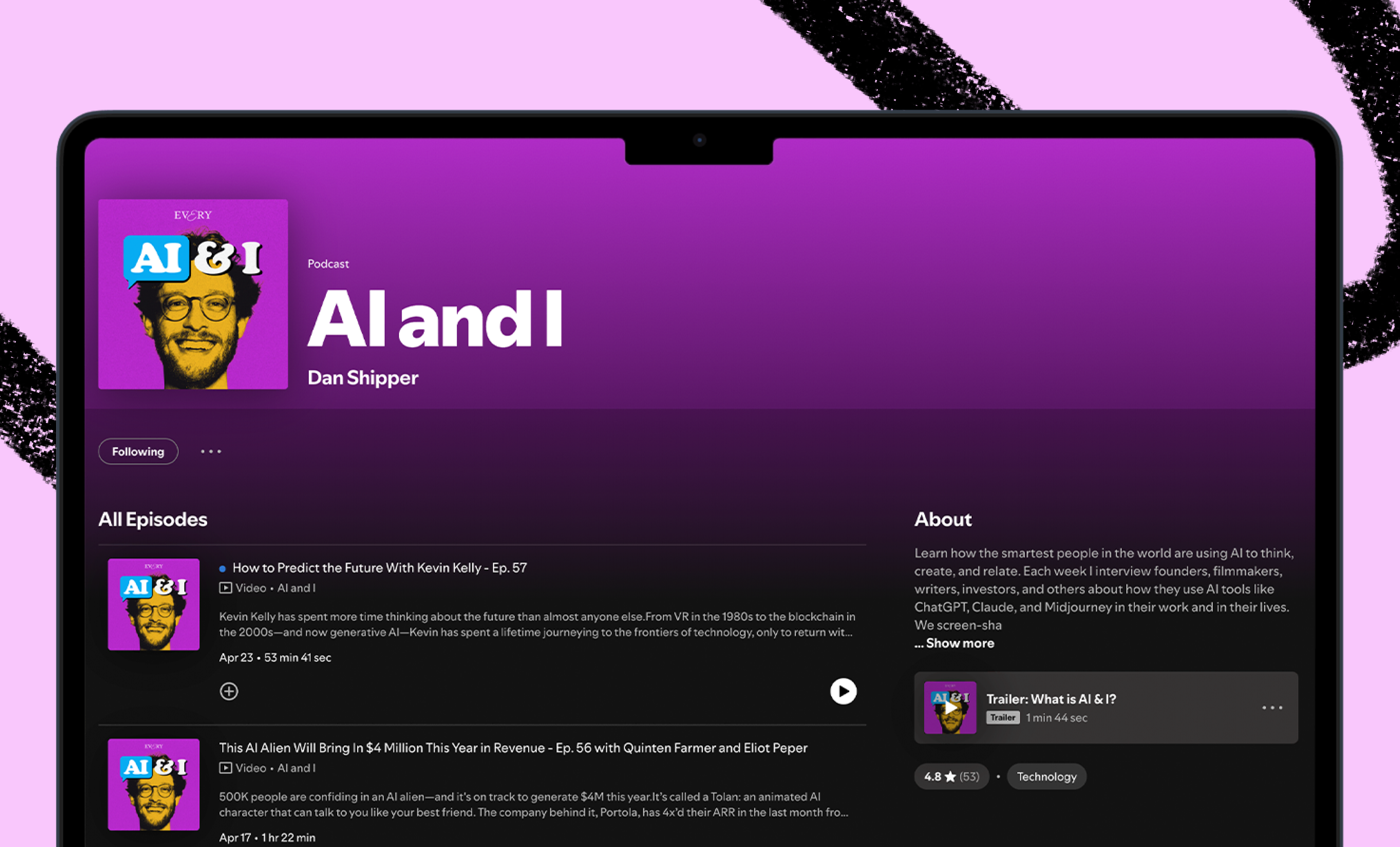
 AI&I Podcast
 Monologue
 Cora
Cora
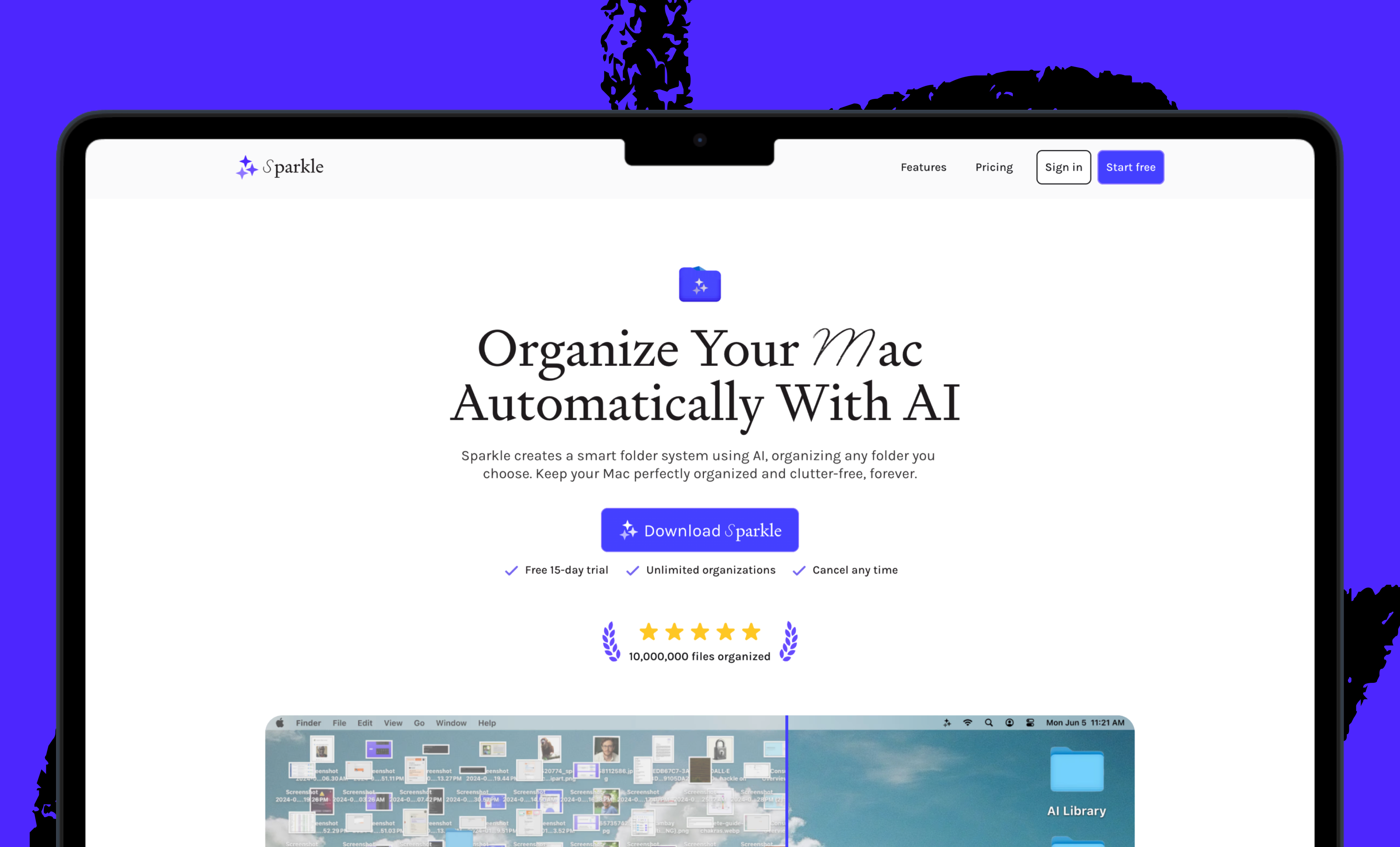
 Sparkle
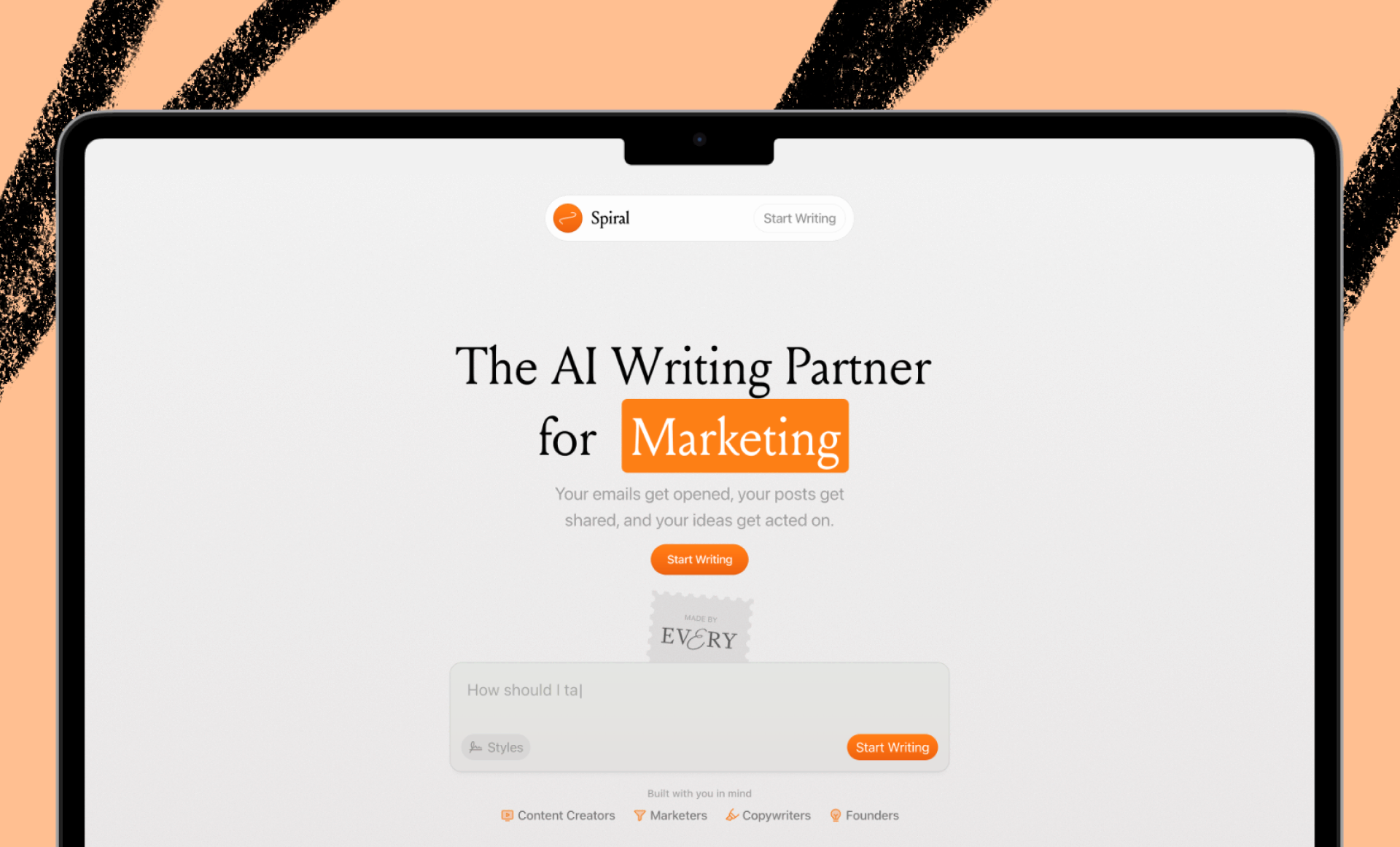
 Spiral
Join 100,000+ leaders, builders, and innovators

Email address

Already have an account? Sign in
What is included in a subscription?
Daily insights from AI pioneers + early access to powerful AI tools
 Front-row access to the future of AI
 In-depth reviews of new models on release day
Playbooks and guides for putting AI to work
Prompts and use cases for builders
In-depth reviews of new models on release day
Playbooks and guides for putting AI to work
Prompts and use cases for builders
In-depth reviews of new models on release day
Playbooks and guides for putting AI to work
Prompts and use cases for builders
In-depth reviews of new models on release day
Playbooks and guides for putting AI to work
Prompts and use cases for builders
 Bundle of AI software




.png)
 Rhea Purohit
 Dan Shipper

 Reviews of new AI models on release day
Comments
Don't have an account? Sign up!