




Sponsored By: BetterHelp
This essay is brought to you by BetterHelp. Millions of people have joined BetterHelp to find the right therapist for them, without having to leave home.
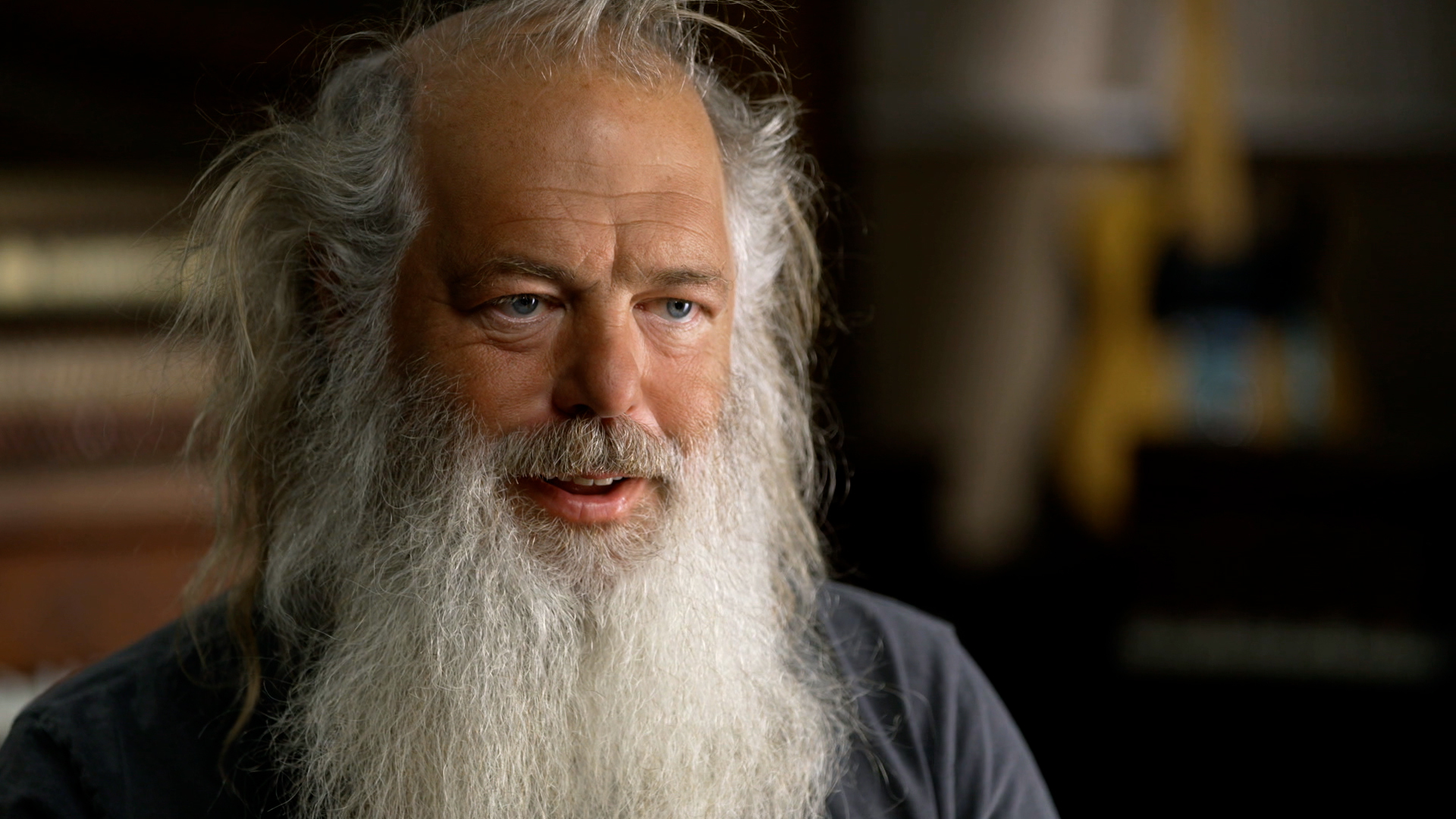
If Rick Rubin started a cult, I would be its first card-carrying member. Bathe me in goat’s blood, howl at the full moon, sacrifice a virgin to the god of music, I don’t care, I’ll do it—this dude is onto something.
For the uninitiated, Rubin is one of the most prolific and important music producers of all time. He started Def Jam records out of his NYU dorm room and brought hip-hop to the masses. He then moved…actually, you know what—let's skip the story. The bottom line is that he has helped make incredible music. Here are just a few of my favorite albums he's been involved in:
- Yeezus, Kanye West (one of the greatest rap albums ever written, unfortunately created by a Nazi)
- Reign in Blood, Slayer (top 10 metal album, one so delightfully full of rage it makes me want to punch a nun)
- 21, Adele (best selling album of the 21st century and the defining emo music for wine moms record)
- License to Ill, Beastie Boys (the first hip hop album to ever go to number one; unrelated but important: I’ve received three speeding tickets while blasting this)
I can do this all day—there are literally hundreds more. The list of albums he has been involved with is some of the most important music of the last 30 years. Most producers stick to a niche and make it their own. Rubin is the opposite, wildly careening from genre to genre, guided by his muse on where to go next. Thankfully for us, he recently published The Creative Act so we can learn how we, too, can be creative geniuses. The book is 404 pages of Rubin distilling his methodology for being creative.
Frankly, I went into the book skeptical. The genre of “successful person tells you how you can replicate their riches” is one that I’ve always struggled with. Most of these books are overly reliant on one person’s success and are not replicable in double-blind randomized control trials. While Rubin probably has more claim to a statistically significant success rate due to sheer album volume, why on earth would that apply to me? I am neither in music nor do I have his glorious beard. Plus, there is a bigger issue: I can’t stand anyone telling me what to do (as my wife, coworkers, and wife again would happily tell you), so advice books always rub me the wrong way.
Rubin would struggle to find a worse reviewer than me. Despite that, I found myself deeply moved by his book. Over and over again I would gasp, feeling like he was speaking directly to the problems that I face in my creative process. It was remarkable how quickly the switch from cynic to devotee occurred. Within three pages of cracking its slate gray cover open, I jumped up, dashed to get my good pen, opened a new pack of sticky notes, and started furiously scribbling in the margins. By the end of the book I found myself reinspired about my creative career to a degree I hadn’t felt in months.
So what did he say that spoke to me so?
The path of creativity
Rubin’s book is devoted to helping artists manage themselves. You might think that's not that valuable—isn't great music about chord progressions and mic specs? As someone whose bills are paid by their creativity, I can promise you that managing emotions is the hardest part of my job. That's why this book is great. It takes the question of emotional regulation seriously.
Rubin repeatedly reinforces that being an artist is not tied to technical skill. Perhaps the best example of this ethos is Rubin himself. I love how he explained what he did in a recent interview with Anderson Cooper.
Anderson Cooper: Do you play instruments?
Rick Rubin: Barely.
Anderson Cooper: Do you know how to work a soundboard?
Rick Rubin: No. I have no technical ability. And I know nothing about music.
 Create a free account to continue reading
The Only Subscription
You Need to
Stay at the
Edge of AI
The essential toolkit for those shaping the future

"This might be the best value you
can get from an AI subscription."
- Jay S.
 Every Content
 AI&I Podcast
 Monologue
 Cora
Cora
 Sparkle
 Spiral
Join 100,000+ leaders, builders, and innovators

Email address

Already have an account? Sign in
What is included in a subscription?
Daily insights from AI pioneers + early access to powerful AI tools


 Front-row access to the future of AI
 In-depth reviews of new models on release day
Playbooks and guides for putting AI to work
Prompts and use cases for builders
In-depth reviews of new models on release day
Playbooks and guides for putting AI to work
Prompts and use cases for builders
In-depth reviews of new models on release day
Playbooks and guides for putting AI to work
Prompts and use cases for builders
In-depth reviews of new models on release day
Playbooks and guides for putting AI to work
Prompts and use cases for builders
 Bundle of AI software



 Evan Armstrong


 Dan Shipper
 Reviews of new AI models on release day
Comments
Don't have an account? Sign up!