




Learn to Build with ChatGPT
Want to learn to use ChatGPT to bring your ideas to life?
We just re-launched our How To Build a GPT-4 Chatbot course—designed to do exactly that.
It's an online cohort-based course that will teach you how to make your own GPT-4 based knowledge assistant in less than 30 days. Early-birds save $500 before November 6th! No programming experience required.
“It is absurd that I could achieve what I did in four weeks!” — Henry F.
Learn to build in AI:
Chat—and ChatGPT—kicked off the current AI wave. OpenAI took existing technology, wrapped it in a chat interface, and set the world on fire.
But there are a lot of questions about chat’s future: is it actually a useful creative tool? Or is chat just a way-station on the road to some other way of interacting with AI to produce creative work?
Here’s what I think:
Chat isn’t great at making one thing incredible.
It’s inexact, it’s unreliable, it’s hard to steer precisely, it’s slow, and it forces repetition. Many next-generation AI creative tools won’t have a chat interface at all.
But, viewed correctly, these flaws are chat’s genius. It is inexact and unreliable—so it introduces you to new things. It is hard to steer precisely—so you’ll bump into things that you don’t expect and broaden your horizons in any new domain. It is great at filling a blank page; it will allow you to venture forth into ideas that you can barely put into words.
Chat can help you scratch the surface of an entirely new field of study, or build you a working prototype of a simple app, or help you test 15 variations of an idea you’re trying to write about.
No, chat isn’t great at making one thing incredible. It’s incredible at making 1,000 things. And therein lies its genius.
Divergence vs. convergence in the creative process
Any kind of creative endeavor has two phases: divergence and convergence.
In divergence, you’re opening yourself up to new ideas and possibilities. You’re gathering inspiring material, scribbling furiously on napkins, and generally letting your mind roam free.
In convergence, you’re narrowing things down. You’re tweaking and refining. You’re choosing exactly the right word. You’re getting the saturation exactly right on a photo. You’re making sure everything is pixel-perfect; your I’s are dotted and your T’s are crossed.
Divergence and convergence, together, are breathing for the creative act. You are constantly breathing in new things and breathing out refinements. If you zoom out, the beginnings of projects are divergent and the ends convergent. But it’s fractal: if you zoom in, within any feature or facet, sentence or stanza, the same thing happens. Ideas flow, and then they are narrowed down.
Breathe in; breathe out.
Most creative tools are built for convergence. Illustrator, Figma, Final Cut, Google Docs, Excel—these are all tools that are built for refining a rough draft into a perfect final output. They have sliders, filters, and formatting options galore. Their interfaces are built for precision, for pixel-perfection. They never do anything unexpected.
ChatGPT is different—it is built for divergence.
ChatGPT is for divergence
ChatGPT is for rambling. It’s for rapid prototyping. It’s for getting up to speed quickly in completely unfamiliar terrain. It’s for the dreamers and the generalists—not for the specialists.
It’s for building a weekend project in two hours with that new development framework that you’ve been wanting to learn but haven’t had time for. It’s for the founder negotiating a contract and asking their lawyer unusually perceptive questions about minor points of employment law. It’s for the romance writer who’s decided to take a creative risk and learn about the finer points of attack helicopter tactics for a short story about the military.
It’s for waltzing around a kitchen and throwing anything that catches your eye into a pot, not for carefully timing the heat on a souffle. It’s for those who love to cook with ideas and hate to bake.
It’s for the jack-of-all-trades and master of none. It’s for the learners. It’s for the connoisseurs of curios. It’s for those who thrive in uncertainty and imprecision. It is for divergent thinking.
And we all need to incorporate divergence into our process in order to do great work.
How ChatGPT helps you to become great
In order to make one great thing you need to make 1,000 bad things. In their book Art & Fear, David Bayles and Ted Orland tell the famous story of a ceramics teacher who tested this conclusively.
At the beginning of his class, the teacher divided students up into two groups. The first group would be graded on quantity: at the end of the semester, students would get a higher grade for making more pots. The second group would be graded on quality: students needed to produce only one perfect pot for their final grade.
The question was: which students would make better work? The ones who made more pots, or the ones who strived for the perfect one?
At the end of the semester, the students who had produced the most pots also produced the highest quality ones. Producing more allowed them to explore the creative territory and learn from their mistakes. Trying for perfection backfired: these students ended up spending too much time agonizing and theorizing, and too little time actually making things. They didn’t learn as quickly.
ChatGPT is built to help you produce more. It will happily help you make 1,000 bad things until you find something that glimmers in the dark. A rough-hewn stone whose muddy shine is worth refining.
Once you’ve got that, you’re halfway to greatness.
My promise to you
I think ChatGPT is the most important creative tool of the decade. So I’m going to spend the rest of this quarter writing about it in depth. I’m going to explore it as a tool to help us make things and understand ourselves better. I’ll share my own explorations and interview people who are using it to do the best work of their lives.
You’ll learn how to integrate ChatGPT into your own life. You’ll see how it can help you code, design, make decisions, journal, write, and more.
Together, we’ll explore the future of AI by living in it. We’ll uncover how it might change what we are able to build, and how we see ourselves.
If you have anything (or anyone) you want me to cover in particular, please leave a comment.
Want to learn to build in AI? The next cohort of my course, How to Build an AI Chatbot, kicks off later this month. You'll learn to build an AI chatbot with ChatGPT—no programming skills required.
Early-bird sign-up ends November 6:
Here's what previous students had to say:
"I'm really enjoying the course and feeling super empowered using chatGPT + Replit to code. I can now query APIs for json, and convert it to Markdown for local storage. All that in an afternoon, it's crazy" — Daniel B.
You can check out what students were able to build after just one month:
The Only Subscription
You Need to
Stay at the
Edge of AI
The essential toolkit for those shaping the future

"This might be the best value you
can get from an AI subscription."
- Jay S.
 Every Content
 AI&I Podcast
 Monologue
 Cora
Cora
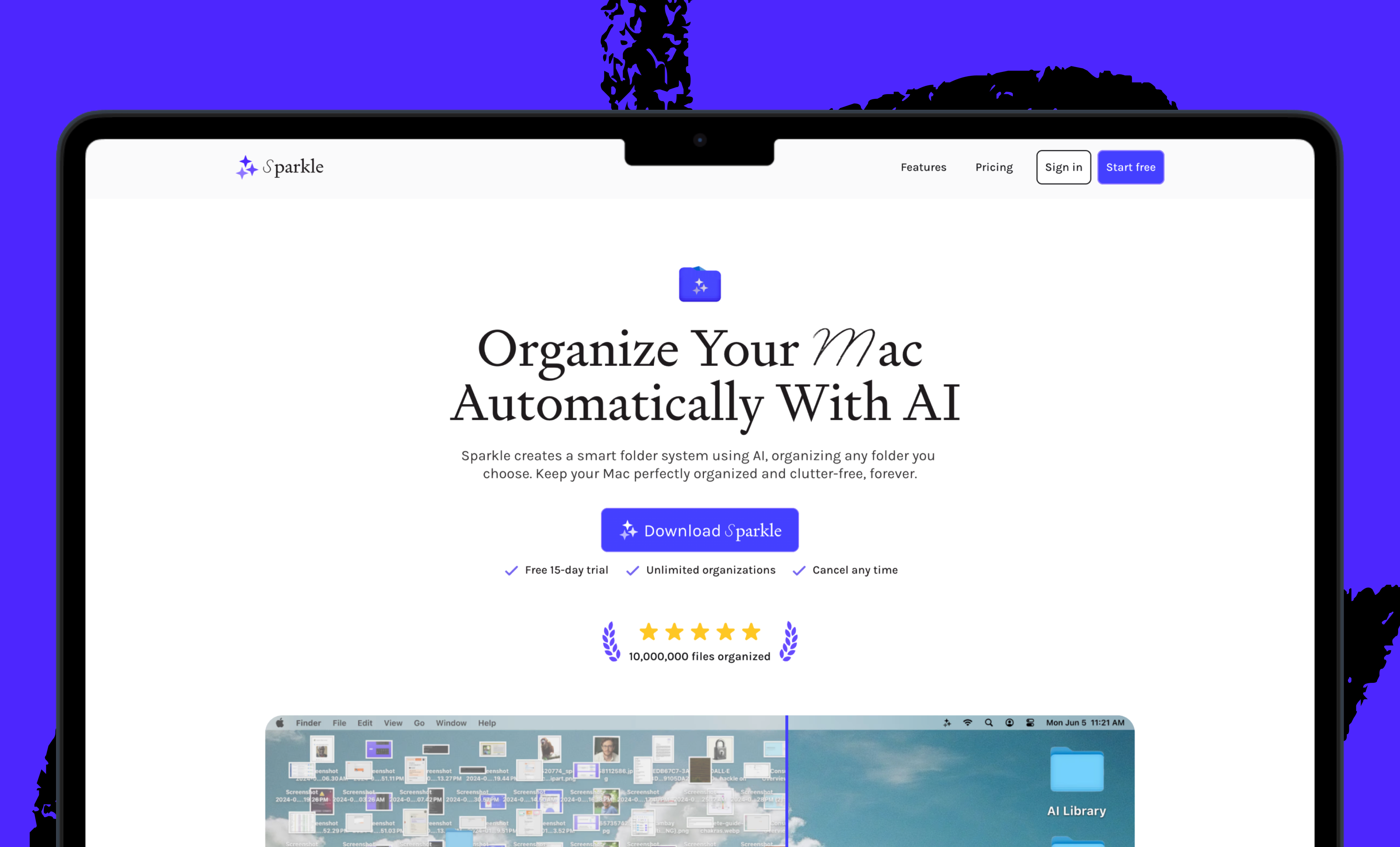
 Sparkle
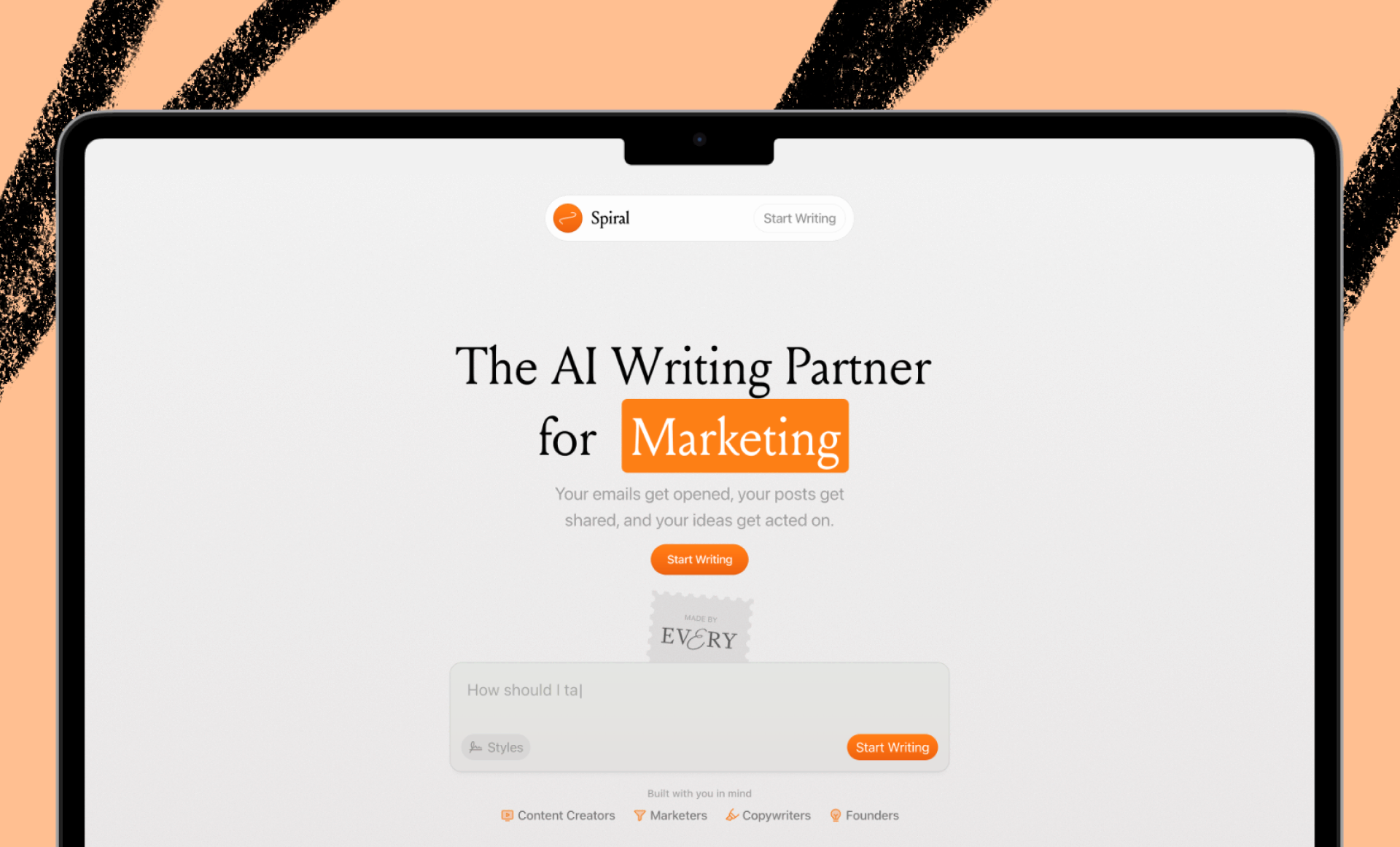
 Spiral
Join 100,000+ leaders, builders, and innovators

Email address

Already have an account? Sign in
What is included in a subscription?
Daily insights from AI pioneers + early access to powerful AI tools

 Front-row access to the future of AI
 In-depth reviews of new models on release day
Playbooks and guides for putting AI to work
Prompts and use cases for builders
In-depth reviews of new models on release day
Playbooks and guides for putting AI to work
Prompts and use cases for builders
In-depth reviews of new models on release day
Playbooks and guides for putting AI to work
Prompts and use cases for builders
In-depth reviews of new models on release day
Playbooks and guides for putting AI to work
Prompts and use cases for builders
 Bundle of AI software



.png)
 Dan Shipper


 Evan Armstrong
 Reviews of new AI models on release day
Comments
Don't have an account? Sign up!
Dan, you might want to keep an eye on replit, it feels like it’s fraying on the edges. Check the reddit sub, ask your students if they are having issues. My own deployment is stalled with a false “over limit” status that the incredibly slow , “5 days to respond with wrong answers “ support can’t explain. Just sayan.
@fkurka thanks for the call-out! i'll take a look. i've definitely experienced issues with deploying in the past—but they'd been resolved for me afaic. will look into it!
Great insights. I have seen this play out with HR professionals all year - where they begin to understand how to use the tool effectively. Would love to know your thoughts on how we prepare people to interact with the new "digital colleague" that is going to show up in meetings, emails, Slack channels, etc.