





I'm fascinated with how the smartest people in the world get their work done. That's what Superorganizers is about: seeing all of the little habits that make up a great work day and a great life. Artificial intelligence has changed what it means to be productive and efficient at work, so we decided to revisit some of our favorite interview subjects to understand how their routines have changed in the era of AI models. Most recently, we spoke to startup adviser Gaurav Vohra. Today, we’re back with software engineer Ceasar Bautista for an update on our very first edition of this column.—Dan Shipper
Was this newsletter forwarded to you? Sign up to get it in your inbox.
Ceasar Bautista has been writing his own personal encyclopedia since 2013. It's like Wikipedia for his life. When we last spoke to him in 2019, Bautista—then a software engineer at the venture capital firm Signal Fire—was documenting everything he knew so he never forgot what he learned. He has entries as varied as modern art, linear growth, travel insurance, and enamel.
Years later, his encyclopedia continues—it now comprises 3,061 articles with 3,835 images. But his philosophy around note-taking has changed considerably. We caught up with Bautista about his evolving approach to acquiring knowledge, why he's become skeptical of productivity apps, and his newfound obsession with stoking his memory using Anki flashcards.
What was the original concept behind the personal encyclopedia?
In college, I was forgetting the contents of some books I had read and loved, and was stumbling trying to explain them. I’d read these books only a few years earlier, which meant the half-life of my memory was extremely short.
I wanted to try different hierarchical ways to organize notes, but was failing. There probably is no great way to divide up the branches of knowledge in a clean tree structure because there’s a ton of overlap. But that’s what I was trying to do—my original goal was to create beautiful notes, rather than actually have them serve my goals.
Make email your superpower
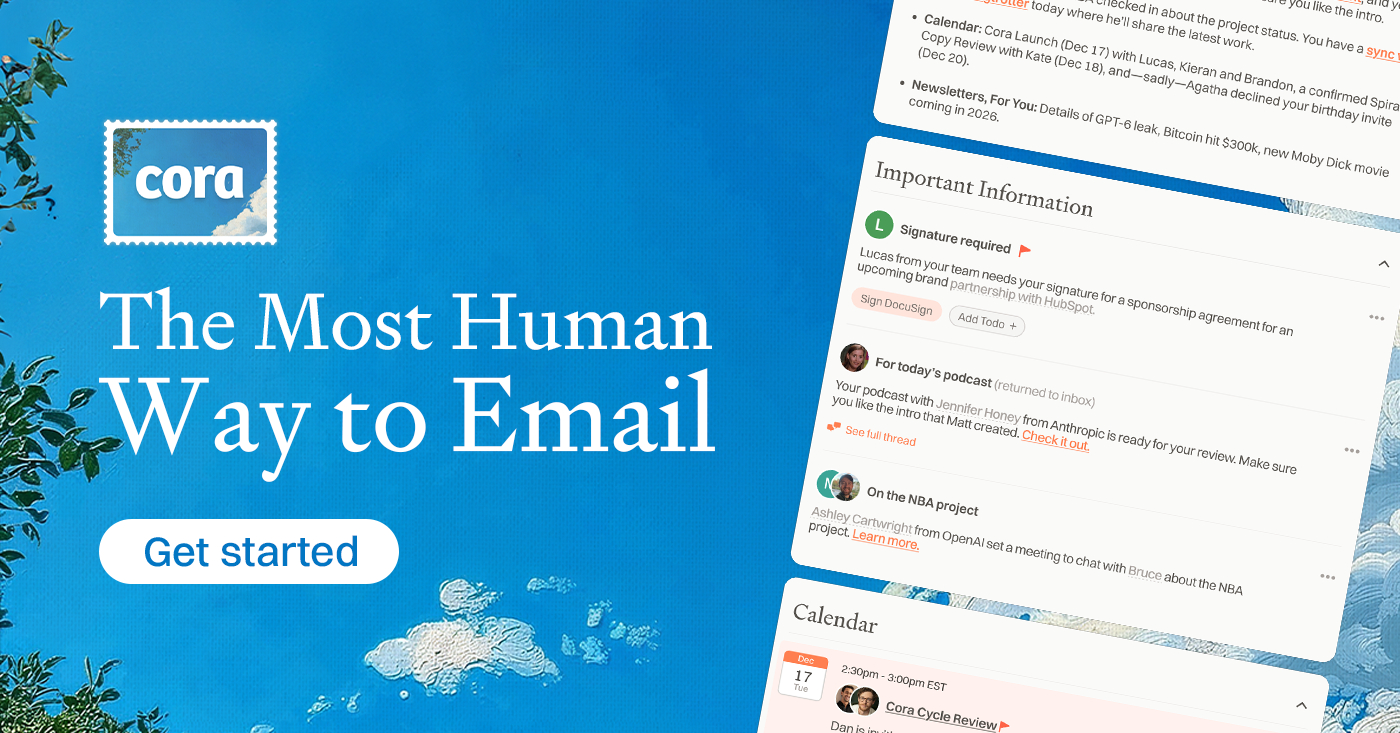
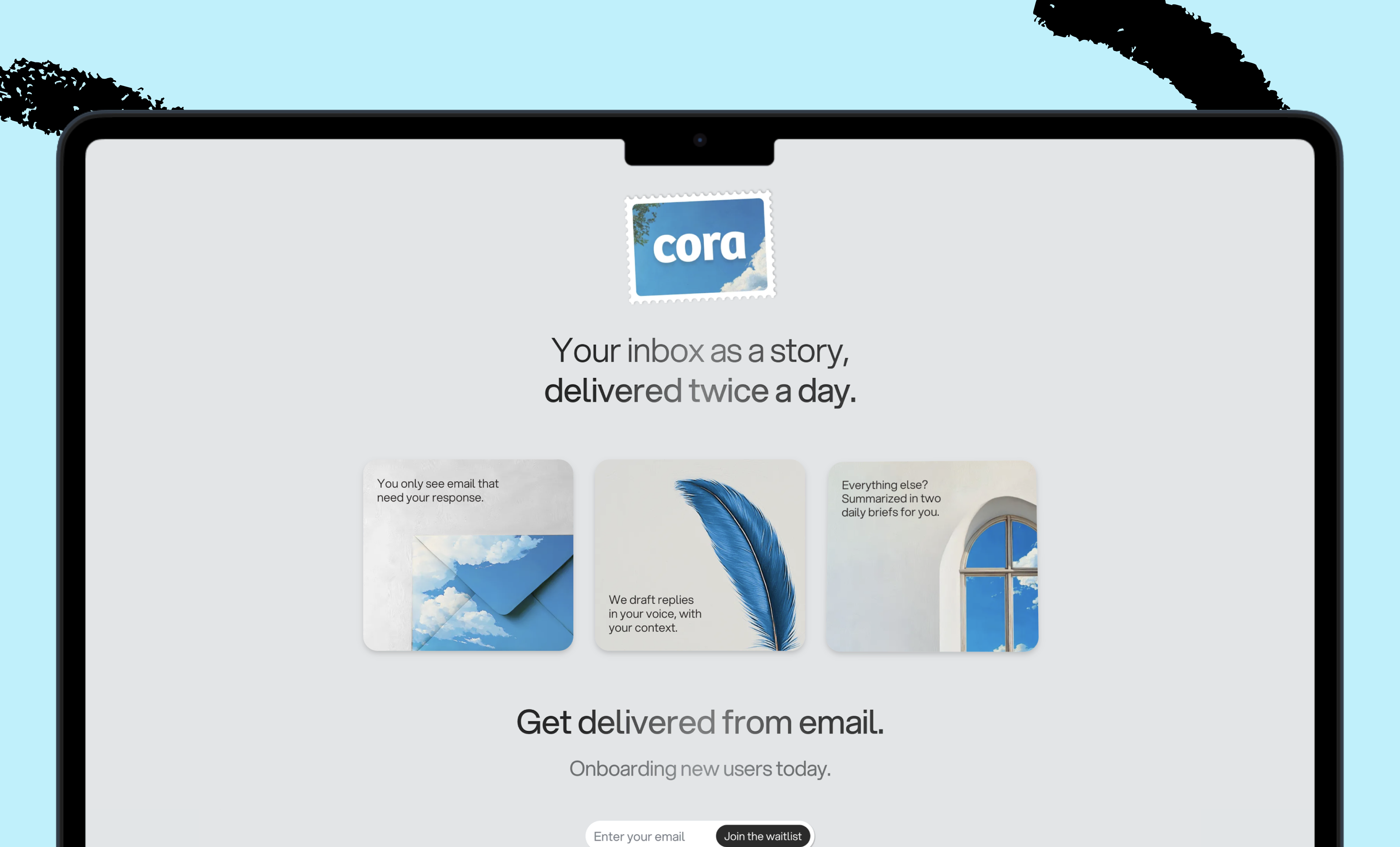
Not all emails are created equal—so why does our inbox treat them all the same? Cora is the most human way to email, turning your inbox into a story so you can focus on what matters and getting stuff done instead of on managing your inbox. Cora drafts responses to emails you need to respond to and briefs the rest.
More than a decade later, the reality of the situation was that I had serious undiagnosed problems with generalized anxiety disorder. One of the symptoms of anxiety is to obsessively research things. I do think some amount of note-taking makes sense and is reasonable, but if the goal is real productivity, we have to keep our priorities straight, and make sure notes are pretty far down on the list.
Are you still keeping up the encyclopedia? What's stayed the same and what's changed?
Yes, daily. The software remains virtually untouched from 2019. There haven't been especially compelling reasons to improve it. I am generally bearish on note-taking apps. Neither notes nor learning have inherent value. The value comes from their ability to help you achieve whatever goals you may have. Reading about arcane topics and meticulously taking notes is not a good strategy for getting things you want out of life. There just isn’t enough time to follow every curiosity. And to make a more subversive claim, the publishing industry is very clever about getting the attention of intelligent people, so we have to be especially vigilant of where we’re spending our intellect. Don’t be a collector of information.
This same pragmatic ideology also informs what makes a genuinely good note. We generally consult our notes when we’re making decisions and know there is relevant information that we can’t quite recall. Notes should be written like a dossier that one might deliver to a billionaire or a president: The most important information should go up front, with clear frameworks about how to make good decisions in that area, and then all the details after. Contrast this with Wikipedia, which is structured to present information about a topic if one wants to understand the topic in its entirety. I used to write in a similar style, with my theory being that if I went and systematically deeply understood, say, the core 10,000 ideas that underpin everything, I’d basically understand the world. I think that might work, but it would take too long.
For similar pragmatic reasons, I’ve started keeping journals on each goal I’m working toward (e.g., treating health conditions, getting a job, finding a partner), with detailed timelines, documenting various experiments I’m running. I don’t think unstructured journals are helpful. There’s no point in documenting each day. The information needs to add up to something.
Tell me more about your ideology around personal organization.
Broadly, I think stressing about note-taking systems is a poor use of time. The benefits are marginal and it’s too easy to get lost in rabbit holes. The right way to think about productivity priorities should look something like this:
Fifty percent of your energy should go to your physical and mental health well-being. That’s sleep, nutrition, training, stress management, chronic disease, mental disorders, relationships, etc. If any of these are not working, they can quickly become a major setback to your career even though it’s entirely divorced from your skills. We need to think about optimizing productivity over the entire arc of our lives, which involves taking steps to lengthen our lifespan and slow down the effects of aging. For knowledge workers, it’s especially important to make all available lifestyle changes to reverse or slow down cognitive decline, which involves comprehensively taking care of your health. Most people underestimate how much potential they’re losing by neglecting their health.
Forty-five percent should be work. To be slightly hyperbolic, the alarming wealth inequality statistics are an indication of vast skill differences in people’s ability to create value; most of us are producing infinitesimal amounts of value for the world. If we truly care about being productive—creating wealth in the world—we need to figure out how to shift toward being an outlier and not merely being the n+1th worker in our chosen field. Given the amount of time in a week is fixed, this must involve somehow increasing the value of our time in a rapid way.
Then, the last 5 percent can go to productivity apps and hacks. Marginally improving efficiency of your annual output is irrelevant if your total output is still a rounding error. Investing in productivity makes sense if it’s easy and bounded, e.g., you should generally be willing to invest large sums into your office furniture, but don’t get lost in speculative rabbit holes. Silicon Valley in particular has a fetish for productivity apps.
This sort of optimizing on the margins makes sense for labor that is routine and not creative. For creative labor, which is the kind with the potential to produce world-changing returns, optimizing in this framework is probably counterproductive. That said, I would encourage people to take (good) notes on what they read, mainly because the effort forces you to think more critically about what you're reading, and makes it easier to synthesize new information as you continue studying a topic throughout your life.
Again, broadly, for knowledge workers, you’ll get a higher ROI thinking about whether you’re working on the right things then thinking about how to work on things faster. For most people interested in taking notes, I think Apple Notes is the best choice. It’s accessible, searchable, shareable, and free.
Have you incorporated AI into this project or any of your organization practices?
No, I haven't incorporated it at all.
I think it could potentially be useful to help in areas where my thinking is very vague, i.e. mainly around career, but I don’t feel so strongly enough about the ROI to invest the time to find out.
What else is new?
I've been obsessed with Anki flashcards lately. I've been in Mexico City for the last two months, and was originally using it to study Spanish. At some point, I realized I could it use for a whole class of problems I haven't had a good solution for and therefore avoided—memorizing herbs, cocktail recipes, wine pairings, which exercises train which muscles, financial terms, artists, fashion vocabulary, details about people you met at parties, wonk vocabulary, etc. I’d observed that despite reading as much as I do, there are still a lot of areas where I’m literally illiterate: I don't know what words mean, and just resigned myself to being confused or skimming because learning these memory-intensive topics seems impractical. Now I have a perfect, antifragile solution in the flashcards. Reading menus here has been an interesting example where, in a few weeks, I could completely decode them, and finding new unknown words became a dopamine hit.
It hasn't been long, but spending time designing the decks has been interesting. I had ideas for restructuring the encyclopedia into a series of cards rather than articles, and Anki is basically exactly that structure. Note-taking tools like Roam are completely unnecessary if one commits to Anki. I feel like I’m literally programming my long-term memory.
I know I'm late to the party on Anki. I think it never clicked because I didn't have a motivating problem, and I was deterred by the $25 price tag on mobile. It’s totally worth it. Learning Spanish was a great impetus, but now I see it as an extremely efficient way to convert time into cultural capital.
Scott Nover is a contributing editor for Every. He’s a contributing writer at Slate and the lead writer for the GZERO AI newsletter. He was previously a staff writer at Quartz and Adweek. He currently lives in the Washington, D.C. area.
To read more essays like this, subscribe to Every, and follow us on X at @every and on LinkedIn.
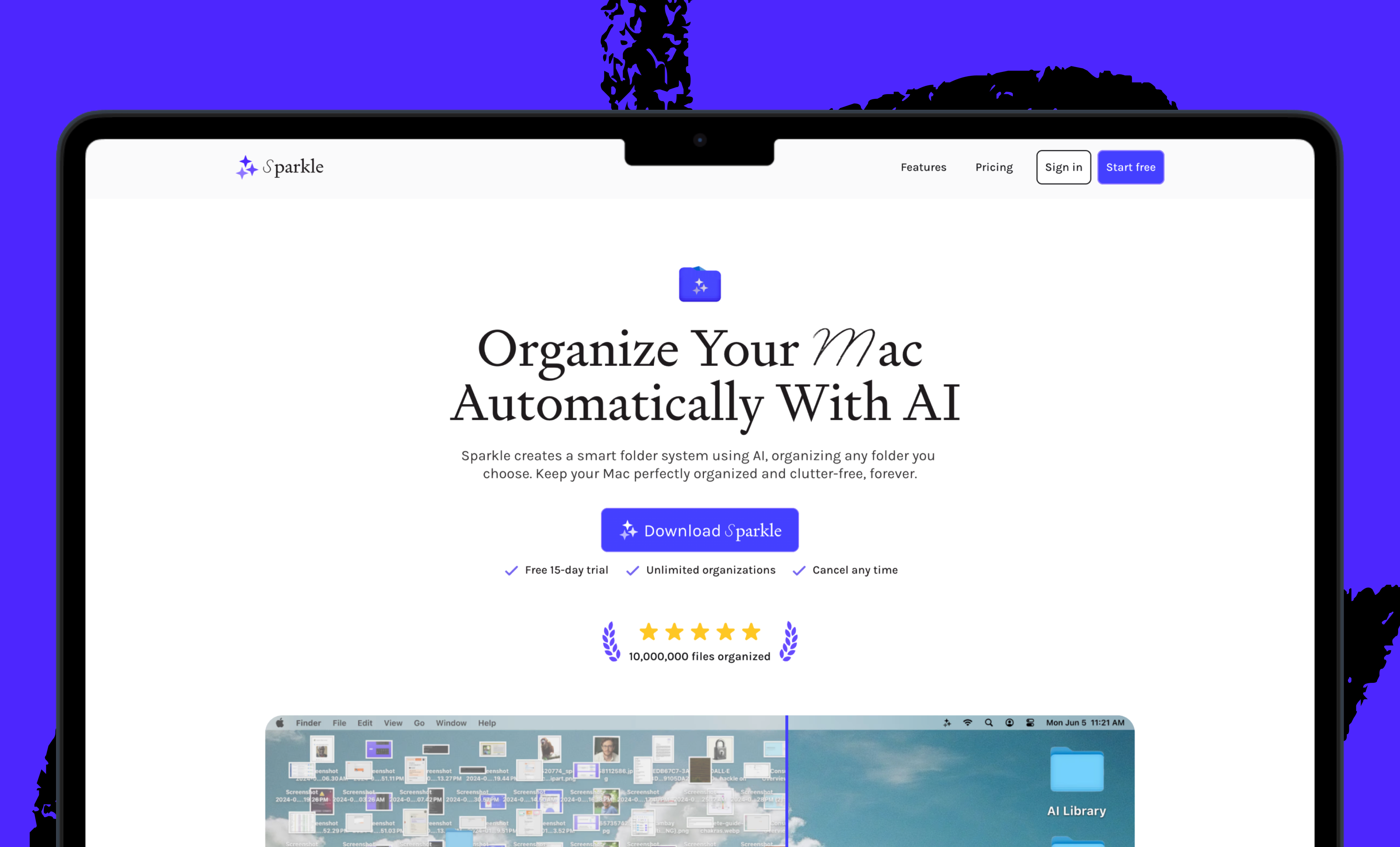
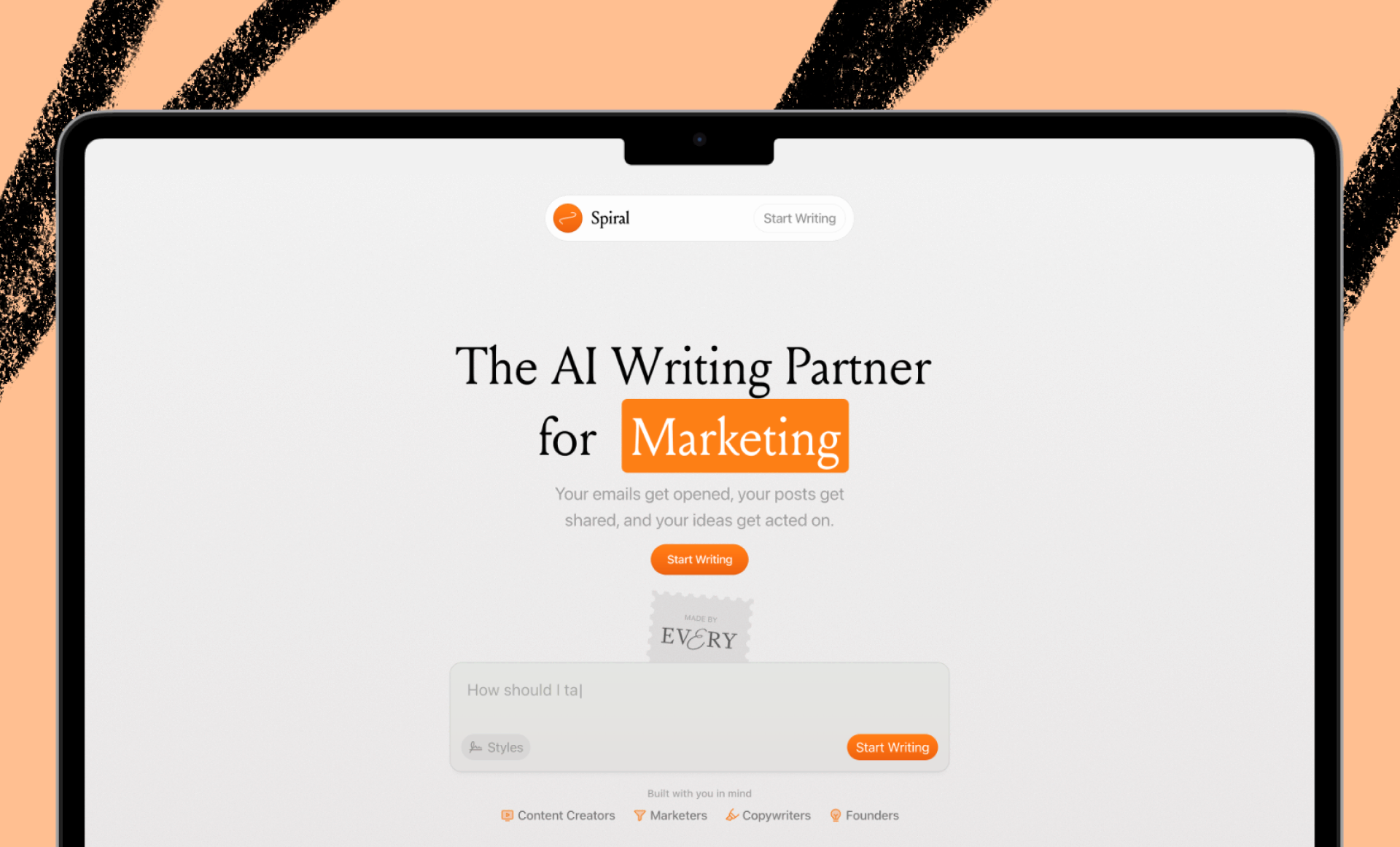
We build AI tools for readers like you. Automate repeat writing with Spiral. Organize files automatically with Sparkle. Write something great with Lex. Deliver yourself from email with Cora.
We also do AI training, adoption, and innovation for companies. Work with us to bring AI into your organization.
Get paid for sharing Every with your friends. Join our referral program.
The Only Subscription
You Need to
Stay at the
Edge of AI
The essential toolkit for those shaping the future

"This might be the best value you
can get from an AI subscription."
- Jay S.
 Every Content
 AI&I Podcast
 Monologue
 Cora
Cora
 Sparkle
 Spiral
Join 100,000+ leaders, builders, and innovators

Email address

Already have an account? Sign in
What is included in a subscription?
Daily insights from AI pioneers + early access to powerful AI tools
 Front-row access to the future of AI
 In-depth reviews of new models on release day
Playbooks and guides for putting AI to work
Prompts and use cases for builders
In-depth reviews of new models on release day
Playbooks and guides for putting AI to work
Prompts and use cases for builders
In-depth reviews of new models on release day
Playbooks and guides for putting AI to work
Prompts and use cases for builders
In-depth reviews of new models on release day
Playbooks and guides for putting AI to work
Prompts and use cases for builders
 Bundle of AI software




 Scott Nover


 Reviews of new AI models on release day
Comments
Don't have an account? Sign up!