



 March 27, 2024


The transcript of How Do You Use ChatGPT? with Nicholas Thorne is below for paying subscribers.
Timestamps
- Introduction: 00:48
- How AI can make you a more effective founder: 12:10
- Live demo of Audos! 17:01
- Why Nicholas built an AI tool to enable entrepreneurs: 27:11
- How Audos puts you in “edit mode” instead of “create mode”: 28:37
- Tools to gather customer feedback, generated by Audos: 31:29
- How Audos actually works: 36:15
- Nicholas uses ChatGPT to prototype a new feature: 38:47
- How to establish checks and balances while using ChatGPT: 45:54
- AI as a force for pushing entrepreneurship to new heights: 1:00:37
Transcript
Dan Shipper (00:00:00)
There's this sort of end-to-end process of, start with a couple of questions to a deck, to a website, to a little wizard that can help you modify a couple of different things.
Nicholas Thorne (00:00:09)
I hope you're not tired of all the AI because unfortunately the answer to it is that we use a lot of AI to make—
Dan Shipper (00:00:15)
Why did I know that was coming?
Nicholas Thorne (00:00:17)
I've never taken a computer science class in my life. I don't know anything about computer science. Prior to ChatGPT, I never particularly programmed anything. ChatGPT has been completely revolutionizing to me, of being able to write code. For programmers, I know that what I create is not code, but it does function, it does work, and it does deliver a result.
Dan Shipper (00:00:35)
This is truly wild.
Nicholas, welcome to the show.
Nicholas Thorne (00:00:50)
Thank you for having me, Dan.
Dan Shipper (00:00:52)
I'm excited to have you. So, for people who don't know, you are a close friend of mine. You are the general partner of the incubator Prehype, which actually incubated—or really was where Every came from, where my first, not— my first company was 10 years ago. Where Every came from is from Prehype, so I owe you and Henrik, the other partner, a big debt of gratitude for that. And in addition to—
Nicholas Thorne (00:01:32)
The best types of debts of gratitude are when the other sides of the coin feel that they are the ones who owe the debt of gratitude, so I assume we’re a mutually assured destruction here.
Dan Shipper (00:01:45)
Or gratitude. Pick your poison.
Nicholas Thorne (00:01:47)
That gets a little too close to MAGA, so we’ll stick—
Dan Shipper (00:01:53)
So, you have incubated— I mean, Every is obviously one of your illustrious examples, but you've also incubated 50 other startups, including BarkBox, Ro, Public.com, For Them, Ferry, and Headway. And one of the things that I think is most interesting about you is you've been very early to the two biggest technology trends over the last decade and a half. So your first company, Basno, was an electronic badge company before NFTs were a thing. So totally called the NFT thing 10 years ago-ish.
Nicholas Thorne (00:02:35)
Yeah. Laughably so. I have to basically say to everyone who comes upon some version of that conversation that, unfortunately, NFTs pre-blockchains are the most laughable sentences you could imagine.
Dan Shipper (00:02:54)
Yeah, I guess you were too early in the sense that the blockchains were not around, but still you had the concept.
Nicholas Thorne (00:03:02)
At least we were mining bitcoin as a result of it and mined a block. So nycbitminter is in the blockchain.
Dan Shipper (00:03:08)
There you go—part of history. And then you were also just really into GPT-3 in 2020-ish.
Nicholas Thorne (00:03:18)
Yeah. Fall 2020. Yeah.
Dan Shipper (00:03:20)
I gotta say when you were first starting to get into it, I was like, this is kind of interesting, but I don't know, Nicholas is off the deep end again. And you were so right. You freaking called it. One of the really interesting things about being so early is I think you've been able to really understand what these tools are useful for and apply them in your life and in your business. And at Prehype, your job is to start and incubate companies. But what you've done is you've actually gone and started a new company to help do more and better incubations with GPT-3, or GPT-4 now. And it's sort of like this interesting GPT-all-the-way-down thing where you're using ChatGPT to help you build the business, the business itself, the product itself uses uses the GPT API to serve your customers, and your and your customers are using ChatGPT or the GPT API to build their businesses. So you're using AI to the fullest extent that I think you possibly can and the result—
Nicholas Thorne (00:04:39)
Yeah, maximalists or whatever the word is.
Dan Shipper (00:04:40)
Yeah, and I think the results are really sort of speaking for themselves. You told me in the pre-production call that your goal is to help people go from zero to business, help your customers go from zero to having a business as quickly as possible. And with AI that takes like three days now on average where it used to take a month or just wouldn't happen at all because they didn't have the skills to do it, and you're basically in this in this place with this company, it's called Audos, where you can't keep up with demand and you have thousands of people looking to pay you to help you build their businesses, and with a 48-hour payback period, it's kind of a crazy thing that you've discovered. And what I want to do today is go through this business that you've built and then talk about how you've built it with AI, and then how the product itself works with AI to serve customers ‘cause I think it's this end-to-end use case of, I want to start a business with AI and I want to learn how to leverage it to build stuff and, even if I don't know how to code, and to make products and make money online. And I think you're the perfect person to help walk people through that ‘cause that's literally your job and you've done it yourself.
Nicholas Thorne (00:05:52)
Yeah. I mean, as you're saying, the interesting part to me in just reflecting on it on the fly is there's both AI native in our capability set—the way that we work is AI is everywhere—and then, in a way, we serve a customer and our interaction with our customer AI is super native. So we're sitting on both sides of that trade, which is very purposeful, inasmuch as we have been trying forever to just remove as much of the edifice between founder and customer as possible. That's both the advice I would give other founders, especially in the earliest, earliest phases to be as tight to your customer as possible. And you do that in two ways: One is obviously by trying to talk to them and spend time with them. And so AI as a conversational force is an incredible power for staying close to your customer. But then you also do that by not getting sucked back into the organization as much as possible. And so, if you can imagine the amount of capabilities that if you can turn them over to AI and you don't have to hire people that you then have to manage and spend time with, well, then, definitionally you stay close, tighter to the customer too. And so it's both because of the way you interface with people and by not getting drawn back into the org that you stay close to the customer. So, for sure, we're just kind of AI everywhere, not as a buzzword, although happy to benefit from the buzzword if it's a benefit, but also just because I think it's a great way to spend time with customers.
Dan Shipper (00:07:30)
That makes total sense. I would actually really love—can you show us?
Nicholas Thorne (00:07:32)
Yeah, let's do the normal—
Dan Shipper (00:07:35)
Yeah, the business that you built and show it to us a little bit.
Nicholas Thorne (00:07:38)
As you mentioned Our core business has been helping entrepreneurs figure out what company to start next, and we've tried a hundred different ways to do that. And but by calling it 2020 and having been in that rough business for a decade that looked like maybe we could a few times a year, help someone start something. And that was because A, we needed to have a good relationship with them and get to know them and these things take time, but also it's because practically speaking, there was a lot of work, in the way that we were doing it, to kind of help someone go from thinking about a couple of different business ideas, framing them up in a consistent enough way that you could even kind of compare them apples, going out and finding some early customers for those things and talking to them and synthesizing the results of those conversations, and then going out and finding some more customers who are hopefully strangers and talk talking to them in some way, probably less of an actual conversation, more of some sort of lead acquisition flow, all towards like helping create this dynamic for a founder where they were, as much as possible, not kind of a priori making judgments about which of their ideas were good ones, but instead, just building some early momentum and seeing if anything kind of just stuck. Ad absurdum, we feel like bad pickers of ideas—or maybe not bad ones, but that picking is hard—and that if you can just go ahead and try things that you end up learning a lot and getting first-party insights. And so everything about what we've built with Audos is to try to make that set of processes available to a much broader group of people. We actually didn't set out to do that. We set out to just make our own process more predictable and repeatable, et cetera. And the natural result of it, of course, is that if you encode it in software, then you can do more, and so—
Dan Shipper (00:9:40)
I want to stop you right there. I want to stop you right there. ‘Cause I think you just said something really profound that that I've encountered too, and it sounds like we're sort of— I always love when two people have similar insights from maybe without having talked—they've come to the same conclusion and the thing that you said about we're not great pickers or maybe we're average pickers or whatever but it's always better to to go out and try something to know if it works. The thing that resonates so much for me about that is—I think it relates very deeply to what you're probably about to show and also what I've seen AI do for people. When I try to figure out, when I try to get that core of what's most useful is that for any project that you want to do, you can go and show how it would work and start getting feedback on it and getting hype—whatever you want, whether that's software, whether that's filmmaking, whether that's art, whatever, you can just do that in a couple hours, whereas before either it would have taken a long time and you would have had to have a lot of skills and a lot of whatever, or you would have had to be able to convince someone to invest in you to fund your movie to get all the cameras and the director and whatever, or you would have had to get someone to fund you to go and hire engineers to make your app. And I think the one of the core things that's happening is we're moving into this world where anyone can just make that little thing to show their work to show someone how amazing the thing in their head is without having to convince them. And it's really hard to convince people of things, but if they can see it, you might get a reaction and things might get funded or get made that never would have been able to be made before. And I think that's sort of what you're doing.
Nicholas Thorne (00:11:30)
Yeah. There's the prototype-is-worth-a-thousand-decks type of mindset in there, and I completely agree. And we've been working on a book, and one of the things that I just will call out to that is to your point here is that to me one of the profound implications about of that dynamic is not just true in terms of how you get started with things, but it's also true of how you operate them over time. And the point being, yes, that's, that's true of how you get started. It's also true of once you're starting and the practice of continuing to build things because, imagine that one of the reasons that an entrepreneur goes from being an entrepreneur to being a CEO with big-company problems over time is that they are no longer the first-draft-maker within their company. And so one of the things that we have been thinking about is what happens if you can be the first-draft-maker longer as someone working on something. And arguably in our view, it helps you stay close to your customer, which is important, but in general rarely is it that— I think we can all intuit that if the founder or CEO could stay close to their customer longer that that would be very valuable, right? And it doesn't mean that they would have all the ideas, but at least they could have contributed more of the ideas, right? And so anyway, these kind of hybrid concepts in my mind are really important in terms of both sitting in the customer service seat longer, I guess I'd call it, i.e., just being a little bit closer to the conversation that your organization or your business or product or project is having with your customer. If you can just hang on to that a little longer, stay a little bit closer to that, obviously your information flow improves, but then, to your point, if you can use those tools to create more first drafts, just the fidelity of what you create as a CEO is less of this— We talk about this concept that if you sit there as a running a big organization and all you do is you create this big of vision and then other people go off and create proposals as to how to achieve it. And then there's the quote unquote big meeting at the end that's just a very difficult organizational model to make work. Or it works, but it’s definitionally a big-company thing. And so I'm so interested in what happened. I mean, this is looking forward, really, it's like what happens when you have companies where the founder-CEO and/or the founding team is just more often and, for a longer period of time, the ones making the first drafts, then what? I think what you'll find is there are really interesting downstream implications of that.
Dan Shipper (00:14:16)
I love that. No, I think that's great. It reminds me a lot of— It's not the exact same thing, but there's that book about how Apple builds products and it's all about prototypes and demos. And it sort of reminds me of that a little bit.
Nicholas Thorne (00:14:29)
Yeah, 100 percent. Totally. Okay, so Audos— So, I was kind of like going into this background of Audos. So, Audos currently lives primarily— And I guess I'll just do a quick demo here, Dan, and then you yell if something we should do differently. So Audos currently lives primarily in an Instagram DM. And so it’s an AI, you can imagine—
Dan Shipper (00:14:51)
Wait, why'd you start there? So it's a DM AI bot. Why'd you start with a bot in DMs?
Nicholas Thorne (00:014:55)
Yeah. We started with a bot in DMs because distribution, what do you know matters, and Facebook has introduced, as of like last fall, a product to acquire people straight into a conversation. And that was a dream come true for people who spend a lot of time using the word “talk to your customers.” If you're in the business of trying to talk to your customers, well then, where do you do that? Where you can have kind of a persistent conversation and not have to install some new behavior for people where they come into your app, which is laughably difficult to do, so I think the question was, could we actually just make a version of a chat experience that would live inside of Instagram so that we could both take advantage of Facebook's products as well as, frankly, just do something that was natural and native to our customer. And so, that's where that decision got made for us. We had these onsite versions, in fact, at some point I was talking to a journalist and they're like, why does this work this way? I'm like, well, what are you talking about? And they're using some version of a product they found online from six months ago. I was like, oh, crud, that's not the right one, you need to go over to Instagram. And so, yeah, we start with a conversation, so people find us there. We do have a following and, I don't know, we’ve got thousands of followers who have traditionally. We were publishing these business-book little videos and shorts, and that was just to build up a little bit of an audience and whatever, but people do come and find us there. But mostly we just acquire people. We run ads that say varying versions of, do you want to start a company or—
Dan Shipper (00:16:41)
Do you have an example?
Nicholas Thorne (00:16:43)
Yeah. I mean we run ads that are things like, “That little business idea you have it'll still be an idea next week,” or “You can let our AI make you an AI and go from zero to business.”
 Subscribe to read the full article
The Only Subscription
You Need to
Stay at the
Edge of AI
The essential toolkit for those shaping the future

"This might be the best value you
can get from an AI subscription."
- Jay S.
 Every Content
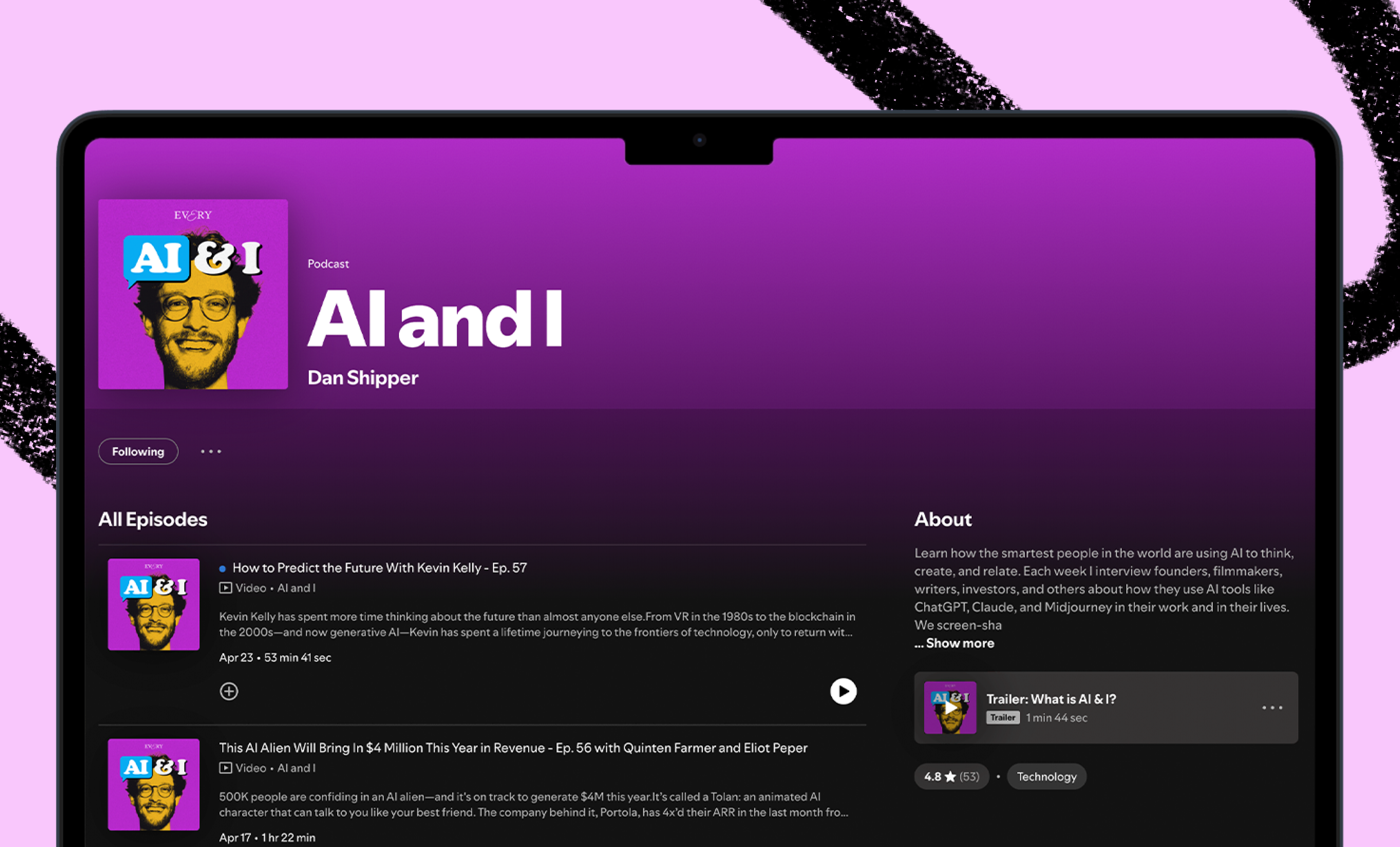
 AI&I Podcast
 Monologue
 Cora
Cora
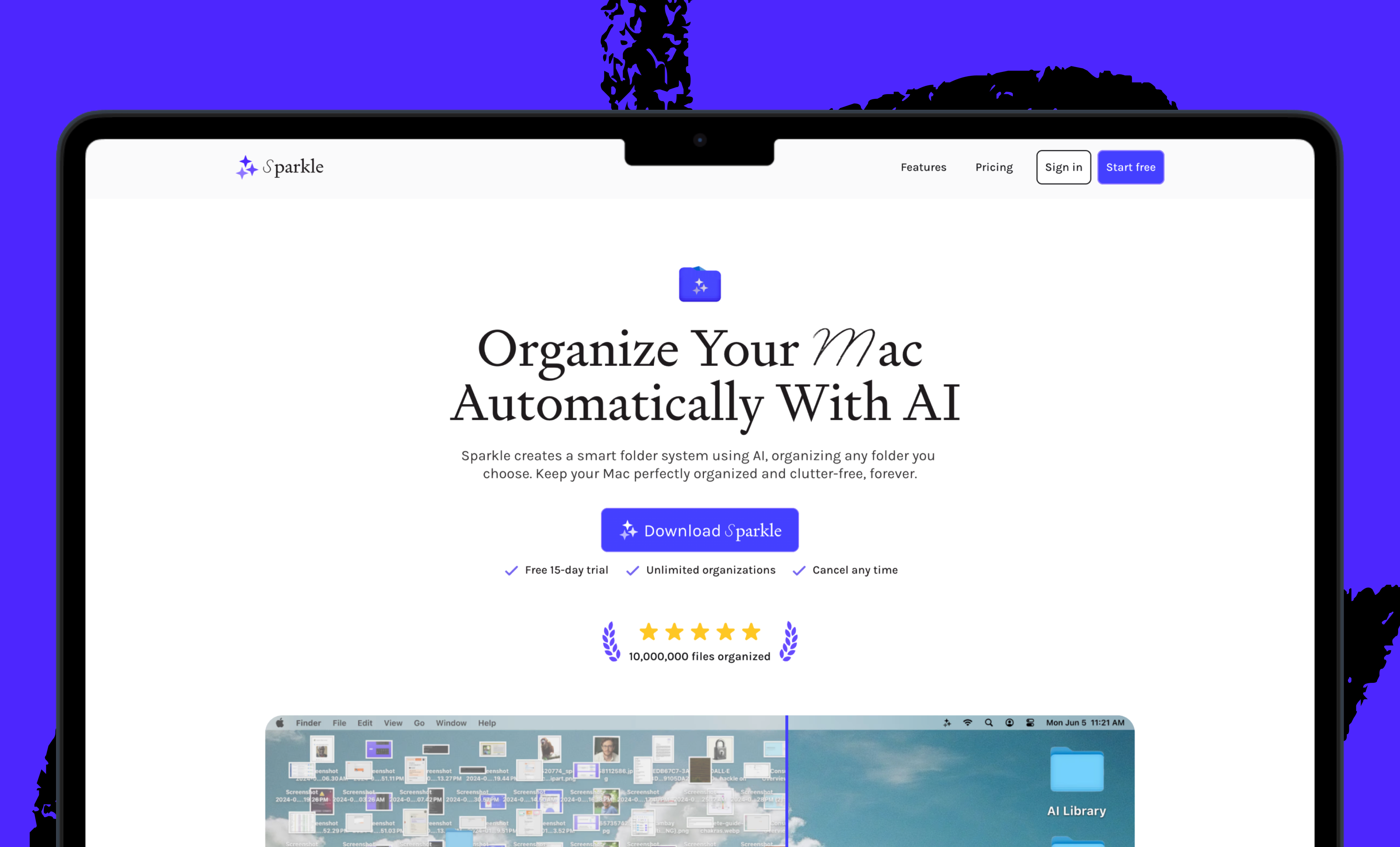
 Sparkle
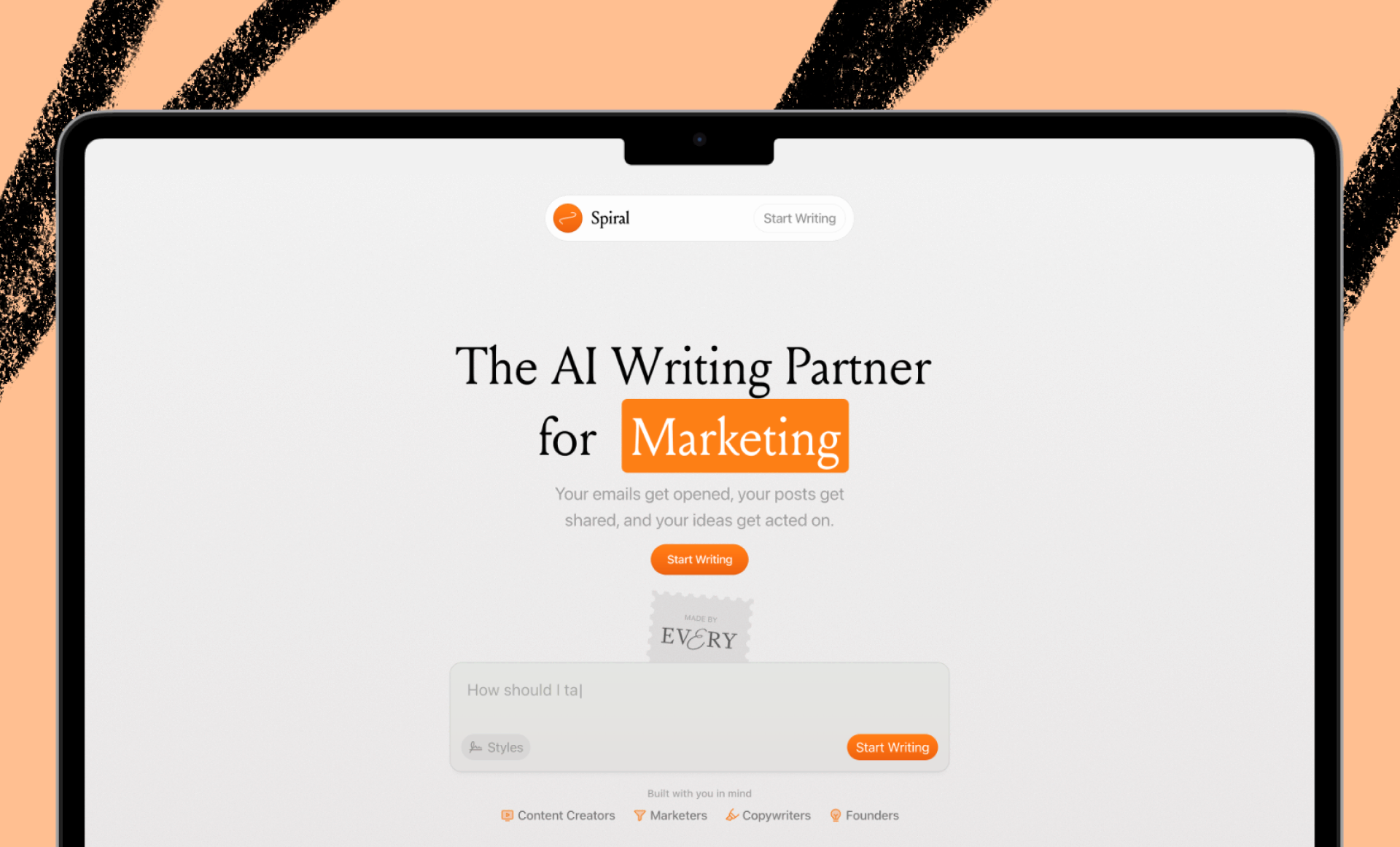
 Spiral
Join 100,000+ leaders, builders, and innovators

Email address

Already have an account? Sign in
What is included in a subscription?
Daily insights from AI pioneers + early access to powerful AI tools
 Front-row access to the future of AI
 In-depth reviews of new models on release day
Playbooks and guides for putting AI to work
Prompts and use cases for builders
In-depth reviews of new models on release day
Playbooks and guides for putting AI to work
Prompts and use cases for builders
In-depth reviews of new models on release day
Playbooks and guides for putting AI to work
Prompts and use cases for builders
In-depth reviews of new models on release day
Playbooks and guides for putting AI to work
Prompts and use cases for builders
 Bundle of AI software




.31.48_AM.png)
 Rhea Purohit

 Dan Shipper
 Reviews of new AI models on release day