



 February 14, 2024


The transcript of How Do You Use ChatGPT? with Steph Smith is below for paying subscribers.
Timestamps
- Introduction 01:12
- Leveraging ChatGPT to generate great ideas 22:11
- Why ChatGPT is ideal for understanding complex concepts 29:29
- How to use ChatGPT to organize huge datasets 48:00
- Shark tank! Dan pitches Steph business ideas 1:00:41
- Steph’s first move while validating a business idea on the internet 1:07:51
- What to look for in a customer review 1:11:09
- Tips on secondary keyword searches 1:17:45
- How to gather market data from a simple Google search 1:26:24
- What type of trend charts depict a good market 1:31:55
- Using SEO tools to find useful insights from Reddit: 1:34:11
- How to gather data about competitors: 1:42:37
- Lightning-round questions from X 1:55:51
Transcript
Steph Smith (00:00:00)
So all I said in this case was a really simple prompt: “Hey ChatGPT! Could you explain what dark matter is in the voice of SpongeBob?”
It starts literally with brackets, says, “Imitating SpongeBob’s enthusiastic and playful voice…”
Duh, duh, duh. Dark matter.
By the way, how great is it that they label your chats so cleanly?
Dan Shipper (00:00:16)
Wait. I have to stop you. Are you using ChatGPT 3.5? I’m just going to say I’m disappointed.
Steph Smith (00:00:24)
I know. I’m sorry.
It says, “Use an LLM to de-bias your content.”
Dan Shipper (00:00:28)
Can you put in one of my articles?
Steph Smith (00:00:29)
Yeah.
Dan Shipper (00:00:30)
This author’s bias is evident in his optimistically view of AI’s role in the future economy.
Steph Smith (00:00:35)
I have a pretty fundamental question for you. If you don’t like the ear flaps, how were you envisioning being warm?
Dan Shipper (00:00:43)
I’m just the ideas guy.
Steph Smith (00:00:48)
I feel like there’s not search volume for this yet.
Dan Shipper (00:00:50)
I’m just taking it on the chin this interview. My writing is biased and my ideas have no search volume. I feel bad—officially.
Dan Shipper (0:01:12)
Steph, welcome to the show.
Steph Smith (00:01:16)
Thanks for having me. This is exciting.
Dan Shipper (00:01:18)
I'm so excited to have you here. For people who don't know, you are a prolific online creator. You're the host of The a16z Podcast—an amazing podcast. You're the author of Doing Content Right, which is about writing, creating, and scaling a blog in 2023.
And you are the creator of Internet Pipes, which is, I think, the most detailed toolkit course I've ever seen for doing research on the internet. I binged it all yesterday and it was just like—it was amazing. I loved it.
Steph Smith (00:01:47)
That was the goal. Before I shipped it, I was like, are people gonna get any value from this, but the whole point was just, hopefully, you go through it and you're just like, oh my god, I didn't know this existed, or you just end up down some rabbit hole.
Dan Shipper (00:01:59)
Yeah, if you're a person who likes internet rabbit holes, it's the the most amazing thing to spend time with. So, thanks for making it.
I want to start with sort of, in doing research for the episode, what I found to be what I think is sort of an underlying theme in the work that you do, and how you think about things—and it actually aligns with an essay I wrote recently, which I did not have you in mind when I wrote it, but I think it really works pretty well. So I want to read you like just a little bit of that essay. And then I want to ask you kind of about that.
So, this is the opening. It says, “Time isn't as linear as you think. It has ripples and folds, like smooth silk. It doubles back on itself. And if you know where to look, you can catch the future shimmering in the present. This is what people don't understand about visionaries. They don't need to predict the future. They learn to snatch it out of the folds of time and wear it around their bodies like a flowing cloak.”
And, like I said, when I wrote that, I wasn't thinking about you, but I actually think this is very core to your work. And the underlying premise of that passage, and I think your work, is that the future isn't evenly distributed. It's here and it's on the internet. And all you have to do is like go and find it.
Steph Smith (00:03:11)
It’s there—yeah.
Dan Shipper (00:03:12)
And if you have enough curiosity and enough patience and enough intuitiveness, you can find it. And if you're looking for your next big idea, the internet is sort of like the place to start. So I want to just talk about that. Tell me about that realization or that thread in your work and how you came to it.
Steph Smith (00:03:30)
Yeah. The coolest part is that that was always true, right? Time is on this spectrum. And, to your point, some people look at visionaries and they saw the future early. There's this really cool video from 1964, I think, where Arthur C. Clarke basically talked about this idea of remote work. Of course, that term didn't exist back then. But he basically was like eventually, maybe even in 50 years—which is actually kind of funny because that was the time frame that it ended up being—people can work the same way in London and Bali and Tahiti. And so that's one example of just, again, this is not a new concept that people see the future early, but what is a new concept is the internet, which allows everyone to kind of get access to that data that also didn't exist back then. Right?
Coming back to your question about when did I kind of wrap my head around this idea that the future is actually present in these little pockets online is: My first job in tech, I ended up working a lot within the SEO sphere. And it's funny because that sphere sometimes gets some hate because people are like, oh there's all these black-hat tactics and people doing content farms and things like that, but if you really just boil things down and you think about what search engine optimization is, it's billions of people who use this website, Google, the biggest website in the world, and every single day they go to Google and they tell it what am I looking for; what do I not understand; what are my wants, needs, desires all baked into these queries. And Google's just one example, right? Many other websites kind of bake this information about billions of people as well, whether it's Reddit or Wikipedia or Twitter or the apps that you have on your phone.
And that's what's so cool is that not only do those websites exist, but now there's tools that help you understand that information. And, you could say, democratization is so nice because if you think about it, even just like a couple decades ago, if someone wanted to get information about the world, it's the people who were rich enough to run a study on a mass of people, or the people confident enough to walk up to someone and ask them questions. But today it's just all in these data sets online. I think that's really cool.
Dan Shipper (00:05:48)
Yeah. I think it is absolutely amazing. And you're so good. At any site, you have a bunch of different tools—for Reddit, you have all these different graphing libraries that you found. And I'm sort of curious, I feel like AI in general, and maybe ChatGPT in specific, turbocharges some portions of that. I'm curious, how and if that has made its way into your research workflow.
Steph Smith (00:06:13)
Yeah. I mean it's limited in my workflow, but the concept is certainly there. And you could say it's the extension of everything I just said, where if you think about keyword research, there are tools like Ahrefs that help you understand the keywords and their volume and their secondary keywords, which tells you what else someone's interested in. But imagine that turbocharged—that literally is AI, right? That is something like ChatGPT, because it's not just scraped Google, it’s scraped all the websites we just talked about, and not only has it done that, but it's turned this massive data set into—some people joke that like the world's intelligence is now in a CSV, right? It's kind of funny, but it's that is the natural extension. And then now we're seeing totally new interfaces where someone maybe who couldn't make sense of a data set now can just query and ask questions. Right?
Dan Shipper (00:07:09)
That's me. I definitely couldn't have made sense of a data set before.
Steph Smith (00:0:11)
But even if you think about the precursor, some of the websites you mentioned, one of them is this cool map of Reddit. To me, that's also someone who, similar to ChatGPT, created an interface that made this massive data set of millions of subreddits into something where it's, oh, now I understand that if someone's on the subreddit DigitalNomad, they also care about Southeast Asia, and they care about lifestyle design, and they care about freelancing.
And, again, that's someone who's introducing a user interface to make sense of the world that again, now we have this data set for. And I think AI is, both the interface—but also just the sheer increase in data also matters there, right?
Dan Shipper (00:07:53)
Right. That makes a lot of sense. I want to get into how you specifically use ChatGPT in one second, but I have one other question that's just sort of popping into my head, which is, I feel like whenever you talk about finding things on the internet, it seems to be about like finding sort of business ideas or opportunities or trends, which I love. It's so interesting to see all these little things that are starting to trend you're like, oh, maybe I could make a make an app or make a website or whatever. But then, I also think you seem to also have this fundamental curiosity about what's going on on the internet. And I'm curious what that brain space is like, what is it about doing this kind of deep research that gets you.
Steph Smith (00:08:30)
I think it's because the most niche things on the internet are no longer niche, and that in itself is exciting because every single one of us has the very high-level interest that we will talk to someone else about—maybe it's your favorite sport or the mass book that someone else might find interest in, but there's also all these little things that, because of the scale of the internet, there are now enough people who might care about something. And the second-order effect of that is that I think we actually discover things that would never have been created before. At the very beginning of Internet Pipes, I talk about just the weirdest things like someone sending garlic bread to space, or someone creating this maze for a squirrel, and that latent interest maybe always existed, but you would never be motivated enough to create something like that because you'd be the only one to enjoy it. And, again, the scale to reach enough people who might care about something just actually changes the paradigm of what people are willing to do. And I think that's so cool. And so, yes. I think there's a deep appreciation not just for a trend that someone can make money with but the creators that are emerging that just do cool stuff for the hell of it. And the internet actually enables that.
Dan Shipper (00:09:45)
I love that. There's that—I don’t know if it’s an urban legend or if it's actually real, which is the reason why cats are popular on Reddit is because before Reddit, no one had any place to share their cat because cats are antisocial creatures. But finally there was like a place to share what your cat was doing. And it was Reddit because you could take cat pictures and—
Steph Smith (00:10:05)
Yeah, no. I love this. I talk about these not-so-niche YouTube channels and—you can apply that, there’s not-so-niche websites too. One of them is this YouTube channel just about Japanese passenger trains.
Dan Shipper (00:10:18)
Can we see it?
Steph Smith (00:10:19)
Yeah. I need to remind myself of the name, but it's just these Japanese passenger trains and they have only posted I think 30 videos and they have 1 million-plus subscribers and I'm just pulling it up now. It's called Travel Alone Idea and they started in 2021, so it's not like one of these phenomena where someone was early to a channel like YouTube and they got that benefit. They have 240 million all-time views, 1.5 million subscribers—and yes, again, only 30 videos with the average monthly views apparently being 700,000. And the best part of this is—by the way, this is not a scenario either where someone is just the best editor and has really figured out how to nail the algorithm. This person has no narration, there's no sound, the edits are minimal, and it is this person walking around these Japanese passenger trains, but again, there's this fascination I have with the fact that there are enough people who like this that this channel is insanely successful.
Dan Shipper (00:11:34)
I have just decided that I don't like ChatGPT anymore. I'm really into trains now. If I can get this many views with only 30 videos.
Steph Smith (00:11:42)
Well, I mean one of the reasons I'm bringing this up is, like I said, I think it kind of defeats a lot of the common mantras around content around like, oh, well, you have to find a new channel and be early to it, or you have to master thumbnails. I mean, these are not good thumbnails either. It's just a picture and a red arrow. Right? But that's why I actually think some of these tools on the internet are also very interesting because they help you surface, is there actually demand for this thing or interest in this thing?
Dan Shipper (00:12:08)
There's another one that you shared I think it's called TVTooFar.
Steph Smith (00:12:12)
Yes. TVTooHigh, TVTooLow. And the most internet thing ever is—so, TVTooHigh is the largest one, and I think people saw that subreddit and—
Dan Shipper (00:12:23)
For people who don’t know what it is, tell us what it is.
Steph Smith (00:12:25)
Yeah, so TVTooHigh is a subreddit where—I included this in my like original note in Internet Pipes because I was like, this is just the most internet thing I've ever seen. And shout-out to fellow creator Pat Walls. He's the one—I saw he shared on Twitter. But this subreddit has a 180,000 subscribers to it and it's just people posting pictures of TVs that are too high. So, I have them up on my screen. And again, it's just TVs that are apparently too high. Some of them are obvious and some of them are less obviously too high. But then, the nature of the internet, someone saw this and then they created r/TVTooLow, r/TVTooFar. And then, best part is that there is a subreddit TVJustRight, but it's private. And I just thought that was the best.
Dan Shipper (00:13:17)
That's great. I love that. And for people watching or listening who are like, why are we talking about this? What is the point of this? You have this thing that you say, which is like, “don't overlook silly,” which—tell us what that means and why you think it's actually important to be aware of things like TV Too High.
Steph Smith (00:13:34)
Yeah, so I mean, in this case, I don't know. Maybe someone listening can invent a business idea around this, but I think there is a large part of all of our personalities, which is not oriented around, let me be really serious and figure out an opportunity right now. It's like, let me laugh about this thing, let me, again, watch a Japanese passenger train, or a bunch of other YouTube channels about someone who's picking locks or is like a toe doctor or all these weird things. And there's a weird part of all of us. And by the way, if there is interest from all of these people, which is proven by the scale of some of these things, I I just think it it's a window into what people really want and if you can understand what people really want, maybe there is again a direct spinoff in terms of how you can leverage it. But I also think it helps you just create better things in the world and also it's almost the second- or third-order effect where if you follow these trails, I think you actually understand your fellow humans a little better.
And then, maybe not directly, but eventually you will create something. A good example is a creator, Neal Agarwal. For me, if I think of the creator that I think epitomizes the internet the best, it is him. And he just creates these websites at neal.fun. I'll pull it up. N-E-A-L dot fun. And each one of these projects, I bet his first one, no one cared about, and a second one maybe got some traction, but he still was making no money. But he's what he's got 20-or-so projects here. And now this is his job. Now he actually makes money from this. And, again, I think it's just this, don't—another way to put it is if you ignore silly, you are so focused on what is immediately actionable and what you can immediately take advantage of. And I think that's just a very short-term, myopic view of the world.
Dan Shipper (00:15:22)
I totally agree. I feel like so much of the best stuff is just wandering through random stuff that for whatever reason at first, you can't really understand why and then years later, it comes together in this really amazing product or book or whatever. And so having too much of an emphasis on what's practical today, you miss out on making amazing stuff later, and also it’s just more fun.
Steph Smith (00:15:46)
I was gonna say, a lot of people, if you think about, especially in our creator space, I think, can be really myopic and being like, what's the newsletter that I think has the most demand or something like that, or how can I create something that goes viral immediately, and then they just have no staying power because they're not having any enjoyment.
Neal Agarwal is one example, but the creators I also really respect are the people who you can tell actually enjoy what they're doing and have a deep fascination with it. It's not just about having fun, I actually think this is interesting and that rubs off on other people.
Dan Shipper (00:16:20)
Totally. Totally. So I think this is a good segue into ChatGPT. Yeah, let's do it. So what I want to do first is I want to just talk to you a little bit about how you use it. We're going to get into us doing some sort of mutual explorations and all that stuff. We have a lot of good stuff planned. But yeah, tell us at a high level what do you use it for? How does it fit into your life? And maybe we can go through some chats.
Steph Smith (00:16:44)
Yeah. So I broke this down into what is this—seven different ways that I currently use it. And what was interesting about this exercise is that I hadn't really thought about that before. Currently, ChatGPT is not my go to for anything consistently, as in, I don't like wake up and know, okay, for this kind of problem, I automatically go to ChatGPT. But now that I've broken this down, I'm like, okay, I actually have a framework to think about when I reach for it more often—and I want to reach for it more often, but these are the different areas.
So for me, one of them is idea generation. And that doesn't mean just broadly idea generation. But for example, I threw a meetup recently for people at Internet Pipes. And I was like, I want to make this internet-themed. And so I had some ideas, but, ChatGPT is really good at kind of helping me extrapolate from a base.
Another thing is just helping me understand complex things in simple ways. And that's where you can bring in it. And I once asked, “Help me understand dark matter in the voice of SpongeBob SquarePants,” and it did it really well and it was enjoyable.
Also, practical things. So every time I'm doing anything related to code, I actually find it much better than Stack Overflow because it actually walks me through the problem or whatever. Cooking, unshrinking sweaters, things like that.
Another area is debates and it's not so much that I'm looking to debate ChatGPT. I actually want ChatGPT to give me both sides of a debate for something that I’m—every so often you feel like you have an inclination of, I have a strong opinion here, but I also have a feeling I don't know enough about this subject. So, I feel like it's really good for that, to just be like, here's the other side, help me see this.
Cleaning up data: I've only used it for this a few times, but it's actually really nice because you can kind of, unlike Google, actually structure or tell ChatGPT to structure and answer a certain way. I feel like that's one of the most underrated parts of really most of these AI tools is to say, this is the kind of answer I want.
And then, finally, the last two were—this is mostly for content, but just, the base for titles and intro, just to get something on paper. And then sometimes just for fun, I've had it write—the other day I had this deep appreciation for APIs on the internet, and just how much of our web is run by APIs. So I was like, hey, can you create like a sonnet for APIs? And it did, and it was pretty good. ‘Cause I mean, that's the kind of thing where it's like, I would never have spent my own time doing that.
And then the one thing that I have not gotten ChatGPT to crack is ASCII art. I mean, it makes sense why it can't quite do that yet. But, yeah, sometimes just for fun, just to be like, Can ChatGPT do this?
Dan Shipper (00:19:35)
I love that. I love that. There's a lot of good stuff in here. One of the things that I'm picking up, in the idea generation or understanding complex things or debates, it's like there's a mind-expanding aspect of the way that you're using it—or as a theme. I'd love to dive into a couple of those. Maybe we can start with some of the ways that you've used it for idea generation. Do you want to show us a few chats?
Steph Smith (00:19:56)
Yeah. Why don't I just show you. I'll start with—by the way, how great is it that they label your chats so cleanly?
Dan Shipper (00:20:04)
Wait, I have to stop you. Are you using ChatGPT 3.5?
Steph Smith (00:20:08)
In this case, I will say 90 percent of these were actually through 4, but long story short, I had enterprise account and then had to switch that for work. And then—
Dan Shipper (00:20:18)
I'm just going to say I'm disappointed.
Steph Smith (00:20:21)
I know. I'm sorry. But again, at least, I would say, for sure, over 50 percent we're done through 4.
Dan Shipper (00:20:28)
So you are a 4 user, but this is not representative of all of your ChatGPT usage.
Steph Smith (00:20:30)
This is actually a great example of just, humans are slow for silly reasons. I just think, if you think about probably the reason that people don't use ChatGPT enough, it's just pure friction and habits. And so this is an example of where I've just been too lazy to upgrade this account, and so I have my work account that I'll use for some things, and then I'm just like, yeah. It's okay. You can shame me. Everyone on the internet can shame me.
Dan Shipper (00:21:02)
I just have to. I am professionally obligated to point it out.
Steph Smith (00:21:05)
Well, you know what? It's helpful because now that you pointed it out, I won't get as railed in the YouTube comments.
Dan Shipper (00:21:11)
Okay. So tell us about this chat. Where did you start? Tell us what mindspace you were in and how you decided to do it and then what the prompt was.
Steph Smith (00:21:21)
Yeah, so, I was throwing a meetup for people who had bought Internet Pipes in San Francisco, and I feel like a lot of meetups are really bad at one, being in any way, shape or form special, right? It's just a bunch of people in a room and it's not memorable in any way. And then two, I feel like people don't learn anything or meet the right people, or really it just kind of comes and goes. And again, maybe that relates to the memorability of it. But I said, “Hi ChatGPT—.” By the way, do you always greet?
Dan Shipper (00:21:53)
I'm very nice to ChatGPT. Definitely.
Steph Smith (00:21:55)
Yeah, me too. Me too. But not 'cause of the whole eventual overlord thing. I think it's just, again, a habit.
Dan Shipper (00:22:02)
Oh, I'm just neurotic and when it takes over, I want it to like me.
Steph Smith (00:22:06)
So you are the looking-ahead, singularity, want to be in good standing.
Dan Shipper (00:22:09)
I like to plan ahead.
Steph Smith (00:22:14)
Okay. So I said, “Hi, ChatGPT. I'm hosting a meetup for fellow people who love the internet. I'd like to run a few icebreakers. What are some good ideas for splitting the group into smaller groups? I'd like to have it be fun and internet-related. For example—” Oh, this meant to say “by their favorite social media app and screen time usage,” which by the way, it's so nice that ChatGPT can like just ignore most of your typos and stuff. And by the way, I didn't even realize I asked this first, but another thing about meetups that I feel like often isn't good is just you end up in these random groups, so there's no sort of commonality and so I started with, yeah, “how do we break them up?”
Dan Shipper (00:22:50)
I want to stop you right there. Just on the prompt, I think there are a couple interesting things. You're giving it enough context—you're telling it a meetup, but, people who love the internet, I think, is a really interesting thing to give to it that someone might not think to do, but it really changes the output. And then I think you also gave it a couple of small little pointers, like splitting the group into smaller groups—you have a little bit of a vision for what you wanted to do and, I think, all that kind of stuff, or even examples like their favorite social media app or screen-time usage, all that kind of stuff is going to get you better results. And it's interesting to see.
Steph Smith (00:23:38)
Yeah. And by the way, I almost was like, should I split them by screen-time usage? But then I was like, I feel like that's shaming some people. But yeah, I think you're right that you obviously get better results when you give some guidance. And one of the reasons I wanted to share this one is because these are some really good ideas. At least I think so. I actually went with the first one, or some version of it where, basically, I had printed out a bunch of very popular memes that everyone recognizes, and I put them on different tables and was like, what's your favorite meme? And even though that's a very, very thin slice of like people's brains, I just thought it was an interesting way to match people. But I got this from ChatGPT. So they said “meme match-up, emoji charades, social media speed dating, tech time capsule, internet trivia challenge, profile picture puzzles,” and it keeps going. But the point is that it actually came up with some pretty good ideas for how to actually match people based on internet phenomena.
Dan Shipper (00:24:29)
Just one shot. You have one prompt and then you got an idea that you ended up using.
Steph Smith (00:24:32)
Correct. I kept going. But I always say, can you come up with more? Do you do that?
Dan Shipper (00:24:39)
I do that a lot. What I also do—and I actually picked this up from an interview that I did with Linus Lee, who's a researcher at Notion—is you know the redo button? It's that little circle with an arrow. I just click that like four times and then it'll just keep going.
Steph Smith (00:24:55)
So you always do the refresh, not “ask for more.”
Dan Shipper (00:24:57)
I mean, sometimes if I've done the refresh a few times and it's not giving me like new stuff, I'll do more, but I start with a refresh.
Steph Smith (00:25:02)
Yeah. In this case, I just said, can you come up with more? In this case I was really happy with the result, but sometimes you'll be like, oh, can you make them shorter? Can you like adjust some part of it? But in this case it just came up with more. So again, pretty good.
So actually, in this case, if you remember, my original prompt was actually, “Can you figure out how to split these people?” and not what to do with them, so—
Dan Shipper (00:25:28)
Oh, that's interesting. So it sort of got it slightly wrong, but it was still a good response.
Steph Smith (00:25:37)
It was like it knew what I actually wanted.
But I still wanted to split them up. So, I don't know, in this way, it got a little confused, but then, yeah, I asked it to follow back up on that. And then I think in this case I said “that are more tech-related.” And then, yeah, I mean, this one's not so crazy. At the end, I did decide to do some trivia as well. And I asked it to come up with some good questions. In this case, actually, I don't think I used any of the questions, but it helped kind of surface—you know when you see what you don't want? And so in this case, I felt like these were like really obvious questions about like, oh when was the hashtag invented? Or like, what does this internet acronym mean? And what I wanted is for people to come out of the trivia with not just new concepts, but a new appreciation for the internet, to be like, how cool is this, and so I then ended up coming up with my own questions, but with that realization.
Dan Shipper (00:26:30)
I think that's really cool. Yeah, I think it's such a common experience with ChatGPT is sometimes gives you the exact thing that you want. It gave you a little idea where you're like, yeah, this is great yeah. And then a lot of times it gives you something that's not actually right but in not being right, it helps you refine what you actually want, which is itself a valuable thing. And, that's sort of the benefit of this, always-on, always-accessible sparring partner is that kind of thing.
Steph Smith (00:26:57)
Yeah, and the nice thing about it is you get that same dynamic with humans, but with ChatGPT you can be so explicit and sometimes crude about, this is not at all what I wanted, and you can't really do that with humans.
Dan Shipper (00:27:10)
And ChatGPT doesn't get annoyed with you, and it's never asleep and—
Steph Smith (00:27:13)
I know, I know. There's so many reasons why it's a 10x experience.
Dan Shipper (00:27:18)
I love that. That's really cool. Anything else on the idea-generation stuff, or should we go on to the next thing?
Steph Smith (00:27:24)
Let me see. What else did I put under here? Well, sometimes it helps me—not so much in this practical way of, help me think of an activity, but sometimes I just need it to kind of fill an idea that is kind of spinning in my head. And so one example of this is I had this realization a while ago that our phones are so dynamic in that you think of all the different appliances, like a flashlight or a measuring stick, or—I'm trying to think of other examples—a camera, right? All of those things are physical appliances or goods that independently existed. And then the phone was like—think of all of the things in there. And I could only think of a handful. And I was like, I just want a sparring partner to fill in those gaps. What else is in this crazy device?
Dan Shipper (00:28:21)
The perfect question for that. And how often do you have that question? Maybe not that often, but when you do, it's like, oh, this saved me so much time.
Steph Smith (00:28:30)
I know, right? And it and the best—to your point—ChatGPT questions are the ones where you're like, I actually don't think this exists explicitly like this on Google. I might be wrong in this case, but like it'd be much harder to understand your question.
Dan Shipper (00:28:44)
Yeah. The information exists. It's just like no one has collected it and you get a real time collector for you.
Steph Smith (00:28:52)
Yeah. Exactly. So that's another example, I think.
Dan Shipper (00:28:55)
That's cool. And then let's talk about understanding complex things. I think this is something that people do a lot. I actually was just texting with a friend of mine who said his favorite thing to do in the car these days is he will put ChatGPT on voice mode and then just like talk about quantum mechanics with it while he's driving or whatever.
Steph Smith (00:29:12)
Yeah, yeah, yeah. That’s awesome. I should start doing that. I'm putting that in my back pocket.
Dan Shipper (00:29:17)
It's really cool. So yeah, I'm curious what you're using it for. It looks like you're maybe using it for explaining things like dark matter or VAT withholding. Show us some of the things you’ve been learning.
Steph Smith (00:29:30)
Yeah, where's the dark matter one? I mean, that was like the best example for me of, I went to, I went to this conference and I met this astrophysicist and he gave this talk about, well, astrophysics, and the most interesting thing from it for me was this point about dark matter and how we just don't understand it as a species. Sorry, I'm trying to find it. It's me talking to SpongeBob. Here it is. See, “explaining dark matter with SpongeBob.” Okay, so, all I said in this case, is a really simple prompt. “Hey ChatGPT, could you explain what dark matter is in the voice of SpongeBob?”
Dan Shipper (00:30:08)
Why SpongeBob? You know, why not any other cartoon character? How did you pick SpongeBob?
Steph Smith (00:30:23)
Yeah I feel like, in this case, I don't know if it was super thoughtful other than thinking about what is a cartoon character that I know is really simplistic and also fun, right? How can we introduce different conceptual elements? And I think something that's underrated here is the more boring version is: you can just say explain this to me like I'm five. But if you think about even just what we talked about earlier—the fun in things being helpful in learning as well. If I get the explain it to me like I'm five version, I almost feel like it's a little condescending or I won't remember it. In this case if, I mean, it starts literally with brackets, says “imitating SpongeBob's enthusiastic and playful voice,” and then it says like, “Ahoy me matey,” it's just like hilarious, right?
And then it's like, “Glad you asked about this wondrous mystery of the deep universe known as—dun dun dun—dark matter.” And this is one of those examples where I was like, I will be doing this again. How perfect. And so I won't read through the whole thing, but it basically does go through not just the concept of dark matter in this case, but it was so incredible. It just talks about the stars in the galaxies first and, let's first acknowledge what those are and what we know about them. And then it goes on to talk about, okay, well, there's this thing that we actually don't know it's our “mysterious friend dark matter,” and it was really good at kind of breaking down that concept.
Dan Shipper (00:31:50)
That's awesome. And after reading this would you characterize yourself as a dark matter truther, or do you think that dark matter is a real thing, or what's your take on dark matter?
Steph Smith (00:32:00)
I mean, I think, I could be wrong, but I'm pretty sure like the scientific community agrees that this thing exists.
Dan Shipper (00:32:04)
It's definitely real.
Steph Smith (00:32:06)
We can measure it—we just don't know exactly. It's kind of hard. It breaks our brains, which is why I went to ask SpongeBob about it, because it's a thing that we can measure and we know exists, but does not follow the laws of many things like normal matter, which is kind of how our brains operates right?
We're not structured to understand dark matter. That's why we can't see it, hear it, feel it, et cetera. So, yeah, I definitely I guess I'm a dark matter truther.
Dan Shipper (00:32:35)
I think dark matter truthers think that dark matter is not real.
Steph Smith (00:32:38)
Oh, oh, oh. Interesting. I gotta go down that internet rabbit hole. Oh, by the way, I didn't even remember I did this. Then I said, “Great job,” just because I was curious, and asked it to do another iconic character, and then I said, “Pick your favorite,” and they chose Gandalf.
Dan Shipper (00:32:55)
Gandalf. I love that. In Gandalf's wise and somewhat grave tone. “You shall not see dark matter!”
Steph Smith (00:33:07)
Yeah, exactly, I mean, it's pretty incredible. That's why, I mean, ChatGPT is obviously very useful in its utility, but I think an underrated part is it's almost a game in a way.
Dan Shipper (00:33:16)
Totally. I think I would have picked Dexter from Dexter's Laboratory. If I had to pick one, that was one of my favorite cartoons growing up. But, yeah, I think this is great. I think it it seems to replace some amount of Wikipedia rabbit-holing that that people do because you can get a Wikipedia article that's written specifically for you.
Steph Smith (00:33:41)
Yeah, I mean Wikipedia is dense and I think the real, again, 10x experience is to be able to usher it into the level of complexity that you're at. Because actually, I mean, think about it. I chose SpongeBob, but had it come back with something that was too complex for me to understand, I would just say bring it down further and you can kind of move with the program, which is just fundamentally not what we had before.
I mean you can imagine different versions of humans like that, but even in the case of something like dark matter, even our top scientists don't quite understand all facets of it. Those people, there's the curse of knowledge, right, where they don't know how to or—that's not the term. Basically the phenomena where they can't articulate something complex to other people. 'Cause they don't—it's hard. There's just so much of a gap there. But in this case they can. This program can take something very complex and usher it back down. And also the other way around too.
Dan Shipper (00:34:39)
Yeah. That's one of the little rabbit holes I've been down recently in my own thinking about ChatGPT is that it's very good at— One of the things that it has made me see is that there are many different versions of English. I'm not talking about dialects. I'm talking about like the way that academics speak versus the way that lay people speak or the way that product managers speak versus the way that lay people speak or all that kind of stuff. And there's a lot of inefficiency in our lives, just because those subgroups of people can't talk to each other. IAnd even think about the way that different subreddits. They all have different languages for the way that they talk.
Steph Smith (00:35:17)
Yeah! Think of WallStreetBets. I won't use the terms. They call each other certain things, but it's a community. And, by the way, so my husband went to Princeton and I make fun of all of him and his friends because sometimes there's just like this list of words in their vocabulary where I'm just like no one knows what Sisyphusean means—or Sisyphean, I don’t even know how to say it! But they use terms where I'm like, it’s cool for you, but to your point, there is a gap.
Dan Shipper (00:35:42)
There's a gap. And I think ChatGPT is really good at doing like these subtle translations between different groups of people that wouldn't ordinarily be able to communicate. And that's really, really, really valuable.
Steph Smith (00:35:57)
Yeah. And to your point, it extends also to other languages. Right? I was listening to something yesterday—was it on your podcast? Because I binged something yesterday where someone was talking about how they basically knew people who were not very fluent in English. And then they skyrocketed, right to full proficiency. That is so cool, by the way.
Dan Shipper (00:36:16)
Yeah, it’s really cool. It's sort of magical to watch and it'll only get better. Yeah, it’s really fun.
Steph Smith (00:36:22)
I know. This is the worst this tech will be. I love that.
Dan Shipper (00:36:25)
Yeah. Cool. So that's great. I love this use case. Going back to your list there. There was another one. One of the things I'm sort of curious about is it sounds like you're using it to see other sides of debates. I love that. Tell us about that.
Steph Smith (00:36:46)
Yeah. So let me pull up this— So I went to a dinner in Napa with with my husband and a friend, and it was a pretty expensive dinner and we got not great service. And then we ended up just being kind all quibbling about how much we should tip. And then we start talking about the Square check-out things that are at cafes.
There’s this whole thing I've been seeing more. There's just an interesting backlash against tipping—and I feel that to some degree. But coming back to what I said before, I was kind of like, I have this frustration with some of the tipping changes, but I also am what's the other side to this? What would someone else say about the people who need the tips, et cetera. So I said, “Hey ChatGPT. Could you provide me with a debate between two people arguing about whether tipping should exist in America?” And then it did—and I didn't even, by the way, ask for this format, but it literally broke down like there's a moderator and then there's this guy named Alex talking to Jordan, and it just breaks down in really clear bullet points what each side would say. And I just thought it was really helpful to, I guess, understand both sides. And obviously you can apply this to way more controversial topics than tipping.
Dan Shipper (00:38:03)
If it did at all, how did it change how you think about tipping?
Steph Smith (00:38:07)
Well, I feel like—Did I ask any additional questions here? I mean, let me look at this real quick, because I'm trying to refresh my memory.
I do know that in going down the rabbit hole around tipping and doing additional research, I learned a lot more about the history of tipping and where it came from. Did you know it actually came from Europe and then was brought to America? And then people in Europe thought it was too aristocratic, so then they actually, got rid of it, and then it's very interesting, and there's slavery that was involved in it, and it's an interesting phenomena because it is not universal. Every country tips differently.
Dan Shipper (00:38:49)
That is interesting. it's also one of those things where once you get into a specific regime, like tipping or not tipping, it's very hard to flip. So in New York, there's this guy, Danny Meyer, who runs Union Square Hospitality Group, which owns Shake Shack and a bunch of really, really nice restaurants. And they decided to eliminate tipping and to make their menu prices reflect the a living wage for their staff.
Steph Smith (00:39:17)
Well, that's my argument as well. I don't think people should make less. I just think it should be in the price scheme. And then I also think, by the way, if it is just a tax, which it feels like it is, this whole idea of you tip around 20 percent. Then that's okay, but then it should be marketed or branded that way, in my opinion, not this societal— People say that tipping is to reward people for their actions. Well, I feel like if that's true, then there should be a way wider range. That's my argument. Bake it into the price as much as you can. But then, also, I would like to reward really great waiters or waitresses, but I'd like to reward them 50 percent and then not reward the people who don't do a good job or give them five.
Dan Shipper (00:40:00)
It's a really interesting complicated issue. And, the thing that they found in Union Square Hospitality Group is they tried to do it and they did, but I think that they had to stop because when you're the only one that doesn't have tipping, the customers feel like your menu is more expensive.
And I think the waitstaff are making a better base wage, but some of them make a lot of money with tips. So especially the best people are less likely to want to work there because they can go make more elsewhere. And it's really hard to change—once you have tipping, it's hard to get rid of it, and once you don't have tipping, it's hard to add it.
Steph Smith (00:40:38)
Yeah. It's just like taxes, by the way. What's interesting about all of these things that touch different jurisdictions is that a lot of people often, what they're really arguing over is, what they want to exist, one side, and the other side, I think, sometimes is more practical around the idea that, there is the reality of people moving to other places. Or in like in the case of taxes, there's been several studies around, for example, I think France added a billionaire tax and it's all the billionaires left, right? I'm not necessarily commenting on whether that's good or bad, but I think this, even if we bring this back to the internet, it’s just recognizing the broad swath of people who all have individual desires and needs, and et cetera, and the fact that not everywhere is is the same, right?
Dan Shipper (00:41:30)
Totally. Anything else on the on the debate stuff that you want to show or any other ChatGPT chats that you think would be interesting to talk about?
Steph Smith (00:41:41)
I think just calling out one thing: This was from my my employer. I wasn't part of this project but they did ship this thing called Sunlight, and I just think it relates to the thing that we're talking about, where it basically is, it says, “Use an LLM to de-bias your content.”
And what you do is, if you go to Sunlight. I'm opening it up on GitHub, but you can actually open it up on—where's the actual link? Live demo here. You can enter any sort of article, and it doesn't need to be a news article that maybe has more bias, but you put in a URL, and—
Dan Shipper (00:42:15)
Can you put in one of my articles? I’d be curious—
Steph Smith (00:42:17)
Yeah. Which one?
Dan Shipper (00:42:19)
If you go to every.to and then scroll down to—see where it says Chain of Thought? Just click the Chain of Thought icon. And then click newest and let's see, keep going, keep going. “The Knowledge Economy Is Over.” That's the one I cited in the intro of this episode. So I'm curious what the bias is.
Steph Smith (00:42:53)
Well, what's funny— So obviously this is such a human thing, by the way. I also, the first thing I looked at was one of my own articles, the same way people look themselves up on the internet. And it was funny because it was my most shared article. It was the “How To Be Great article” and it was nice about it, but it was accurate too.
It ripped me apart. It was like this is just a lot of tropes or things that are maybe not super well researched. There's like maybe some simplicity here is I guess what it was saying. And I was like, yep. that's true.
Dan Shipper (00:43:27)
Well, let's see what it does to me. I'm sweating a little bit here now that I know it's not very nice.
Steph Smith (00:43:29)
Well, no, no, no. It does it in a very nice way, but it definitely surfaced, I think, some accuracy about how, how it could be interpreted.
Dan Shipper (00:43:41)
Okay. So it's given us some factual claims. “The author, Dan Shipper, has started using AI tool ChatGPT for summarizing tasks, freeing up his intelligence for directing or editing the summarizing. The author predicts that handing off summarizing to AI will become widespread in the future, impacting the economy.” Okay. So, yeah, it's getting—
Steph Smith (00:43:55)
Okay. So it has factual claims and then I'll scroll down. There is an analysis, which, this part is about—I guess, so it says “tech-optimist, techno-optimistic.” And so I think articles would get different flags.
Dan Shipper (00:44:13)
True. Guilty.
Steph Smith (00:43:14)
You see these things and you're like, yeah.
Dan Shipper (00:44:18)
Okay. So it says. “The article, ‘The Knowledge Economy Is Over. Welcome To The Allocation Economy’ presents a speculative view of the future of work in the age of AI. The author's bias is evident in his optimistic view of his role in the future economy, which he refers to as the allocation economy. He suggests that AI will take over tasks such as summarizing and humans will transition from being makers to managers, allocating tasks to models.” Okay. “The author further reveals his bias in his assertion that AI is an abstraction layer over lower-level thinking. This is an oversimplification does not take into account the complexities and limitations of AI. It also dismisses the value of human intelligence and creativity in problem solving. It's filled with speculative statements and assumptions.”
Steph Smith (00:44:54)
This is what I was referring to! I got something similar where it was like, yeah, basically like she did not—you know.
Dan Shipper (00:45:04)
Okay. Yeah, I I feel bad. Officially.
Steph Smith (00:45:07)
So, I would say, for the kind of content that we write, yeah, obviously there might be some bias and maybe it's, you know, there are certain statements that aren't necessarily backed by a scientific study or something like that, but what I think this is more helpful for are things that are truly biased, whether it's along the political spectrum or just, I mean, something that if someone happens to chase certain content of a certain style, this could help them recognize that it's quite extreme in one direction versus—I haven't read this article in depth, but, I don't think it's extreme in that way. The question though is just whether anyone would ever actually change their habits based on this or even think to use something like this if they're that far down a bias.
Dan Shipper (00:45:56)
It's a good question. There's so much incentive to be more biased, you know? I had a friend who worked on this thing that—It was based on this study that if you're a conservative and you read something in Fox News that is liberal-leaning, you're more likely to believe it. Same thing if you're a liberal and you read it in the New York Times or whatever. And so he built this Chrome extension that would basically, if you were a conservative, it would feed you liberal stories from Fox News. And if you're a liberal, it would feed you conservative stories from the New York Times to try to reduce polarity. It was pretty cool and it got some traction but it's always gonna be a niche thing, you know?
Steph Smith (00:46:42)
Yeah, I mean, I think that's a really clever way to do it. I think the other ways i've heard people do it is, let me just like show all the different sides in one place, and I think that version definitely does not work because we do gravitate towards certain certain, you could say, other humans that we resonate with. And I think that's a clever way to do it. The question is just, I think our brains are so hardwired to seek out certain things, even with the nuance of even though this is from Fox News, let's say if someone is quite far in one direction, they will even sniff that out, I think. I think they would be like, oh, this article is not the kind I actually like. And same in the other direction.
Dan Shipper (00:47:23)
It's a hard problem to solve. Okay, so that was disturbing.
Steph Smith (00:47:33)
You know, that’s funny. It's kind of like when people Google themselves and they're like, oh, I'm not here. There are other more important specimens.
Dan Shipper (00:47:46)
But yeah, I'd love to keep going. So are there more historical chats that you want to get into, that you want to show us? Or do you want to move into our exploration phase of this discussion?
Steph Smith (00:47:55)
Let's just see. I think we've covered most of the interesting ones. Maybe one that's potentially helpful for people is just the cleaning up data.
Dan Shipper (00:48:04)
Oh yeah. Show us that one.
Steph Smith (00:48:06)
This was one of my earliest ones, and there was a task where, I have this website or I think it's here—tags for untranslatable words. I have this website called Eunoia, and it's just this directory of untranslatable words, and you can see this is a pretty long thread, because I actually got it to do work for me.
Dan Shipper (00:48:23)
That’s so good. What does Eunoia mean?
Steph Smith (00:48:25)
It's a Greek word that basically means, “beautiful mind” or “beautiful thinking,” which, I thought, housed the directory pretty well or the ethos of it. But basically I had this to-do list task where there was—I'm always adding to Eunoia, but it's very far and few between ‘cause I'll get a hundred new words. And then I tag them with these very broad, is it about society or beauty or nature or whatever? And you can see all the tags here on the screen, but basically I had all these new words that I wanted to upload, and I just didn't want to tag them. And so, sitting in my to-do list, and I just said, “Hi, ChatGPT. I'm building a database of untranslatable words. I already have the words, but each one needs one to three tags associated with it. I'll supply you each word and then you can select the correct tags from a list that relate to the definition.” I put a question mark. Like, this is again where I love that you don't have to make it super correct or human-like. ChatGPT will understand it.
And then, obviously, ChatGPT said, “I'd be happy to help.” Can you imagine, if it was, like, “No. No, thanks.” And then I said, “Great.” So, I'm not sure, because this was quite a while ago, why I chose this approach, but what I did is I said, “Great, let's try one first. The word is Kokoro” and then I said the definition is X because it obviously needs the definition to abstract what the tags are. “The list of tags is below. Reminder, each word can have one to three tags that fit.” And then I sent the tags, and then it said, “Based on the definition you provided, tags that seem best fit are these ones.” And in this case, it did a pretty good job. So I said, “Great job! Let's try another word.” And I sent another word and the definition. And it did it again. And then I said, “Great! You seem to understand the assignment. Now, can you please return the responses with just the tags in a formatted table with the columns” and I just said “word, tag one, tag two, tag three.” And then I just sent a bunch of the words and the definitions and look what it gave me.
Dan Shipper (00:50:31)
That's amazing.
Steph Smith (00:50:32)
It's truly amazing. But it did this. Again, this was one of my first dozen chats with ChatGPT. So this is many, many months ago and I think it tended to hallucinate a little more back then. So you might notice, actually, it added new tags. So, for example, “sensory” was not a tag in here. “Slang” was not a tag, but, pretty good. It got all the words, it knew the format, it included all the words, and it included three tags for each. And then I guess I was happy enough with that, because I didn't want to be like, can you do this again, but not these tags. I just knew it was going to hallucinate a little bit.
So I said, “Okay, here's a much longer list of words,” as you can see there. And then it basically didn't do it. It broke. So then I basically learned that maybe to your point about if you go far enough down the line, it messes up for whatever reason. So I was like, let me just give it the precise original prompt that seemed to work with the longer set.
So I just said, “Hey, this is precisely what I want, this table with these columns, and then here are all the words” and it did it. You can't see there, but again, it did hallucinate a little bit more. So it took a little bit of back-and-forth, but the point is that you can see one time it hallucinated and didn't do the table. And then I said, “Hey, can you put it in the table?” But the point is, eventually this back-and-forth seems longer than it actually took. It took me probably 15 minutes to get a table of like 100 of these words, if not more. And then all I had to do was just scan. Okay, and no, that's wrong. Let me add this one. And so it definitely reduced it by an order of magnitude.
Dan Shipper (00:52:12)
This is great. I mean, this is exactly the point I'm trying to make in the piece we just looked at, that's incredibly biased and techno-optimistic, which is about people moving from doing a lot of individual contributor work to managing models. And when they do that, you get more leverage, but you also run into the same issues that managers of today get when they manage people, which are, for example, sometimes when you give a task to someone who you're managing, they mess it up like a little bit. And it's a huge question for any manager to be, how far into the details do I go? And a lot of managers are like, well, I don't give people anything because they'll mess it up. So I do it all myself. But then you realize, you're just going to be doing all the work yourself and you don't get any leverage that way. So then you have to learn which questions to ask, how to check things, how to edit things, all that kind of stuff. And I think that is a skill itself for ChatGPT, where a lot of people will be like, oh, it hallucinated. I could just do this myself. And, yeah, you could just do it yourself. But you'll get a lot more leverage—you'll end up going faster if you learn the kind of mistakes it's likely to make and learn how to manage it. Rather than just being like, well, it's useless and I'm not going to use it in the same way that managers of today have to learn that same skill.
Steph Smith (00:53:29)
Exactly. And I mean, every time you get something incorrect from ChatGPT, it's somewhat of a reflection of your instruction set and how good you are at communicating that. And by the way, I have been that manager that you're describing whose just like, it's just easier to do myself. But at the same time, I think this is also really helpful for people. I had a friend do something like this with ChatGPT where he's like, I use ChatGPT to remove all the duplicates and something. And I was like, you can do that in Google Sheets. That's like a button. But there's something really interesting about the fact that this is a wrapper of all the things that you might be able to do in something like a Google Sheets or Excel or Microsoft Word. But it doesn't require you to know what exists. It just requires you to know what you want, right? People know that they want to remove duplicates from a list or add tags to something, but some portion of the population does not know that you can do that very easily in insert application here. This is again, a wrapper that abstracts that. And you actually don't need to know what functions exist or that we've custom-coded into here. And just tell me what you want and we'll work through it.
Dan Shipper (00:54:41)
That's so true. That is, I think, one of the downsides of ChatGPT is it's so general that people don't know where to start. Which I think is why the show is helpful for people. But the other side of it is if you know what you want, you don't have to think about, can it do this? It'll try, you know?
Steph Smith (00:54:58)
Yeah. And I think another takeaway, right, is it doesn't have to be binary—right or wrong. In this case, instead of me doing it myself for six hours. I mean, I don't know if it takes six hours—point is for many hours it would have taken for me to do this, right? Or I could get it 90 percent-plus there in 15 minutes That's much better. And so it's not right or wrong, right?
Dan Shipper (00:55:20)
So what is your what's your top untranslatable word of the moment and why?
Steph Smith (00:55:30)
Oh, shoot. I don't know if I have a top one of the moment. But what I will say is my favorite ones are the ones that reflect something about where it's from in a very concrete way. So if you think about words, I'm going to get more meta here, but they're code, right? They're code for an experience. And so if you think about why we create code in the form of language, it's because all of us have all these neurons and things happening in our brain. We're experiencing the world and we want to be able to communicate that to someone else and if something happens enough, if an experience happens at a threshold where we no longer want to explain this in a paragraph, we turn it into a word, right? And so that's why I find it so interesting when words exist only in one place like these untranslatable words because I think often it says something about an experience happening at a threshold high enough only in that place, right? And so for example, there's some that are quite happy. I'll share a sad one first because I think it kind of makes this concrete. There's a word in Japan for people who basically die from working too hard, literally they like fall on their desk because they've worked too hard, and that word doesn't exist in English because the work culture is different.
Now, simultaneously, there's words in parts of Scandinavia that mean work happiness, which also don't exist in English. And, again, there's this threshold of experience where someone, where something happens enough in one place that they decide, let's no longer say this in a sentence or a paragraph, let's actually encode it into something that we can communicate much more quickly. There's ones in Sweden that basically is like waking up to hear the birds sing. And I'm like, why don't we have that?
Dan Shipper (00:57:24)
Scandinavians or northern Europeans or whatever are amazing. I love it.
Steph Smith (00:57:28)
And by the way, it's also interesting just to look at. I mean, this is not comprehensive. There's probably 700 words on Eunoia. But it's also interesting at the very least to reflect on which countries have the highest concentration of these untranslatables. And Japan, at least based on my data set, is far and wide the most. And if you've ever been to Japan, you kind of feel that. You feel like the culture is, if you were to map it on some sort of web, Japan feels like it would be more distant in some really excellent and also sad ways, like I just said, right? They have words for walking in the forest, basically like a forest bath, right? And it's like refreshing your brain. So that's a positive version that doesn't exist in our culture. But, coming back to your question, I don't know if I have a favorite, but I love any that I'm like, wow, that does feel very Japanese, Russian, German—whatever it might be.
Dan Shipper (00:58:20)
Yeah, I'm surprised that you think it's Japanese, because there's a whole meme that there must be a German word for this, you know?
Steph Smith (00:58:24)
Yeah, but that's because of— So that's an interesting thing. There are a bunch of German words in here, but a lot of the German words— The way that German works is they’ll basically piece together words.
Dan Shipper (00:58:30)
Like a compound word?
Steph Smith (00:58:35)
Yeah, it's basically a compound word, but then they make it—they make it a word.
So there's one word that a lot of people—it is in the directory—but it's like fear that time is running out. And I think it's just like time panic. So it's things like that.
Dan Shipper (00:58:50)
What do you think it says about German culture that they have a word for Schadenfreude?
Steph Smith (00:58:56)
I don't know.
Dan Shipper (00:58:57)
I'm German, by the way.
Steph Smith (00:59:01)
Oh, are you? Do you speak German?
Dan Shipper (00:59:03)
No, but I actually just recently got my German citizenship. But I don’t speak German.
Steph Smith (00:59:04)
Do you have a passport?
Dan Shipper (00:59:05)
Yeah.
Steph Smith (00:59:10)
Nice. I actually have a British passport, but I got it within a year of Brexit, so it's, yeah, it's okay. I didn't vote in that, so I didn't have a part in that.
Dan Shipper (00:59:17)
Just sitting pretty with my EU.
Steph Smith (00:59:07)
I know, I mean, it's pretty good access. Yeah, I don't know. There are words where I'm like, I don't know what the key takeaway of this culture, because it doesn't feel as representative of the country. But then there are words where I don't know if I'm just extrapolating more, where I'm like, hmm. But schadenfreude, or I don't know how you pronounce it, does feel like one of those words that I appreciate that it exists because I think it's more of a reflection of humanity. When people hear it, they're like, oh, I felt that. For sure. Like yesterday.
Dan Shipper (00:59:52)
Cool. This is great. I love it. So, I'm going to move us into the next portion of this discussion, which is the exploration phase, where we're gonna—What are we going to do together? I don't know.
Steph Smith (01:00:08)
We're going to go down the internet rabbit hole in some way.
Dan Shipper (01:00:09)
I'm going to move us into the next portion of our discussion where we're going to go down the internet rabbit hole. We're going to use some of the internet research tools that you use to vet and understand ideas. And maybe we'll use some AI as well and we're going to see what we do. And specifically the thing that we sort of came up with is: One of the things I think you're really good at is if I have a business idea, how do I do the research to understand the market, understand if it's a good idea, help refine it, help differentiate it. So I think it'd be really fun to—I always have lots and lots of random ideas. So what I want to do is I'm going to pitch you some ideas. You say which ideas you think are interesting. We'll pick one of them. And then we'll go down your rabbit hole to understand it more. And I think there are a couple ways that we can incorporate ChatGPT into this process and it's gonna be really fun. And maybe by the end of this, we will have a business idea that we can start. Okay. Cool. So I'm gonna pitch. It's gonna be a little mini Shark Tank. Be as brutal as you want.
Steph Smith (01:01:07)
Steph Smith: I've always wanted to be a judge on Shark Tank.
Dan Shipper (01:01:10)
Yeah, let's find something that you're excited about.
Okay, so my first idea is women's walking shoes—and I'll tell you about this. So my mom has been walking around her neighborhood for, I don't know, 20 years—since I was a kid. And she just goes on one walk a day, and it's a leisurely stroll, but to keep active, basically. And she used to—I think at the Nike store, they used to have a section of shoes that was specifically for walking but they got rid of it and now it's just like running and like very active things. Yeah. And my mom has complained that like she feels those shoes aren't really for her.
Steph Smith (01:01:50)
Look-wise or for functionality?
Dan Shipper (01:01:53)
Look-wise and just functionality-wise. Walking is a different thing from running, you have different parameters for what you want when you're on a walk. And so I feel like it would be—I've just had in the back of my head that I'm sure if she's feeling that way, that there's probably a lot of other people who feel that way, where you're like, I'm a frequent walker as my form of exercise, and I don't really feel like traditional running shoes are like my thing. And so I've like had in the back of my head, maybe I could like start like a D2C walking shoe brand for moms basically.
Steph Smith (01:02:24)
The Fur Moms bit would probably work.
Dan Shipper (01:02:26)
So that's number one. Number two: brand-name generic Zoloft, or any other kind of antidepressant or any other kind of medication manufacturer. So basically, there's tons and tons and tons of prescriptions for Zoloft or any other kind of SSRI or SNRI or anything for mental health. And most of them are generic now because patents expired. But if you get a generic prescription, it's sort of a bummer. It's cheap, which is great. But I feel like, for example, if you're taking psilocybin and you're doing psilocybin therapy, there's this whole ritual to it where the setting is going to affect how it affects you. And I feel like antidepressants have the potential for that. And can be like really transformative for people, but they're purely done in this kind of clinical way that it's like—
Steph Smith (01:03:26)
They make you feel bad that you're taking them.
Dan Shipper (01:03:28)
They make you feel bad that you're taking them. Yeah, and so I feel like it would be really interesting to create a brand around generic drugs. So that's another one. I don't know anything about the legalities or whatever.
Steph Smith (01:03:42)
Yeah, there's definitely some considerations. I don't know specifically about antidepressants in this case, but, for example, certain drugs you can't brand in certain ways, even just in terms of packaging. I know, for example, in Canada, they have different regulations than America. Even though weed is legal in Canada. All of the different weed that you would get from the government or the government stores just look like these white boxes with very clinical—you can imagine like what a drug box would look like, which is interesting because all these brands want to, once it became legalized, they wanted to be able to market to different people and attract certain audiences. But you can't do that with a white box with very limited color differentiation or anything. So that's a consideration, but there's definitely a rabbit hole we can go down.
Dan Shipper (01:04:25)
That would be really interesting. Okay, so that's one. Another one is a product that like we're actually building right now inside of Every. I launched a little demo of it on Twitter that went viral, which I’ll link in the show notes so people can look at it. But it's called Sparkle. And the idea is my desktop and downloads and documents folders are always a freaking mess.
And I don't ever want to organize them. And so it's a little app that just is always running on your computer. It's hooked up to GPT-4 and it, basically, when you first run it looks at all the files that are on your desktop or on your downloads. It's like, okay, these are the categories, and then it puts them all into folders and then it keeps them organized in that folder structure indefinitely, basically. So everything is always organized, but you don't have to touch it. So that's another one. And I'm excited about it, but, I don't really know anything about the market to be honest with you.
Steph Smith (01:05:20)
That's one of those where, I mean, we can go down that rabbit hole too where it's kind of, yeah, we'd have to figure out the willingness to pay for.
Dan Shipper (01:05:30)
Sure. Yeah, I have a little bit of evidence there where like we launched a version of this pre-AI like three years ago, and we got a lot of like sign-ups for it.
Steph Smith (01:05:35)
Okay, nice.
Dan Shipper (01:05:36)
So I have a little bit of validation, but, yeah. I don’t actually know.
Steph Smith (01:05:44)
By the way. I think that's actually—that sphere of products I'm very excited about with AI. Because the whole concept of a second brain, I feel like was mismarketed in a way. Not calling out anyone in particular. But the whole idea of being fully augmented. It was just the technology wasn't there, but I actually feel like AI changes that paradigm.
Dan Shipper (01:06:01)
It’s there. Totally. Yeah. 100%. It's all of the things—I've been a note-taking nerd for so long and all the things that I've dreamed of are finally happening.
Steph Smith (01:06:09)
Yeah. You're like, I don't have to feel overwhelmed by my Notion, Evernote, whatever, because I actually can have something helping me versus—I feel like it's so far, for most people, including myself, yeah, actually more of a brain drain than a second brain.
Dan Shipper (01:06:22)
Totally. Yeah, that's a good one. That's a good line. I like it.
Steph Smith (01:06:09)
I actually just came up with that on the spot, but it definitely resonates. Internet Pipes, by the way, would have been created years ago, if not for just the fact that I actually didn't have a second brain. I actually didn't use AI very much or really at all in this. But like, the point is, I was overwhelmed by this sea of information that was just sitting. So that's why, I do think for most people to brain drain.
Dan Shipper (01:06:54)
Yeah. That makes sense. Okay. A couple more. So one is: I think the next one—it’s not a product idea. It's just, I think policing is a big problem for people. I don't know why—I definitely never do that. It's a huge problem for me. And so and I think that there's just not enough stuff for that kind of people, but for those kinds of people. So maybe there's like a category. I would just be curious to know, like, what are the communities out there? I know there are a couple, but I'd like to map those communities and see what could possibly be offered to those people. It's kind of an interesting one for me.
My next one is warm baseball caps. I really like wearing baseball caps, but wearing a baseball cap in New York in the winter when it's literally the friggin’ surface of the moon temperature out is the worst, you know? And so then I have to choose between looking the way I want to and being warm, and I would rather just like have a warm baseball cap.
Okay. And I think it's possible to make.
Steph Smith (01:07:51)
Yeah, okay. I feel like I need to know if anyone actually searches this. That's my first go-to for anything like this, right, which is coming back to our very earliest conversation. How Google is just this data set that shows what people are actually searching for. In this case, at least, I use this extension called Keywords Everywhere. It's saying 320 searches per month, which is low.
Dan Shipper (01:08:15)
So, there's not that many people like me is what you’re saying.
Steph Smith (01:08:19)
I don't know. To come back to the like fast horse thing where I feel it’s one of those things where I’m like do people just not know that they want a warm baseball cap? And you might be able to, through secondary keyword research, actually see, people are looking for, a better looking toque, or some version of, not this, but insinuating that they actually want a warm version of something stylish.
Dan Shipper (01:08:41)
Totally. But I think that's a really interesting move that you just did. Because, I've been thinking about this idea for weeks. And, I never I never typed in “warm baseball cap.” Theoretically, I want this for myself. And rather than like actually researching it, I was like, maybe I could make a whole company to do it.
Steph Smith (01:09:03)
Yeah, I know, I know. Well, that's funny. So, when I show people these tools, I'm like, this is useful not just to be like, oh, let me go spot a trend, but let me figure out if actually no one wants this. That's equally valuable to be like, oh, there's actually not that much search volume for this. Barring what I said before, which is that there could be like secondary versions that insinuate that someone actually wants this.
Dan Shipper (01:09:20)
Yeah. I think the thing that's in the way is you don't want to find out that your idea sucks
Steph Smith (01:09:26)
I know, I know, but we all have terrible ideas, right? So I think another version of that is a lot of people, if they see research that indicates a lack of demand, they will go down that, fast horse version. They'll almost convince themselves that, oh, well, people don't search for this because they don't know they need it. And obviously that exists. But actually the broad majority of things people are searching for, they actually do know what they want. And that's why the beauty of Google or ChatGPT or all these search engines is that humans actually are telling that data set what they want. And what they would tell you if you were to pitch the idea on Shark Tank or something. They'd be like, oh, that's not bad. Whatever. Yeah. But you know, the search data is more accurate.
Dan Shipper (01:10:10)
Right. No, that makes a lot of sense. And I think it's the kind of thing where you have to literally spend years of your life working on a product that no one wants before you this before you start learning how to redo research to invalidate your idea before you pour blood, sweat, and tears into it. And I'm saying this—I've done this a lot and I'm still not doing it. But for something I really took seriously, I would definitely do the research but it's just so funny that it’s not—
Steph Smith (01:10:39)
Quick question, though, do you see on my screen this one and this one? Because your whole thing was you want it warm and stylish. For the listeners, there are these caps that have ear coverings.
Dan Shipper (01:10:51)
I don't want the ear coverings!
Steph Smith (01:10:51)
I was going to say because some, clearly someone has created a version of this. I'm going to open this up. Yeah. Sorry, Amazon. Someone just had to pay for that click. When I pull this up, the one little tactic—this is not like this is not revolutionary, but just going to the ratings. This is where you want to pay attention to a few things, like one of them is for anything that's five stars. Are they just like, oh yeah, good, I'm very happy with this or are they like, I've been looking for this like ou're saying, I've been thinking about this forever. I can't believe I didn't find this until now. So that's helpful. But actually the most helpful things are often especially if you're looking at creating a comparable product or some other version of what you're looking at is to look at the two- and three-star reviews because the one-stars are just—my husband likes to say—irrationally angry, they're just super upset about something and they probably would be upset about any product, and then similarly five-stars aren't very helpful either, but the two- and three-stars are typically where you'll see someone basically say, you know what? I was looking for a warm hat. This was warmer. I didn't realize that I actually don't like that the ears do something to my face, or that’s not really what I want. But you'll see other versions of that where they're like, oh, well I really like this this phone carrier case, but I actually need it to be HIPAA compliant or whatever. That's just something for documents that would apply to but you can find little pockets where you're like, oh, this is a good product. I could spin it in this way and enough people want that.
Dan Shipper (01:12:29)
That's really interesting What are you what are you gleaning from this? What's the verdict on this idea?
Steph Smith (01:12:33)
Well, let's start with what we said, let's look at the five-stars. What are they happy with, if anything? “Winter outdoor hat.” It's funny because also you get kind of some of the stories like you were saying. “I love to wear baseball and cap style hats all year.” And it says “my wife found this one for me and it is so warm on my bald head. And the hair covers are awesome. Very dark colors.” So I mean, this does validate this thesis of other people who were specifically looking for something in cold weather. And it's something that they were thinking about. I'm not seeing like super exuberant behavior on this or even, some of this is like gifting or like “dad loved it.”
Dan Shipper (01:13:24)
And gifting is a negative? You want to find first person—
Steph Smith (01:13:26)
Kind of. I think gifting is not necessarily negative if there's some sort of common gift that people give or sometimes you can find something special. I, for example, have been thinking of creating like a hot sauce tasting kit. That feels like a very giftable thing. There might not be search volume for that, but it's something that people might talk about. I don't know if this is the kind of thing people would virally talk about to their friends and family as a gift. So I don't think gifting's net bad. But what you do what ideally—The reason gifting could be slanted negative is you want things that individual people en masse realize they need and then search for in some way.
Dan Shipper (01:14:00)
I think that's also maybe one of the problems with this idea is it's supposed to be sort of stealth that it's warm. And so it's not obviously something that other people are going to pick up on that you're wearing.
Steph Smith (01:14:10)
Right. It's not a walking advertisement.
Dan Shipper (01:14:11)
Yeah. And so that's harder to make that kind of a product work.
Steph Smith (01:14:14)
Let's look at the three-stars. “Great concept. Decent execution.” This first one: “This is exactly the solution I was looking for for a warm hat that looks relatively normal and not an Elmer Fudd like.” So it seems like some people are unhappy about the size here. Ear flaps are pretty thin in this case. “Flimsy.” Yeah. So this is a case where I don't know if there's a glaring there’s definitely an opportunity here, but if you were to pursue this opportunity, even just very quickly scanning the three-star reviews, it's like, oh, well, the people who wanted this really want it to be warm. And, this is some gray middle area where it doesn't really facilitate their need.
Dan Shipper (01:15:02)
That makes sense. That makes sense. Okay. So it seems like we've very quickly invalidated the warm hat idea, which is cool. I actually like that we've crossed it off. Now I don't have to wonder what if, you know?
Steph Smith (01:15:14)
Well, I mean, I should say like all that was obviously very, very cursory research. It's also worth doing some of this research to have a sense of size. And that's an example where like someone actually—and someone has, right—created a small business around this. But it's also helpful to understand as you're looking at these things. It's not just the trend but it's how are you looking to create a multimillion dollar business where you actually just want to solve your own problem and maybe create like a lifestyle business on the side. Etsy by the way is like huge. I bet there's—let’s look.
Dan Shipper (01:15:52)
Warm hats on Etsy? Yeah, there's probably some some guy who just makes millions of dollars making warm hats.
Steph Smith (01:16:00)
Yeah, the craziest thing is as I've gone further down the Etsy rabbit hole is the amount of hyper-personalized content. That's the biggest thing on Etsy. People like will create these like puzzles for babies and bridal things—everything's just personalized on the top stores on here. So, warm baseball caps. So we see that same 320. That's from that same extension, Keywords Everywhere. So I'm not—
Dan Shipper (01:16:25)
Corduroy—Oh, there we go. Everyone has the same idea.
Steph Smith (01:16:30)
Hey, 678 reviews? I mean, that's not that low.
Dan Shipper (01:16:32)
But it's a $43 hat, which is a lot.
Steph Smith (01:16:40)
I have a pretty fundamental question for you. f you don't like the ear flaps, how were you envisioning to be warm? Is this just a thicker—
Dan Shipper (01:16:46)
Look, I'm just the idea guy, you know? Other people can do the execution here.
Steph Smith (01:16:52)
Because at first when you said it, I was like, is he thinking like heating?
Dan Shipper (01:16:54)
Yeah, I'm thinking it's lined. It's lined because one of the things is wind comes through and that makes it cold. And then, yeah, I feel like if it was lined with something, it would just like retain a little bit more heat. So it's not supposed to be as warm as a beanie, but it's a bit better.
Steph Smith (01:17:11)
Okay. Yeah. So a thick hat. We can look that up too.
Dan Shipper (01:17:15)
With three Cs. That's the domain. Thiccc.
Steph Smith (01:17:19)
I mean, I feel like there's probably no search volume for this, but let's check. By the way, one of the things that I think is actually really underrated is—yeah, zero search volume. But obviously, there's probably other permutations, which we can look at here, like the long-tail keywords—
Dan Shipper (01:17:40)
I’m just taking it on the chin in this interview. My writing is biased and my ideas have no search volume.
Steph Smith (01:17:45)
Well, something that's helpful, by the way, is—I think, secondary keywords are really helpful if you were to think through what they mean. It's like, if someone asked this, they might also ask this. And sometimes they can tell you if there's a lot of secondary keywords, which are just synonyms. You're like, oh, people are thinking about this. They're just searching it in a slightly different way.
Dan Shipper (01:18:02)
And what is that plug-in that you're using to find the secondary keywords?
Steph Smith (01:18:04)
It's called Keywords Everywhere. And I'll mention why it's great in a second—obviously not affiliated. In this case, I'm not seeing any synonym permutations. What I'm actually seeing is something completely different, which tells me that there's actually just not that much mind space being applied to this. In this case, it's like Google's actually saying, we don't really see anyone search this. Did you actually mean a baseball cap for thick hair? Which I guess is something that some small number of people search, but to me that's actually an indicator where Google has, again, this is a huge data set. And so anytime Google is like almost trying to take you in a different direction if you're looking at these secondary keywords it’s probably a signal that I haven't seen this before and to me, that's a pretty strong indicato. But Keywords Everywhere: It's great because it allows you to spot things passively, which I think is one of the most underrated things that you can do on your internet journey because think about and I think that's a really important thing to keep in mind when we're talking about—it's just all of the different mindsets you take to the internet. Sometimes you're working. Sometimes you're checking the weather. Sometimes you're looking up some brand or your friend's company. It's just endless ways that we use the internet. And typically our minds are unidirectional while we're doing that. It's just, okay, I need to go grab this thing from Whole Foods. So that's all I'm doing.
However, when you add these extensions—and Keywords Everywhere is not the only one—all of a sudden when you're on these trips through the internet, you passively notice things like imagine just like trying to think of a parallel example, but imagine if like a typical internet journey is you biking down the road, but most people just have a cone around their head, they can only see what's right in front of them.
But imagine you like take that cone off and you're like, oh, there's like a beautiful park over there. And, oh my gosh, there's all these people crowded around this magician. What is this magician doing? But these passive examples are, I think, actually underrated because there's both, as we talked about, the actionable things. I've definitely seen things where I'm like, whoa, like there's 300,000 people who search or 300,000 queries for this every single month. And then—Also, oh my gosh, this trend is exponential, but then there's also the kind of more fluffy fun part, which is just also equally there's all these people who care about this thing. That's so cool. I'm not going to go create a business, but also if you're searching things like secondary keywords that pop up on the side, it's like, oh, yeah, I didn't realize that was like a related question.
Dan Shipper (01:20:26)
That makes sense. Another way to summarize what you're saying is, if you want to be a creative person, if you want to make businesses, if you want to make books, whatever you want, it's about noticing. And really, really noticing what's going on around you because there's so much that's always going on and a tool like Keywords Everywhere is going to make that noticing sort of passive for you so that you don't necessarily have to be thinking about it all the time. And maybe it starts to just make you think about it more so that you get into that mode more. But yeah, that seems super valuable. I actually really want that. The only problem is I use Safari a lot and—
Steph Smith (01:21:07)
Yeah, the Chrome extensions are a lot more broad. I mean, you can see my extension bar up here. There's quite a few of them for that reason. I just think your browser, by the way, as like your access point to the internet. And I think that's actually underrated where if you, at least the both of us, spend a lot of time online, wouldn't you want that vehicle to be strong and seamless and an upgraded version of just like whatever comes out of the box?
Dan Shipper (01:20:26)
That makes sense. My other browser is Arc and that has all the Chrome extensions. So I think it's another reason probably to—
Steph Smith (01:21:42)
I know. I need to switch. There's tools that you just have on your to do-list to. I've been wanting to do Arc, actually, for probably around a year now because I can't remember who it was, but someone on Twitter asked this question, what is the—I think it was something just along the lines of, what is the application that you use the most or that you just think is like so underrated? And the two tools that I saw pop up there were Descript, which I use daily already, and then Arc. And I was like, I gotta try it.
Dan Shipper (01:22:09)
I love that. Yeah. Cool. It's great. You should definitely check it out. Full disclosure, I am a small angel investor, so I'm biased—but yeah. It’s great.
Steph Smith (01:22:15)
I mean, can we just quickly talk about—the concept, I feel like, is amazing. Just this idea that all of our internet journeys are moving to the cloud, the idea of— The same way we were talking about how appliances are absorbed into this one phone. It's like all of our work online, actually no longer needs your individualistic computer. Eventually, they talk about that the internet computer.
Dan Shipper (01:22:42)
Yeah, totally. They're doing that. They have a lot of really cool AI stuff I think specifically for internet rabbit holes. It is the best organizer of lots of tabs and all that kind of stuff and one of the features they have that I really love is if you leave tabs open overnight it automatically cleans them the next day and you can go find them, but it’s so much cleaner.
Steph Smith (01:23:00)
I didn't know that. Okay, that's like a thesis I have. I think there should be this whole suite of software products that deal with expiry. And we talk about we're both tech-optimists. One of the unfortunate downsides of technology is that there is no cleaning mechanism native, right? So if you think about if you live in a house and you hoard, you see all your stuff around you and you're like I can't deal with this anymore. But software allows us to abstract that so things just pile up and then we also like just accept, oh, I have all these emails in my inbox. I have to get to them eventually. But I, for example, I don't use it nearly enough now. But I had set up something in Notion that was like a to-do list and it was an expiring to do list where I just decided, oh if if I haven't checked this off in 30 days, then it disappears and I think that's actually a whole range of products could be designed just around this idea of expiry.
Dan Shipper (01:23:58)
Me too. I’ve been on that vibe for a long time. That's sort of what this whole Sparkle thing is about the automatic cleaning of files and all that kind of stuff. I think it's so important and it's really magical when it works.
Okay. So. I want to just make sure we pick a product and we go down a rabbit hole. We've done a little bit of the baseball cap. We can keep going with that if you're psyched about it. My last pitch to add to you, which I want to say, ‘cause I think based on having gone through Internet Pipes, you’d be into was: I was in Thailand recently—actually with Hursh, who is the CTO of Arc, the browser company. And there's this dish in Chiang Mai, which is a city in the north, if you've been, called Khao Soi. And it is so good.
Steph Smith (01:24:46)
So good. It's so good.
Dan Shipper (01:24:48)
And you can't get it here. You can get it a little bit, but it's not good. It's not good. And so I've been like looking at a bunch of YouTube videos on how to make it or whatever, and I don't know if it's a D2C Khao Soi ramen-type thing, or it's a Khao Soi restaurant or whatever. But I just think Khao Soi is going to happen at some point. And I'm definitely not the right person to start this business, but it would be kind of interesting to investigate, you know?
Steph Smith (01:25:14)
Yeah, we could. That one's interesting because I agree with you that, I mean, this is like a whole other tangent of just—this is going to sound really obvious and dumb to some people, but just, if you've traveled the world enough, I've had this realization when I'm in Vietnam, for example, it's like, oh, the pho here is so much better because the ingredients are local, as in like the basil and all of the spices that go into the soup are just fresher there. And so there are questions around just as you're like spreading food around the world, which is inevitable, if you can do that well.
Dan Shipper (01:25:50)
Is it even possible to to make it good because the ingredients are not going to be as fresh basically?
Steph Smith (01:25:55)
Yeah. Well, I mean, I think it's definitely possible, but it is a question of like, is it hard?
Dan Shipper (01:25:59)
How hard?
Steph Smith (01:26:00)
Yeah. How hard?
Dan Shipper (01:26:02)
Yeah. That makes sense. We're not going to fly in lemongrass first-class for this experiment.
Steph Smith (01:26:07)
Yeah, exactly. I mean, you could, it's just, what market are you going for?
Dan Shipper (01:26:10)
Billionaire Khao Soi lovers, if they exist. I don't know.
Steph Smith (01:26:12)
I mean, we could start going down that rabbit hole. So, I mean, the first thing, again, I know this is—oh, so I said Sai. I mistyped that. “Khao Soi.”
Dan Shipper (01:26:24)
Okay, so, the first thing you're doing is you're Googling.
Steph Smith (01:26:26)
Googling Khao Soi. Oh, sorry. I'm just curious how many—by the way—590 people mistype that just like me every month. Not very many. So, I mean, yeah, so just people who are searching like this Khao Soi—110,000 per month. By the way, something that's really important to note as you search these things is Google tells you the intent of the people searching it just by the nature of what is on the page. And so if you think about even, Khao Soi as a query at face value doesn't seem that interesting, but are they searching the definition? Are they searching for pictures of it? Are they searching for recipes? Are they looking for Khao Soi near me? And Google has enough context from all of the 110,000 searches per month to kind of bake that in. And in this case, it looks like most people who are searching this are looking for recipes, right? You can see this is a recipe page. This is a recipe page.
Dan Shipper (01:27:29)
And, in your, in your view, is the number of searches, more or less than you expected? And does it seem interesting?
Steph Smith (01:27:32)
I mean, 110,000 is—it's not low, right? It's not like the 300 for the warm cap. But it's also I mean, there's definitely like broader queries that reach many millions a month. The point of search volume isn't necessarily to determine, is an idea good or bad from the raw number, because we'll go further in other dimensions. It's more so just to get a sense of broadly where does it fit in the is it huge? Is it medium? Is it tiny? Or is it nothing, which is also even more valuable. How is that trending? And you'll notice it’s trending up.
Dan Shipper (01:28:15)
Trending up! I'm ahead of the curve here. I think Khao Soi could be the next bone broth.
Steph Smith (01:28:28)
I mean, I do think— There's a whole chapter in Internet Pipes, which I think is very underrated, which is taking things from one part of the world and applying them elsewhere with the right branding or the right operational strategy, like you said, D2C, right? Making it simple. So I mean, even just at face value, I love just showing people SERP—a search engine results page—like this and just being what can you learn. And already you can learn roughly the volume, you can learn that when people search this they're looking for recipes not some of the other things I mentioned. We learned that it's growing over time. We can look at the related keywords and you can see it's, you know, not surprising but “Khao Soi meaning,” “Khao Soi restaurant,” main ingredients, paste recipes. So there's demand for, not just obviously the term, but all these other things. You also, really quickly, just because Google's pretty—I'm sorry. I'm weirdly zooming in here, but there's also—Did you know, I discovered this recently. There's food.google.com.
Dan Shipper (01:29:15)
No, I did not know that.
Steph Smith (01:29:17)
It's a kind of abstracted version of Google, but you can see here, “dishes in restaurants.” So I wonder actually if we can super quickly— And by the way, sometimes it's helpful to do just comparative searching. So you asked me about like volume. Well, there's no straight answer of as to whether 110,000 is good. But we can also look at something that's a little more popular and common, something like Paid Thai or green urry to see. So in this case, I wonder if it tells you—
Dan Shipper (01:29:51)
Should we just DoorDash some Khao Soi?
Steph Smith (01:29:53)
I mean, again, some of this is some people might be thinking, oh, well, not all of this is extremely data-driven, but I think what's helpful along the research journey is just picking up on things. And one of the things I'm picking up on is the restaurants that are coming up here like don't really have high reviews. And that's just a purely anecdotal or qualitative thing that I'm noticing.
Dan Shipper (01:30:15)
By high reviews, you mean number of reviews?
Steph Smith (01:29:17)
Well, no, I mean the actual rating.
Dan Shipper (01:30:19)
Because 4.2 is low for you out of 5?
Steph Smith (01:30:23)
I think so. Maybe I'm just picky.
Dan Shipper (01:30:28)
I'm legitimately asking. I would put 4.2 as it's decent. You know, it's not—A 4.9 is, oh, this actually could be really good. It's decent, but not great. But you're saying it's sort of eh.
Steph Smith (01:30:43)
I think it depends on the city, right? I know some—I'm not local to New York. So, maybe in New York, people rate lower. There's definitely places—in Bali, for example, and Chengdu. Everything was so high that some of my friends were like, we can't trust a 4.5. A 4.5 is not good.
Dan Shipper (01:31:01)
I have that with different apps too. DoorDash, I always rate five because I'm kind of rating my my Dasher rather than the restaurant. And so I think the the the ratings are artificially high.
Steph Smith (01:31:10)
Cool. So coming back here. I mean one thing we can—My computer is freezing. There we go. So we can also look at the “people also search for” thing. And so like let's just quickly get a sense of like, “Khao Soi near me.” That's the classic location-based thing. By the way, are you thinking—I guess we can figure this out along our journey—but a restaurant, a kit—
Dan Shipper (01:31:39)
One of the things that occurred to me is that a big component of Khao Soi that makes it difficult to make is you have to make the Khao Soi curry paste first. And if you just had the curry paste, it would be a lot easier to put the rest together. And so maybe it's like a D2C curry paste.
Steph Smith (01:31:52)
Yeah. That's interesting. So yeah, 5,400 people. It is increasing. I love to see charts like this, by the way, which are like low-volume, but growing for sure. Because, I mean, it's one thing—let me show you. If we just go to Google Trends, You know how there's saved queries? I always open that. It's just there. It's just saved in my bar. But I just wanted to show you and others how long some of these trends can go.
So edamame is my favorite because it's something that people are pretty familiar with now. But you can see it has trickled up since 2003 when they started tracking this and it's just continuously because, I think to your point, if something is good and, try finding someone who's tried Khao Soi who hates it, there's not many people, but to your point, there's just operational or logistical constraints. But to me, this is like, if someone can fix that, there's like latent demand for it. I'm trying to think of like the next.
Dan Shipper (01:32:57)
Wow. Edamame is just a force. I didn't realize that.
Steph Smith (01:33:00)
Okay, people are gonna be like, you're talking about this on another podcast. People love these snackable beans, like lupini beans. Have you heard me talk about lupini beans?
Dan Shipper (01:33:13)
No, I haven't.
Steph Smith (01:33:15)
I wonder if this—I don't even know how this graph is gonna look. Oh, there we go. Lupini beansaAre these beans originally from Italy, but the reason people love them is because these beans actually taste quite good They're highly snackable, but they're very healthy. They're the protein and the other fibers in them and so these beans that are native to these parts of the world like Italy or Japan, I think, just are slowly—now you can find edamame in a Costco, right?
Dan Shipper (01:33:43)
As a chip replacement-type thing? Tthe beans are migrating as a chip replacement?
Steph Smith (01:33:50)
Yeah, just I think a healthy-enough snack.
Okay, so another few places that I would check, for example, are, I mean, Reddit, of course. And so one tool that I always check, and it's not always guaranteed to surface something, but it's just to see what subreddits exist.
Dan Shipper (01:34:10)
This is cool, so tell us what we're looking at here.
Steph Smith (01:34:12)
This is a tool made by this guy—his last name is Anvaka, so that's his GitHub. He didn't really name it. But it's a tool where you can see the interconnections on Reddit in any given subreddit. And so, I typically start with something broad that I know exists. So for example, r/Thailand. And then once this does its whole animation, you can see the like related subreddits. This one doesn't seem as interesting, but you can kind of see like what potentially—
Dan Shipper (01:34:50)
What’s TEFL? That’s interesting. Vozforums.
Steph Smith (01:34:54)
Isn't this people who go as teachers to Thailand? But yeah, I mean, one interesting part of this little rabbit hole is purely just what other subreddits exist. And, by the way, the same person who made that also made this map of Reddit. Which is, I use both often because they for whatever reason don't always function exactly the same. This one tends to give you less subreddits, less nodes in connectivity, but it views everything in more of like an extended map where you can see if I zoom out all of the subreddits in this large—You can see, it's kind of like a, a world map, right? Yeah, so you can see where, of all things, like, r/Thailand is in this thing, which is kind of in travel land, but also, kind of next to parenting, interestingly enough.
Dan Shipper (01:35:45)
How did they make this?
Steph Smith (01:35:46)
I think he's just a machine learning engineer because if you look at a lot of his—he's done this in really interesting ways. Another one of these top-five creators for me who just does this for fun. But he's got another tool, for example, where he's done the same thing for Google queries where it's X versus Y. And so you can see for any given thing, a product, what are the most obvious close ties of—yeah, for comparison, so he just has another one by the way, another product on his GitHub where basically he's then just distilled it down into this really basic street view. And people print them on mugs and posters and it's just really fascinating.
But coming back to r/Thailand, we can also go to Chiang Mai, so you can click any of them and just see, sometimes it changes and you start to see new connections. But in this case, it seems like—
Dan Shipper (01:36:43)
I cannot believe there's not a specific Khao Soi subreddit.
Steph Smith (01:36:44)
Oh, ThaiFood. See there’s ThaiFood. What can we learn from that? See, and then now we are actually—we're kind of getting into a thicker part of the internet where now we see ThaiFood, but we also see things like KoreanFood or JapaneseFood, Vietnamese, AsianEats is a subreddit on its own. You also see—I think I saw something here—CookingVideos, RecipeInspiration. There's a subreddit called ShittyRamen, right? And so by the way, I think we talked about not ignoring the silly, I would say when you're going down these internet rabbit holes, it's equally important to not ignore just what you find interesting, as in if you're going down specifically to validate this idea of Khao Soi not to feel like you you can't explore outside of that if that makes sense. And then also interesting things like Kombucha is up here on the left-hand side, SushiAbomination, MexicanFoodGore, by the way, like to me, I'm seeing something really interesting here, which is kind of the flagship foods of some of these places have you could almost say super fans who really take offense to when it's done badly. And so that's interesting to me. You also see things like RecipeGIFs, which is huge.
By the way, do you know this whole rabbit hole? I think due to partially the the ridiculousness of recipes online, people started creating recipe GIFs, which were just like super—and you see this on TikTok as well, but that's a big community not so much on Reddit, but I think things like Tumblr where people just post recipe GIFs instead of the long—
Dan Shipper (01:38:33)
It's like step one, step two, but it's like in, it's like really cut up?
Steph Smith (01:38:35)
Yeah, you just watch the actual thing happening. Yeah, so I'm seeing a lot. We can take it in a few different directions. We can, for example,—one direction you can do is you can go to r/ThaiFood and you can use tools like Subreddit Stats or GummySearch to see the top-voted posts over time so you can get a sense of like sometimes it's obvious, maybe it's all Pad Thai, but I bet you it's not in this case, and you can see like what people are actually talking about. If I pull up GummySearch, for example, you can—
Dan Shipper (01:39:09)
What is Gummy Search?
Steph Smith (01:38:10)
It is a Reddit tool. And you can see I've got a few saved audiences when this opens. But you can, for example, add an audience. So make a new audience, and I'll just put ThaiFood. And you can add multiple communities here, which can be helpful, because, for example, if we were actually just trying to compile the learnings from what I just noticed about there's one about SushiAbomination, and there's other ones about other kinds of food gone wrong, we could, for example, add all of those. In this case, I'm just gonna add r/ThaiFood to start. And this is where we can start to learn. This is a relatively small subreddit. So how many people? 10,000 subs. Yeah, it's pretty small. but this is where you can—you open up the subreddit here. Again, this is a smaller subreddit, so I don't know if you're gonna learn as much, but you can see keywords that are in here, posts and specific days, or whether posts tend to do better with images, et cetera. You can see the kind of people in the subreddit in this case. Again, small subreddit, so we're not seeing too much. But you can also—the thing that GummySearch does that's different from something like a Subreddit Stats, is if I go to themes—and it can be, again, not always the best for smaller subreddits, but they've basically broken down top content so you can see automatically, what are people talking about, what is the most upvoted. So, let's just see, browse top posts. And what they've done is they've applied AI as well so you can look at patterns. So it'll basically be like, what are the themes that we're seeing? The most on here. So this is just the pure view of just like top voted submissions.
Dan Shipper (01:40:59)
“Grapao moo kai dao. My death row meal.” I mean, I'm with that person. They spelled it wrong, but it’s fine.
Steph Smith (01:41:08)
Let's see here. So, for example, 96 submissions. Let's just see, find patterns, what it says. And basically, to me, this is not super interesting, but sometimes something will surface about the patterns. There was one, for example, where it was, like, EuropeFIRE, the subreddit, which was significantly bigger.
Dan Shipper (01:41:28)
Like Financial Independence, FIRE?
Steph Smith (01:41:30)
Yeah, exactly. It had all the obvious things—people care about ETFs and things like that. And then there was one about like Portugal real estate and you're like, oh, there's a lot of people talking about Portugal real estate. That's interesting, but for example, like Thai Curry, you can click into any of these if they do seem interesting and then you can pull up the specific posts that was like highly upvoted. And then what you can also do is in this section. I guess since there's not enough posts, it won't let me do this, but, you can click pain and anger, for example, or specific advice or solution requests, so if there is a big enough community, you can maybe one of these other ones, for example, like AsianFood. I wonder how big this one is. Oh, that's even smaller. You can basically actually surface some very specific solution requests, advice requests, et cetera.
Dan Shipper (01:42:23)
Got it. So, coming back to the the idea we're trying to refine based on the things you've seen so far, what is it making your brain do and what do you think we should do to take the next step in the idea, either validation or refinement or whatever?
Steph Smith (01:42:37)
Yeah, I think so. Maybe the next thing I would open up is something like AnswerThePublic. And what I want to get more color around is what people are associating this thing to. So again, some of those secondary keywords to see if there's enough volume for things like, oh, I actually just want a better recipe or I need something here. Another thing you might want to do is just start looking into competitors to see if anyone's actually doing this. So we can look up a Khao Soi recipe kit or something like that. And not so much for the volume, but to actually see who's doing this. And you can see a few. So then you would take something like some of these kits and either put them into a tool like Similarweb to see the volume, the number of page views they have a month, or you can also look into—I see some of these on Amazon, for example, and so I would be interested in pulling up something like a Jungle Scout to see how much they're actually doing. And on Jungle Scout, you can see the margins and things like that as well. So I think one direction that you could take it is actually just trying to see what is being sold. So we searched “Khao Soi recipe kit.” There is no search volume according to that but you start to see a few different companies that do have, for example, Khao Soi seasoning mix, a Khao Soi vegetarian protein hot cup that are selling on Amazon, for example. And then we see on the actual results page a few different companies that aren't advertising but do sell some sort of kit. And so the next place you could take it is you could take some of these companies that are on the SERP and you can put them into a Similarweb, for example. So if we take—actually this is just one product on Takeout Kit, for example, but actually, yeah, why don't we put Takeout Kit into Similarweb? I'm just curious how that does. And then in addition, I pulled up Jungle Scout which is an Amazon analytics tool where you can see specific products like we saw two of them advertising. Yeah, so we can actually get a sense of how much volume they do. And of course, I'm getting hit with the Captcha.
Dan Shipper (01:44:49)
Which I mean, at this point, they should be getting rid of those. AI can do this.
Steph Smith (01:44:55)
Well, can’t AI solve the Captcha?
Dan Shipper (01:44:56)
Yeah. The robots won.
Steph Smith (01:45:00)
Alright, while this is loading, let's look at Jungle Scout. So I searched in their keyword scout tool to start Khao Soi. And this is, again, where you can—we'll get to the product search as well. But where you can get a sense of just like how much volume there is. So in this case, down here, we have Khao Soi. There's very limited volume, less than 450 searches per month. But you can also see some people are bidding. Easy to rank moderate. This is where you can get additional ideas. You can see something, for example, like Asian noodles actually has way more search volume, but it's actually much easier to rank on. There's a lot of branded terms here. But you can get a sense of what people are actually searching for. And again, maybe pivot if you if you're not like set on a specific idea.
Dan Shipper (01:45:46)
I'm pretty wedded to Khao Soi.
Steph Smith (01:45:47)
Okay, so then let's go to product research.
Dan Shipper (01:45:50)
We can pivot if you want. Whatever you think is, is is the right move.
Steph Smith (01:45:54)
Let's go to the product database and just see. Let's see how much these companies are making. Interesting.
Dan Shipper (01:45:58)
It's so interesting that it's a low-competition keyword. Sorry, it's a low-volume keyword, but it's still moderate competition. That seems like not a great thing to play in, right?
Steph Smith (01:46:06)
Yeah, I mean, all of this is data— So I should say some people might be listening and they're just like, you know, you don't have a clear answer by the end. And to be fair, some rabbit holes you go down, there is a very clear, like, no. And then sometimes there's not necessarily like a definitive yes, but you're like, oh, actually there's seems to be like this gap where no one's addressing this huge keyword search volume and I could create a product in it. But often you're just gaining data, right? You're getting data about the reviews, the latent demand out there. The products and how they're currently doing in the space and you're all kind of bunching that together and seeing if you can create something that's differentiated. So in this case, there's this Khao Soi cooking kit and we can sort all this, by the way, with like monthly revenue in Jungle Scout. So in this case, it's low, right? The top for Khao Soi, at least what's coming up here is $1,500. Oh, but see, I mean, coming back to the review conversation, really low reviews, right? And that's like the top one, according to this. Also something that's interesting— kind of paying attention to what this is surfacing, not just pure numbers. There are t-shirts that people are selling that are about Khao Soi, and I love Khao Soi. And I don't know, sometimes you just have to pull in those qualitative data points to be like I'm not the only one who really loves this thing. if we pull up the Similarweb, if it's going to load, I'm just curious how much that website about Takeout Kit.
Dan Shipper (01:47:44)
And Takeout Kit is bigger than just Khao Soi.
Steph Smith (01:47:46)
Yes, correct. But it kind of gives you a sense of, yeah—look at its description here, which is helpful even just in itself. It says it's a “global pantry meal kit.” So it's not just like any meal kits. They're specifically orienting around global pantry meal kits: Asian meal kits, ramen meal kits. So it is in the wheelhouse of what you're describing. So it's pretty low—10,000 views per month. The nice part about this a Similarweb—even their free version is you can start to see the related sites as well. So this is where you can kind of go down another rabbit hole and you're like, oh, what's Try The World. What's House Foods. And then in this case, what's also helpful is just to see, okay, so they basically do no paid search. And sometimes this is helpful. You can view it in different ways. Sometimes if you look at a space and you're like, oh, every participant in it is doing organic search, for example well, what if I actually juiced my product with paid, could I outcompete them? Could I like get more attention, build a stronger brand? But there's a second side to this where it's not binary, where what you actually might be seeing is this kind of thing you can only do with organic search. As in, you can only really be profitable or build something sustainable. And so it may be an indicator, another data point for when you're assessing these things to be like, is this the kind of business I want to build? For example, if you go down the rabbit hole of comparing different credit cards and points and that's what NerdWallet does. They have so much organic search and all their competitors are also like organic search kings and in that particular market if I were to assess it I'd be like, oh actually I would only ever do this if I think I have some advantage in organic search, right? I'm not going to be able to compete with paid or social or something else.
So yeah, I mean, to me, everything we've learned so far is: One, I probably, if I had more time, I'd be going further down this, Reddit rabbit hole and looking for signals in terms of, maybe not only on the r/ThaiFood, but some of these adjacent subreddits to see if there's just latent demand of people who want way better Asian food in America, as an example. But then I also would be kind of bringing all this together to be like, okay, clearly there's not a huge amount of demand. Do I think I could create like a differentiated product that—probably in this case, because there's not much search demand, I could market really well on social, for example, and create something D2C and do I have good enough Facebook ad chops to do that effectively? And, you know, again, you're not going to get a definitive answer, but it's probably enough to start working with to be like, can I create some like basic test where I don't even need to create the product, but I could run some ads and get some data.
Dan Shipper (01:50:31)
Yeah. I mean, that makes a lot of sense. It's so valuable. ‘Cause we just went down these lists of ideas. We took two of them. And in five minutes, I'm already like, I'm probably not going to do the warm hat thing.
Steph Smith (01:50:45)
If you pursue the warm hat thing after our cursory research, you just want that product.
Dan Shipper (01:50:50)
Yeah. I just sort of want it. And then I think for the Khao Soi thing, the vibe I'm getting is Khao Soi is going to happen. Khao Soi is—it's inevitable, right? And then I have to do this calculus of am I going to be the leader of the Khao Soi movement?
Steph Smith (01:51:04)
Are you going to be the Khao Soi king?
Dan Shipper (01:51:05)
Obviously not. But I feel like what I'm seeing, looking at that chart is, probably in five years or ten years, that chart will have continued that trend and someone will do that and that's an interesting thing to pay attention to and it might be an opportunity later on down the road once it's a little bit bigger and there's more search volume and there's all that kind of stuff. But the, I don't know, five, 10, 20 minutes we spent now saves so much time in, I don't know, I think an alternative route would be just go and make make a bunch of Khao Soi paste and then maybe start a restaurant or whatever which sometimes that that is actually the right move because all you really want to do is like make the best Khao Soi. And in that case, you don't need to do the search engine because you want to build that movement. You want to build a movement of it. And sometimes like you want to obviously know, is there an actual market here? Is there a business to be built here? And I think what we've found is there could be but it's going to take a long time, and probably right now is not the right time, and that's such a valuable thing to know.
Steph Smith (01:52:09)
Yeah, and again, you can go way deeper down the rabbit hole, but I think to your point, even just these few data points, I think the way you describe the picture is accurate, and people just need to decide, from these data points, is this the kind of business I want to build? Where are we on the is it going up or down? How far along are we? Do I want to be the person who's really pushing the rock up the hill? Or, do I want to be someone who comes in at the end and just builds the coolest version of the product once there's demand.
By the way, just one more thing that might be worth looking at is if you look up, especially something like Khao Soi, which we're unsure of, in terms of if there's enough interest, you can also look at the geographical interest. And so let's do this for the U.S. only.
Dan Shipper (01:52:59)
That's actually really, really interesting.
Steph Smith (01:53:00)
And something that Khao Soi reminds me of—hard kombucha, which I saw this using keywords everywhere, by the way, years ago. I was just buying some and I was like, oh, there's a trend here. I didn't even know that there was such a trend. And if you looked at it geographically back then, it was only in a few states. And this doesn't surprise me at all. It's on the coast, right? But I bet that if you actually looked at this a year, three years, certainly five years from now, this would be all blue. It wouldn't all be the same blue, of course. But I mean, even this is interesting in a way. I wouldn't have necessarily expected Oregon and Washington to be—
Dan Shipper (01:53:36)
Maybe there's like a lot of Thai immigrants there or something like that. Or they just have good taste there.
Steph Smith (01:53:40)
Yeah, it's possible. You know, it's funny. Do you know what Zyn is? It's the nicotine patches.
Dan Shipper (01:53:46)
Oh, yeah, I do know that.
Steph Smith (01:53:50)
Are you a user?
Dan Shipper (01:53:52)
Well, no, I'm not, but there are Sinn watches, which I know—but yeah,
Steph Smith (01:53:57)
The reason I was mentioning it is because the exponential curve on this is so big, and I was asking people. I posted it, and I was like, why Montana? And I think it's because there's a lot of Scandinavian immigrants.
Dan Shipper (01:54:06)
Oh, interesting. Yeah. That's so funny. wow. That's fascinating. This was incredible. I feel like I'm in the presence of genius. You're an internet impresario.
Steph Smith (01:54:16)
Oh thanks! No, well I mean, what I'm excited about is these are the things that I rely on and I think there's a few things going on right now. One of them is that more people are using these tools. They'll get better and they'll improve. The second is that there's way more tools that I don't know about. So I want people to surface those and me to build out my internet toolkit. And then I just think over time this is—we talked about, AI is the worst that it'll ever be. Our ability to ascertain what people want, need, enjoy, is only going to improve with time. And some people might think that's—or there's like privacy concerns, but obviously all these of this are aggregate data, right? I don't know who actually likes Khao Soi. I just have a sense of that. It's desired potentially. And I think ultimately the reason I'm excited is because I hope that as more people use this we actually get better products. If people actually understand not just where demand is, but there's other tools we can use to more so gauge, again, not just creating a Khao Soi kit, but if I were to do that, how would I do that to make it better?
Dan Shipper (01:55:26)
Totally. I love that. That makes a lot of sense and I don't know, it makes me really excited for what these tools are going to look like in five years or something like that. So, before we end, and I know we're very close to time, but we had a bunch of Twitter questions for you and I would be remiss if I didn't ask a lightning round of a few.
Steph Smith (01:55:48)
Okay, we'll try to make it lightning. Do it for the Twitter.
Dan Shipper (01:55:51)
Okay, cool. So LeCrypto asks why you stopped doing Shit You Don't Learn In School.” It was their favorite podcast.
Steph Smith (01:55:56)
Oh, that's so nice. It's because of me. So I do it with my husband—it's funny. That's the thing we get asked about the most. And it just takes more work than I think people realize. You run a podcast—you know. But it's coming back. We're doing it in very disparate seasons.
Dan Shipper (01:56:11)
Great. Amazing. I love it. Jessa asks, do you use ChatGPT for therapy or self-help?
Steph Smith (01:56:12)
No, but I definitely can see the use case. I have a therapist that so I am very for therapy, well, we have a couples therapist and that's been amazing.
Dan Shipper (01:56:26)
That's awesome. Andrew asked, what's something that you worked on that turned out to be a dud?
Steph Smith (01:56:31)
Oh, I mean, go to my product tent. All my first projects are—it's interesting because they're very much of that ilk of internet products like I mentioned. It's so funny that those two words, by the way, mean different things, like product and project, and sometimes they're interchangeable and sometimes they're not, but if you look at a bunch of my early projects, like Nomad Hub was my first one after I learned to code. It's like, no one needed it. So, yeah, there's tons of random—
Dan Shipper (01:57:09)
Everyone who makes stuff has that graveyard of stuff they made that was terrible. So, yeah. Okay, last one. What is a habit or action she's intentionally stopped that has helped her productivity mindset or health? From David.
Steph Smith (01:57:20)
I saw this one and I thought about it and I'm actually not sure, but there's one thing that, probably—My husband's been trying to get me to do this, and I think he's right, which is, I very much am an inbox zero person. But I also do things like, I will use Superhuman to take all my newsletters and I read them on Sundays, for example. But, talking about this weight that the internet can create sometimes it’s like a requirement to read all your newsletters or to get to things, I think, is like not great for me over time. I'm like, why do I feel the need to respond to everyone? Why do I feel the need to read every version of Numlock every single week? And I think actually I need to reverse some aspect of that.
Dan Shipper (01:58:09)
That’s really interesting. I'm the opposite. I don't respond to any emails and I feel tremendous guilt and shame about it all the time. And I want to get better.
Steph Smith (01:58:17)
Well, I'm not necessarily good at responding to people quickly. I just kind of put it away and it's like a weight on your life to be like, oh, do have to get through all these emails versus Cal is more just the kind of person that, he has 10,000 emails and he's like, what's the problem? And I'm like, there's a problem.
Dan Shipper (01:58:36)
That's great. Well, I think this is a great place to end. We've covered so much. This is an incredible interview. We had more stuff planned. We were going to go into using AI for more research stuff, but we'll have to do maybe a part two.
Steph Smith (01:58:50)
Yeah. After our warm baseball cap project is finished a year from now.
Dan Shipper (01:58:55)
I’ll have more business ideas for you, we’ll find something that we can validate. But this is really great. I really appreciate you coming out.
Steph Smith (01:59:02)
Thanks. This is so fun.
Dan Shipper (01:59:04)
Cool. See you next time.
Thanks to Scott Nover for editorial support.
 Subscribe to read the full article
The Only Subscription
You Need to
Stay at the
Edge of AI
The essential toolkit for those shaping the future

"This might be the best value you
can get from an AI subscription."
- Jay S.
 Every Content
 AI&I Podcast
 Monologue
 Cora
Cora
 Sparkle
 Spiral
Join 100,000+ leaders, builders, and innovators

Email address

Already have an account? Sign in
What is included in a subscription?
Daily insights from AI pioneers + early access to powerful AI tools
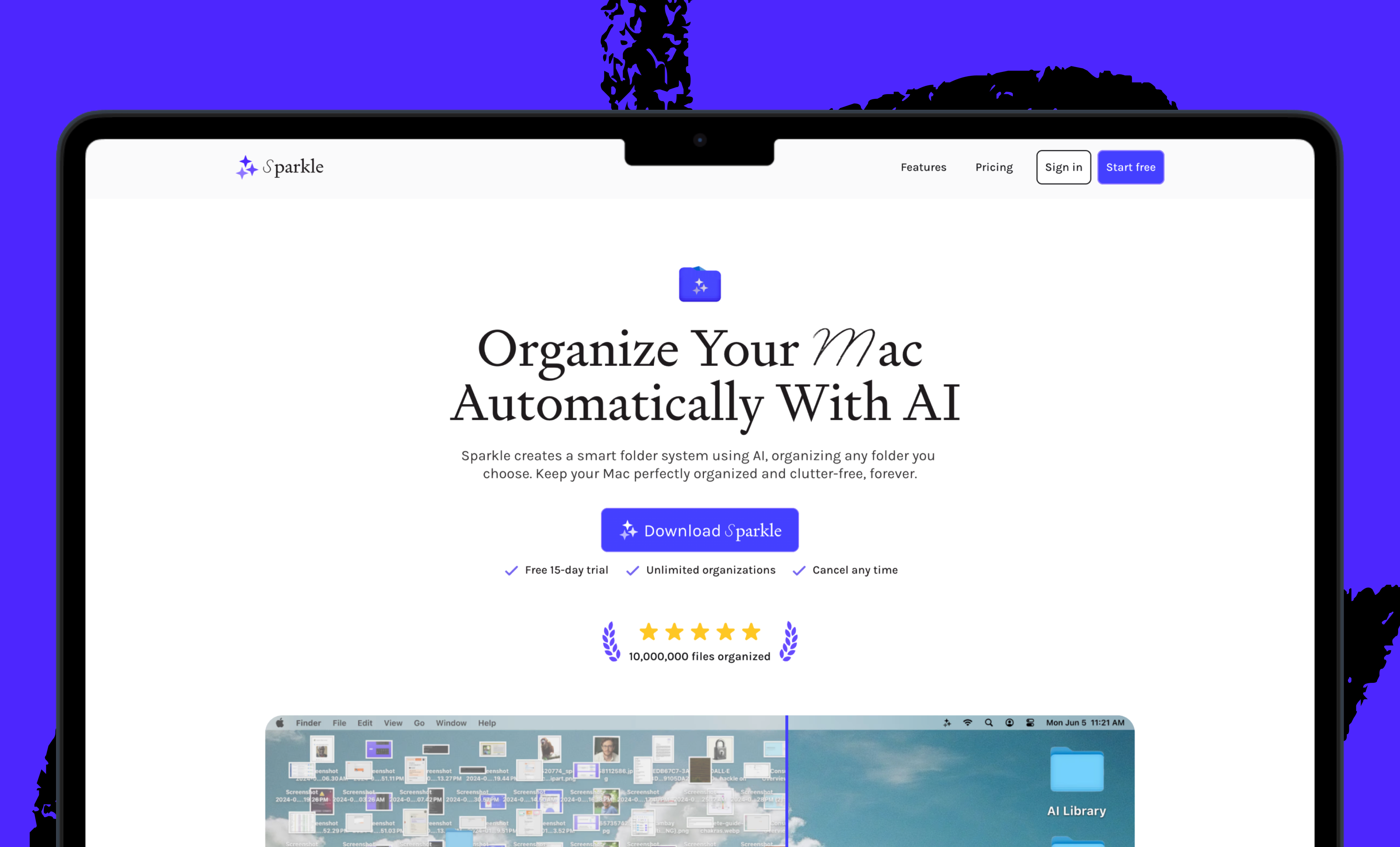



 Front-row access to the future of AI
 In-depth reviews of new models on release day
Playbooks and guides for putting AI to work
Prompts and use cases for builders
In-depth reviews of new models on release day
Playbooks and guides for putting AI to work
Prompts and use cases for builders
In-depth reviews of new models on release day
Playbooks and guides for putting AI to work
Prompts and use cases for builders
In-depth reviews of new models on release day
Playbooks and guides for putting AI to work
Prompts and use cases for builders
 Bundle of AI software





 Dan Shipper


 Rhea Purohit
 Reviews of new AI models on release day