





The transcript of AI & I with Nat Eliason is below. Watch on X or YouTube, or listen on Spotify or Apple Podcasts.
Timestamps
- Introduction: 00:01:45
- The origins of Nat’s viral course on building apps with AI: 00:11:45
- How coding with AI has evolved over the last two years: 00:18:46
- Nat creates an app using Composer, Cursor’s AI assistant: 00:22:22
- Tactical tips for coding with Cursor: 00:26:06
- How coding with AI is creating new behaviors in programming: 00:29:06
- What excites Nat the most about the future of AI: 00:32:41
- A demo of Hubbard, the AI editor Nat built for his science fiction writing: 00:38:58
- When does it makes sense to build custom software: 00:44:52
- Nat’s take on the future of writing with AI: 00:49:18
Transcript
Dan Shipper (00:01:45)
Nat, welcome to the show.
Nat Eliason (00:01:47)
Thanks for having me on, Dan. Again, right?
Dan Shipper (00:01:48)
Yes, you're back.
Nat Eliason (00:01:49)
I'm back.
Dan Shipper (00:01:50)
You were here in the earliest phase of the show. You took a bet on me—on us—when we were nothing and now we're here.
Nat Eliason (00:02:00)
We've been taking bets on each other for a long time.
Dan Shipper (00:02:02)
We have been. And you're one of my favorite people in the online writer space or really just in general. But let’s say in the online writer space because I think what's so special about you is you have this ability— You have so many different career arcs and you have this ability to go really deep into something right before it gets hot and know everything about it and then succeed at it and then move on to the next thing. And I think people get so caught up in, what am I going to be? And who am I going to be? And you've had all these different topics that you're just the master of. And you just throw yourself into it with wild abandon. And when we first started working together, you were into SEO. Then you moved into crypto. You wrote a book, which you released recently that I love—I think it’s amazing. And you sort of transition from online writer to author and then most recently you've been in the AI coding game and you launched this new course teaching people how to build with AI and you have this really fun— I'm going to shut up in a second, but you have this really fun course arc where— When we first started working together, you made Roam hot and you basically launched a course and like bought a house with the money and then disappeared from the game and now you're back and it's really fun to see. Tell us about that.
Nat Eliason (00:03:28)
Well, yeah, I mean, I owe some credit to you guys, because— I don't know if you remember how this started, but Adam Keesling had a tweet and out of—
Dan Shipper (00:03:32)
Keesling. Our first Every employee.
Nat Eliason (00:03:35)
Yeah, he had a tweet in October of 2019—I think October, November—where he said, wow, I just tried this thing called Roam Research and it's really cool and nobody really knew about it back then. And I was still running my marketing agency, Growth Machine, but was looking for interesting things to explore. And so I dived into it and was just kind of blown away by the tool and started tweeting about it and talking about it. And that made other people really interested. And I just said hey, does anybody want me to do a course on teaching how to use Roam? And a lot of people on Twitter responded positively. And I just put up a PayPal link and I think I got $10,000 or something worth of pre-orders off of those tweets before I'd written any or written anything for the course. It was like, well, I better go do this now.
Dan Shipper (00:04:39)
Pretty good validation.
Nat Eliason (00:04:41)
Good validation. And then I launched the course and it did something $600,000 in sales over the next year, which was bananas. And I owe a lot of that to the Roam team because they didn't really want to build onboarding for their product. They were focused on other stuff. And so they said, if you take Nat's course, which was $100, we'll give you $100 in credit for signing up because it was like $15 a month. And so that was what? Six months of free usage. And they said, yeah, take that course and you'll basically get it for free because you'll get the product for six months. And so obviously that drove a ton of sales. And had we had a really good thing going and then I ended up being like, okay, I kind of feel like I don't want to keep doing this. I didn't want to keep doing the cohort model. And that ended up being, I think, a pretty good decision on accident, just because Roam's development fell off quite a bit—competitors popped up like Obsidian. And I think an easy way you can kill a good course business is by hiring a ton of employees and building a huge apparatus around it only for the interest in it to fall off two, three years later. And now suddenly you have all of these liabilities that you've accumulated and you lose the huge upside that you had when it was maybe just you are a really small team and crazy cash flows. So, as you alluded, I used a lot of the profits to buy an Airbnb property outside of Austin in June of 2020, the absolute pit for the real estate market. We had a really good deal on it, turned it into an Airbnb, tried doing the Airbnb thing for a bit. That turned into a miserable experience that peaked with a frat party throwing a rager at the house and somebody—I kid you not—pooping in the bathtub.
Dan Shipper (00:06:38)
Oh my god.
Nat Eliason (00:06:40)
And leaving it for our cleaner to find where— And she was wonderful. She was like a Rottweiler. She was so pissed at the people. She wasn't pissed at us. It was very much, oh, I can't believe these people. They disrespected your beautiful— She was amazing. She handled it so well. But they did that and they broke off an outdoor water faucet that flooded the whole yard and caused all this damage and then, literally two weeks later, Austin had this terrible freeze that blew out the shower pipes upstairs and flooded the second floor and it was like a $15,000 repair. And after those two things happened, we said, okay, this sucks. This is not worth it. Anything we think we're making, we're losing in repairs. And so we sold it on May ‘22, which was the peak of the Austin real estate market. It was like literally just two happy accidents in a row. And it ended up being like a 6x cash on cash return in a year-and-a-half on a real estate investment, which just doesn't happen ever.
Dan Shipper (00:07:74)
You just have great timing. I just want to fast-follow all your trades sometimes.
Nat Eliason (00:07:50)
I also opened a cafe in January 2020, so it's not always the best timing. Crypto Confidential, coming out in the middle of last summer when nobody was talking about crypto, could have been timed, I think, it's a little bit better. It picked up with when the market picked up in the fall, but, yeah, those timings are pretty, pretty great.
So, fast forward to today, you and I have been talking about some of the cool potential with this AI stuff. I remember when GPT-3 launched, you and I were playing around, you were doing it a lot more than I was. We were texting about this, about, okay can we train these models— Can we use them in our writing and things like that—
Dan Shipper (00:08:29)
Do metaphors and like all this kind of stuff.
Nat Eliason (00:08:31)
Yeah, I was trying to build a stoic bot so I was calling it Stoic Therapy. So I was training it on Marcus Aurelius and Seneca. And so you could have a conversation with it like you would a therapist, but it would respond to the way a stoic would. And it wasn't great back then, so I kind of put it on the shelf and you kept going with it to your credit. You went a lot harder than I did. I put it on the shelf for a while. And then last winter, from December ‘23 to January ‘24, over my holiday break I started playing with it again because these AI-augmented software tools, Cursor predominantly, were just coming out. And I had this question of, okay, could I use this to actually build a mobile app?
Because I'm primarily a writer. I've been doing all of my writing tracking in a spreadsheet. I thought it would be cool to have a Strava-like app for tracking writing. And it seemed like you could maybe build that without a ton of knowledge using Cursor. And so I tried and it worked. I got a basic version of the app working pretty quickly.
Dan Shipper (00:11:00)
I think I still pay for that, by the way.
Nat Eliason (00:11:05)
Oh, do you? Well, I won't be hurt if you cancel. I mean, it turned out that nobody really wanted that tool, which was fine. Even I kind of stopped using it after a while. I was like, yeah the spreadsheet is actually— Every good software can kind of be replaced by Excel at a certain point. It has to reach a certain level of pain to graduate from Excel and that level of pain just wasn't there, but that got me started using these tools to write software for my life. But back then it was okay. You still had to have a pretty good grasp of programming to get anywhere with it. And then it feels like four months ago, maybe so fall of ‘24, the agents started coming out. So you had the Replit agent, you had stuff that came out more recently, like Bolt and Lovable. And Cursor added its own agent, and this was this really new step function in how much programming you could do without knowing any programming, because you if you had a rough idea of what you wanted a basic understanding of programming, you could kind of just prompt it and it would start writing full apps for you.
So after Crypto Confidential came out, I've been working on the sci-fi novel and I've been going really hard on that for the last six months. I finished a draft of it in December and was letting it sit in the drawer. And I said, okay, while sitting, let's go play with these tools because maybe there's a way I can actually use them for my work. And so the first thing I thought about was. I'm sure you have this too. Maybe you don't anymore since you have Spiral, but a lot of people who do writing have a bunch of saved prompts somewhere and they're kind of copying and pasting those into Claude to get similar results. And my good friend, Nathan Baugh, he's also a fiction writer. We write together every week. We were trading prompts back and forth, but it was kind of this complicated process of, okay, we've got to paste it into Claude and then get the output. Maybe we have to make a new chat and you kind of have to jump through these hoops. And I was like, well, I could probably just make an app that does a lot of these things. And the other benefit of doing that is with some models you run into text limit issues. The one context window is actually 200,000 tokens or whatever, but per chat, it's only 40,000. So, if you want to put in a full manuscript of your book, you have to break it into three or four messages, which is super messy. And so I was like, well, let's just use these new Cursor agents and let's just try building an app to help me edit my book. And I started hacking on it and literally within a day I had something that was better than what I could do on the Claude front end and that was pretty awesome because one, I was still getting Claude Sonnet responses, but I had all of my prompts saved and I was slowly turning into this editing tool. I can show it to you in a minute.
Dan Shipper (00:14:30)
I want to see it, yeah.
Nat Eliason (00:14:35)
Unfortunately it's not done. It's not nearly to the point that I thought it would be at this point because I started tweeting about it. I was like, yeah, I built this thing. This was so easy. And then Nathan and I started a podcast called “Between Drafts” where we're talking about The journey of being an author and growing your audience and selling books and writing and editing. And I mean a podcast requires a decent amount of work on the backend. You've got to get the show notes and the timestamps, and you've got to format it for YouTube, you've got to make social media. And like that takes a decent amount of work. And I've hired people to help with that in the past, but my thinking was, okay, well, I can probably create an app to do this too. And so I started hacking on that and a day later, I had an app where I could just upload an audio file and it would make a nice description timestamps so it would handle all the show notes. It would format it in different ways. So I could just copy and paste into YouTube and Spotify and my blog. And I was like, this sick because this now saves me a few hours a week and it's just very useful. for running a podcast and so that was useful and then I was tweeting about that and then it literally was just like history repeated itself. I thought I was never going to do a course again, I didn't really want to get back into that business, but somebody tweeted at me and said hey, I really want to learn how to do some of this stuff. You're doing it looks really cool. So I put up the bat signal again. It was like, hey, does anybody want me to do a course on this? Just building your own apps with AI. I got 100-plus responses to that tweet saying, yes, please do it. I put up a page where people could buy and it did $200,000 of sales in a week.
Dan Shipper (00:15:58)
That's crazy. I hate you.
Nat Eliason (00:16:02)
I mean, I've never seen anything like this. I don't know if I've ever heard another story like that of a course launch. Obviously people have done much bigger course launches. There have been—
Dan Shipper (00:16:20)
Except for the last course you did.
Nat Eliason (00:16:25)
I mean, but it even blew that out of the water because it didn't really start selling until the course was done. I mean, yeah. It was just like the pre-sales. and so that's literally all I've been doing the last three weeks, recording videos and getting that built out. And it's been really— Dude, it's been so cool to see people go through the course and to see. They post all this stuff that they've built that they didn't know how to build beforehand, not stuff that I'm directly teaching them. They're just like, okay, I've learned how to do this. Now I can go build this other thing that I want. Paul Millerd wanted to build this calculator for solopreneurs for a while and built that and got it launched on his site. And Cat Lavery built a journaling tool that's like forced morning pages where it deletes everything you wrote if you stop writing for more than five seconds. It's just cool stuff people are making. And I literally just finished the last video of the last unit this morning, so I'm hopefully going to get all that edited and get it plugged in. I'm still bug fixing, so I can't do a full demo right now. But literally, I've got to give it permission here. Let's see the thing that I did for the course is I got a fresh computer to start recording from so I could show, here's a computer that's never done any development and, let's get the development environment set up. The way the course works is it kind of walks you through building these basic apps. And then in the end, I've sort of built this whole AI content studio, landing pages and Stripe payments.
Dan Shipper (00:18:00)
So, for people who are listening, basically, you're on this website. It looks like PodBuddy.ai
Nat Eliason (00:18:05)
PodBuddyAI.com Somebody had the dot AI.
Dan Shipper (00:18:10)
Very frustrating. PodBuddyAI.com, which I guess is what students who are in the course are going to end up with when they're done. And if you scroll up and go back to the homepage for a second. So yeah, it looks like it's a podcast studio. So it does transcriptions, content generation, and social media. I can't believe you're competing with me here.
Nat Eliason (00:18:35)
Did you build an app for this?
Dan Shipper (00:18:38)
Well, I mean, this is sort of like Spiral, but it's okay. This is very cool. And I think what's most interesting to me about this is how complete it looks. There's a lot of things that people are building and I did a course like this a year ago and it was not as popular as this, but it was like a big deal back then. And it was like, “How to Build an AI Chatbot with...” And that feels so archaic now, but what's interesting is I had a lot of concerns like, okay people who are non-technical are taking this, is it going to be possible for them to actually do the course? And it turned out that it kind of was, but it was a big pain and the amount that we could do is sort of limited. And I had to provide a lot of sample code and all this kinds of stuff to make it work. And we're just in a completely new era right now where English is just— You can just build with English way better and if you have enough like sort of gumption and stick to itiveness to copy-paste back and forth between o1 and like and your Cursor instance you can get through any bugs you find it's crazy.
Nat Eliason (00:19:50)
Dude, that was my big concern with doing the course. That was my really big hang up. If this is popular, am I going to have dozens of people messaging me every day with the bugs that they're running into and the problems that they're having that I'm going to have to try to troubleshoot remotely. Because if that happens, this is not going to be sustainable and it's going to be miserable. But the first lesson started going up two-and-a-half weeks ago. There are 700 students in the course. There have only been two instances where I needed to help somebody troubleshoot something that they couldn't resolve using Cursor.
Dan Shipper (00:20:30)
That’s wild.
Nat Eliason (00:20:32)
And it's absolutely insane because the course starts by showing you how to use Cursor and how to troubleshoot things and how to get errors fixed. And I err on the side of playing dumb through the course to where even if I know how to fix something, I'll still let Cursor do it to show that it can handle stuff and people can just figure it out. It's pretty wild. And there is a common problem of, as the code base gets bigger, as the app gets more complex, it starts hitting more issues and you start having to get a little more intelligent with your prompting. But people are kind of figuring that out too, and it's really neat to see just how much you can build now without having that much of a programming background And I've noticed too it's making me a better coder because I'll go look at how it's doing things. You can ask questions about why it did things certain ways. It'll explain it and it's kind of a neat new way to learn programming. I think this is just how people are going to learn programming now.
Dan Shipper (00:21:35)
I agree. Totally. Because I think that for some people listening and watching, maybe they know about AI, but they haven't used Cursor yet. Or maybe they used Cursor a year ago and they're like, I kind of get it. But I think the whole agentic experience, which I actually first used Windsurf and I was like, holy shit. Windsurf, I think, was the first one to really have the full agentic thing. And then Cursor now has it—
Can you just show us a little sample of making something with Cursor and then we can talk about it from there? I do want to get into your more advanced Cursor tips, just honestly, selfishly, but I think we should sort of set the table for people who aren't, don't know yet know what's possible.
Nat Eliason (00:22:10)
Cursor, if you've used it before, it just had this chat feature where you could—
Dan Shipper (00:22:22)
For people who are listening, basically, you have Cursor open. And Cursor is a development environment, right? So you've got your file system on the left. You've got your files in the center. And then you have a chat window on the right. And Cursor always had this— Or not always, but yeah, I guess always always had chat. But chat wouldn't go autonomously. It wouldn't make edits for you. You had to select the edits and say, “apply.” And it was just kind of a mess.
Nat Eliason (00:22:50)
So now it has this Composer tab next to chat and Composer is basically their agent. So it has these options: “normal” and “agent.” If you select “agent,” it will basically do everything for you. So the way the course starts out is I show people, you get Cursor open up and running and then you hop into this agent tab and you can say something like, can you build me a simple Pomodoro timer in HTML, CSS, and JavaScript—keep it as simple as possible. And you hit go, and it'll think for a moment, and then it'll just start making the files. So there's nothing in this folder. And so right now it's generating the HTML. And I didn't have to create this file, I didn't have to copy anything over, it just automatically plugged it in. Now it's going to say, let me create the CSS file with some basic styling. And this is the simplest version of how you could do it. Build a website or build a web app, right? Just a JavaScript like those three files.
Dan Shipper (00:24:00)
And what I want to underscore here for people who are listening or watching is you did one prompt and then it's like it's doing these multi-turn edits where it has a plan, it creates a file, it writes the file and then it checks to make sure that the file is working in the winter and then it just does the next one and the next one until it's done. And what I think is so funny or different or crazy about this we're just watching this happen, right? Literally two years ago to do this. Even if you knew how to do it, which we both would have been able to do, we would have had to type every single character into every single one of those files. That is wild. It feels like the dark ages to hand type your code. And it was inconceivable that this would be possible. And now it is.
Nat Eliason (00:24:55)
Yeah, I mean, it's 20 lines in the HTML, 40 lines in the JavaScript, 46 in CSS. I mean, if we were typing this out manually, two years ago, it's probably like 20–30 minutes of work, right? It's going to take a little bit, but it did all of that in 30 seconds. We can accept all. And then I should be able to reveal the index HTML in the finder. And then I'll double click on it. And we have a Pomodoro timer. I could just hit start and it's going to start the timer. This running, right? We're watching it live. It's working. And this is such an incredible moment. I had all these people texting me being like, oh my god. Yeah, it's just so cool. And we can just go back to Cursor. And I'll start a new chat and say, this is working great, but the design is a little boring. Can you spruce it up to make it look like a modern web app? Maybe use blue as a base or primary color and then I'll just hit enter again.
Dan Shipper (00:26:10)
So while it's working, this is a specific Cursor Composer tactic that I'm kind of curious about. When do you start a new Composer window?
Nat Eliason (00:26:15)
So I start a new window whenever I don't want the previous context in the conversation.
Dan Shipper (00:26:25)
Right. But how do you know that you don't want the previous context? Why did you do it just then?
Nat Eliason (00:26:30)
The way I think about it is if I'm working on a new feature or some new part of the app, I'll start a new window. Or if it's getting stuck fixing a bug and it can't seem to figure it out, I'll start a new window.
Dan Shipper (00:26:35)
Another little interruption, but are you ever using o1 or o1 pro for this? And how are you incorporating that, if so?
Nat Eliason (00:26:49)
I'll use them in two situations. So, one, if I'm running into an issue that Sonnet's having trouble fixing, then I might go to o1 in the chat. And have that try if I'm making a bigger plan, I'll use o1. So, for example, in the course for the capstone with the PodBuddy tool, once it was close to being ready to deployed to web, I went to the chat, I selected o1 and I said, can you please do a deep review of all of this and see if there's anything that we need to fix before we push it live? Think about security, think about user experience, and then create a checklist of everything we need to do before we go live. And it actually made a Markdown file. I can go find it here and show it to you. So it created this whole deployment.md file.
Dan Shipper (00:27:45)
Interesting. And then did you have the agent go through the deployment file or the Markdown file?
Nat Eliason (00:27:50)
I had to do some of it. I started pasting a couple of these one by one into the Composer and had it start executing them. And that was really helpful. But while we're talking, it went ahead and it did this redesign of the Pomodoro timer. If we go back to our browser and refresh—look. We have our nice new design.
Dan Shipper (00:28:10)
I love that. For people watching, it's now blue.
Nat Eliason (00:28:25)
It changed fonts too.
Dan Shipper (00:28:30)
It followed the instructions. That's good. So I love tracking the new norms that come about. And I think that's a shift that's starting to happen. It happened to me. I see that it's happening for you just watching you use this, and I think it's happening for other people. When we first started using AI, we started to look line by line at the changes it was making and like making sure that the changes were okay, like accept one by one. And then, now everyone just presses “accept all.”
Nat Eliason (00:28:55)
Just brain off.
Dan Shipper (00:28:57)
And I just want a t-shirt that just does “accept all” because I think it's so of the moment that's just a totally new thing that we never would have done before. And I think what it speaks to is there definitely are still cases where the underlying code quality matters, but especially for this stuff, like this early stuff, it doesn't matter. And we don't need to care how it is, how it's being done. It does a really good job. And that's totally different. And it's a totally different way to learn programming, as you said, because like when I learned to program, and I think when you learned to program—
So I learned to program from reading books. When I was in middle school, I would literally go to a bookstore and buy a book on BASIC or C++ or whatever. And the first six months of learning to code, you just learn all the abstractions—you just learn if statements and for loops and you have no [bleep] idea how it levels up into anything that you want to make and you have to be willing to like get through that hump to actually make anything and students today, you just type a thing and then there it is. And even saying this, I sound like my dad. I sound like I used to have to hike to school uphill in the snow both ways or whatever. He doesn't really sound like that, but he does sort of. And I just think it's so different and so much better because of how many people were not able to build things because they couldn't get through those six months of hard toil and how many people are going to be able to do things now that they wouldn't have been able to before. And I just think that's such a good thing.
Nat Eliason (00:30:40)
Oh, yeah, I mean, those are the two most common testimonials that I've gotten. One is that I've wanted to be able to do this for years and have never taken the time to sit down to figure it out. And now it's just so easy to build these things and the other one is that people have tried to use these online all-in-one builders, right? Bolt is a common one that people mention or Lovable as well. And it eventually runs into errors that it has problems debugging. And you often have to bring it locally and start working in Cursor to get through them. And that can be a sticking point for people. But those two barriers are so much lower now. If you learn how to, I mean, really what you have to learn is troubleshooting. You don't have to learn syntax anymore. Once you get to a point where it really starts struggling, then you have to start thinking about code organization and being dry and all those things. But it takes a while to get to that point. And by the time you get there, you already have a decently functioning app. You're a lot more motivated to figure out how to push through those challenging issues.
Dan Shipper (00:31:50)
Yeah, what I think I really want to talk to you about is how this changes how you think about your career and what you want to do with your life and how you want to spend your time. Because I think that one of the reasons why we like each other is we're both generalists that just love new things and have all these different skills that we love putting together to make a product or a company or a book or whatever. And that's the thing that's drawn me a lot to AI is, I now have all these powers and all these domains that I maybe know a little bit, but now I can do a lot more. And I'm curious, you're doing this course. You're building little apps, but you also have made this very big decision to be a writer and write books and I just want to know how all of these things are currently bubbling together in your brain and your sort of like plan for what's next.
Nat Eliason (00:32:40)
Yeah, I mean, the thing that has me really excited about being able to build these tools with AI is that I love the idea of a hyper prolific solo creator business, because I've done building a business. I've done hiring employees. It's not something that I'm really aspiring to get back into. What I really want to be able to do is predominantly right and do and talk about things that I'm interested in, but have a pretty robust business around that with as few people to manage as possible and the ability to do that has just increased dramatically now, right? Having this podcast tool for me and Nathan's podcast I don't need to hire someone to do— A good chunk of this is editing and management because it's so fast for me to just use my tool to do it and I think I'm going to be able to use it for creating shorts and things that in the relatively near future as well. And so that whole level of additional management that I need is just kind of gone while still being able to tap into these marketing channels. And on the writing side too much of writing is in the editing and being having the patience to fully edit your work, being able to get good feedback on your work, being able to parse that feedback and so a lot of the writing tools that have been working on have been around editing more than writing. Because the writing that it generates is getting good. It's getting better, but it's still not really your writing, but the feedback it can give you as an editor is getting excellent. And especially in the book world, the big bottleneck or one of the big bottlenecks to high output is editing pace and editing throughput. You finish a draft and you send it to someone for a manuscript review. It's three to four weeks minimum before you get it back.
Dan Shipper (00:34:40)
I didn't even think about that. But that makes so much sense. Yeah, totally.
Nat Eliason (00:34:45)
Yeah. Three or four weeks minimum before you get it back. Or if you need to wait in somebody's queue, right? So Nathan hired an editor to review his draft because he's on Query and trying to find an agent and getting somebody professionally reviewed will be really helpful. And he found some great people, but the soonest they can look at it is in three or four months. And then it's going to take them a month to read it and get it back to him. So that adds a four- or five-month delay. That kind of sucks, right? It's a lot. But if you can build a really excellent editing tool, that's even 80 percent as good as these professional editors that can give you that feedback instantly. That's incredibly powerful. And that lets you move through so much faster and it lets you do things that you couldn't do before. So one of the features I built into my editing tool is that it has a task manager. So it has everything that I know needs to be fixed about the book. And every time I do an editing prompt, it also sends in the tasks that I already know about so that the editor only points out things that I'm not already planning on changing.
Dan Shipper (00:35:55)
That's interesting. I definitely want to see this. You said so many things I want to talk about. So one, just to respond to your basically you want to live a sort of solo creator life, but like have a business. I wrote this article two years ago called “AI in the Age of the Individual.” And that was the promise that was like originally so exciting to me is, at Every, for example, like we've got 10 full-time people now and a bunch of contractors. But I have to pay a lot of people to do that. And so I have to be at a certain level of income and success and whatever money raised or whatever, in order to do that. And you can see that with a lot of writers who are way, way, way more successful than me, like Ryan Holiday has a whole team and that's how he does all the stuff that he does. And to some degree any solo writer can get the leverage of having a big team with this stuff. And I think that is so fucking amazing. It's so valuable. And the editing thing is like, I feel that pain so much right now because it's a bottleneck for us, right? We have so many different surfaces. We publish an essay every single day. Then we have three different products that we run all internally that send emails and like to have product copy, and whatever. We want everything to have this sort of the same Every feel to it. And then we've got new writers and, so I feel like I'm repeating myself all the time and I'm not even the main editor. And so I just want a tool to make this better. So I'm curious to see the tool you've made.
Nat Eliason (00:37:45)
Yeah. Well, here, I'll show you. So, I mean, like I said— One second, let me bring it up here. It's unfortunately not where I hoped it would be by this point, since I got sidetracked by doing the course and everything, but it is still exceptionally useful. So let me share—
Dan Shipper (00:37:52)
By the way, before you dive into it, are you using o1 for this? Because I found that o1 is the best at giving editing feedback. And the reason is because it's good at finding all instances of something in a piece of text, whereas Claude will only find two. I'm curious if that's what you did.
Nat Eliason (00:38:15)
Getting 01 properly integrated is like the next step that I have to do. I'm using Sonnet right now. And the only reason that it's not integrated yet is because my API isn't at the level where I can access the full 01.
Dan Shipper (00:38:30)
I know a guy. I can get you API access if you want.
Nat Eliason (00:38:35)
Honestly, all I have to do is pre-fund it with $1,000 and then I'll have access. So it's literally just I need to do that.
Dan Shipper (00:38:40)
You just need to pipe your core sales right into your OpenAI account.
Nat Eliason (00:38:45)
Yeah. My guilty admission is that I haven't done any book work in the last month because I've been so focused on the course.
Dan Shipper (00:38:50)
Bat Nat. Okay. So you're bringing up this tool. It's called Hubbard, which I guess is for L. Ron Hubbard. Basically, the screen you're on, it looks like a dashboard where you can have tasks, characters, locations, and technologies and you've selected characters, the character view where you have a list of all your characters. So it kind of looks a little bit like Scrivener, but maybe an AI-native Scrivener.
Nat Eliason (00:39:30)
Yeah. Or there's another tool that I like called Novelcrafter.
Dan Shipper (00:39:35)
Yeah. I think you turned me on to that at some point.
Nat Eliason (00:39:40)
Yeah, yeah, but this kind of came from some frustrations with Novelcrafter. It didn't have some of the world building things that I wanted and it didn't have the editing aspects that I wanted. So the editing aspects of this are broken right now. So I got to fix those after. But basically, the way that part of it worked is you could paste in your entire manuscript and then you could pick reader personas: master editor, casual reader, angry adversary, romantasy reader. Things like that. And it would read your draft and then give you very detailed feedback based on those personas.
Dan Shipper (00:40:15)
That's really cool. We have something like that internally here—it's called Rally. It's built by one of our writers Michael Taylor. And it does that, but you can spin up an audience of like 1,000 people that are Hacker News commenters or Every readers or whatever. And then you can ask it a question, like which headline would you click on? And it'll tell you what the crowd thinks. It's really cool.
Nat Eliason (00:40:40)
That’s kind of the next level that I want to build in is basically have each of those personas do three or five passes and then have a master editor, probably using o1 pro aggregating the feedback from all of those people into one kind of master guide. And then the way I had it set up, was that under the feedback, you could mark things that you wanted to create as tasks for your next edit for the book, and then those all pop up here, right? So when you're going to work on the book—
Dan Shipper (00:41:15)
And you're looking at a basic task manager that looks sort of like Trello where it has sort of different tasks organized by description, relationships, world plot, all that kind of stuff?
Nat Eliason (00:41:35)
Exactly, and these get passed into the editing prompt too. So when you're trying to get feedback on your draft, it already knows all the things that you're aware of and doesn't mention those. So you can run it a few times to make sure this is good to go before you get to work. But the other thing that I really wanted was— I'm decently able to come up with plot type stuff, but I have a hard time fleshing out characters. So I built this whole character editor where you could take a character in the book and you could start filling things out for them. So their age, a celebrity lookalike, a character's inspiration, physical characteristics, their background, things about their personality, aspects of their health and relationships. And then built-in chat with it. So the chat can work in two ways. One, it can role play, right? We can say, if Isaac came back to camp with a broken leg, how would Grant react, right? And it'll use these descriptions of him to reply as that character in the book. And this can actually be really helpful because sometimes it's hard to get out of your head and write in the way your characters speak and you might not want to. You probably don't want to use this verbatim, but it starts giving you some good ideas so that your dialogue is being more varied.
Dan Shipper (00:43:00)
That's really cool. You know what I kind of want? And it seems like you're on this track, so if you decide to do it— I wish you would do it, so I can just use it. I have a couple of writers who I just think are fantastic at things like this. So an example would be—an easy one is Tolstoy. He's incredible at using characters' behavior and some of their inner monologue to tell you about who they are and to kind of paint this very vivid picture. And I just want some agent to take apart Tolstoy and turn it into like a vector database that, when I want to describe a particular character, it like selects a few sections of Tolstoy that are relevant and then like recombines them into something interesting to kind of like push my brain into that territory. I really want that.
Nat Eliason (00:43:55)
Yeah. Or even if there's a way to extract a methodology, right?
Dan Shipper (00:44:00)
Yeah. How would Tolstoy think about writing a character? Yeah.
Nat Eliason (00:44:10)
Yeah. It's a good idea. So, it's got this role play and then it also has this assistant for talking about the character. So, we can look and we can say what could be important to fill out here, right? Or we could even just ask that based on what you know about grants. How might you flush out these other details? And this can give us some ideas, especially for like secondary or minor characters where you want a couple of distinct things like this will start to give you some ideas. Right? And it spits this back pretty quickly. I'm just using Haiku for it. So you can do this all day and it's not really going to cost anything. and then you can start filling out more character details from this.
Dan Shipper (00:44:50)
That's really cool. The thing that's on my mind is— As both of us are sort of recovering or maybe not even recovering, just still are productivity note-taking bros. And there's always a thing in the note-taking world, which is like, how much time do you spend on your system? And how much time do you spend actually doing the work that you are building the system in order to do? And I think in the previous era of Roam Research or Notion or whatever, people would create these elaborate database structures and tagging systems and blah, blah, blah, blah. And you always look at that and you're like, okay, cool. But what did you actually make? And a lot of times that the note-taking system is the coolest part of what they made. and something occurs to me, which is a trap here is this. I'm not saying this specific thing is, it could be that on steroids. It's like, yeah, I can actually make an entire Scrivener or Novelcrafter or whatever. And I'm curious, how you're navigating that for yourself, the trade off between okay, making something really custom for myself that really fits what I want vs. okay, there's maybe there's an off-the-shelf tool that has some of this stuff. And I can use that and just make more progress in my novel.
Nat Eliason (00:46:15)
Yeah, the way I think about it is it's probably worth building assuming you're competent enough to build. It's worth building a personalized tool for the thing. That's most important for you. So for me, it's like, okay, I'm very focused on Husk and the subsequent books. And the better this tool gets, the better all of those books are going to be potentially—maybe six or more books, right? It's going to be useful for years and years, the better it gets. And I do think that you're just not going to be able to compete nearly as well as a novelist in the next few years if you aren't learning how to use these tools to either make your work better, produce your work faster, extend your work into other mediums is going to be a lot of ways it could be useful, but it's worth investing and figuring it out now so that you aren't playing catch up in a year or two, but it wouldn't be worth me making a super robust tool for YouTube thumbnails or something, right? Because the stuff I can make on Canva is good enough. I'm not like a full-time YouTuber. I make YouTube videos, but it's not my core thing. And so there, it doesn't make as much sense. And so the other end of it is where can you make a tool really quickly? That may save you some time and money that you know is also worth it, like I did earlier today. I had Cursor write a script for compressing videos and audio files because sometimes I get like a huge WAV file back from my editor and I just want like a more compressed mp3 and I could pay for a tool for that, but it took three minutes for Cursor to make one for me. And now I can just do it on the command line. So that's kind of worthwhile as well.
Dan Shipper (00:48:05)
I think that makes sense. I think that's a good line. I want to talk to you, though, about the future of writing, because I've been kind of thinking about this too, because I want to do a lot of writing. You named your app Prolific, right? The best way to be a great writer is to be prolific. And there's no tool that has been better for making writers prolific than AI ever, in my view. I think an interesting difference, though, between the Cursor thing that you already sort of mentioned, but between Cursor where you can just press “accept all” and writing is when you're writing under your name, the point is to stand behind everything that gets written and code is different. Code is a little bit more outcome oriented where it's like you want to stand behind whether it does the job, but like the way it does the job is less important. Whereas for writing, every detail of the way it does that job is an expression should be an expression of you. And so having something that generates an entire novel and a prompt is like, is not useful for writers. Because you want it to be your novel, not a novel. And so I'm curious about, this question is not, oh, how do we avoid a slope or how do we—whatever? It's more like what do you think is the limit in a couple of years when a super dialed in writer is writing with a I like, what is what is being done for you? And how is it assisting you in getting all that stuff out as quickly as possible and still having it be yours?
Nat Eliason (00:49:30)
I think one of the things that I am probably going to try to hack on next is something a little closer to Cursor for writing.
Dan Shipper (00:49:35)
I love that. It's so necessary.
Nat Eliason (00:49:40)
Yeah. Where you've got the main dock in the center, and then you've got a chat and Composer next to it because and figuring out how you really train it in your style, so it's not putting in generic stuff. It's writing like you write and proposing things that you can accept and reject that are again in your style. Because when I think about planning a novel. It's like, I've got an idea for the high-level arc and then I might break that down into a seven-point story structure of the hero's journey, one of those. And then from that, I can probably figure out, okay, these are the core 50–80 scenes. And then within those scenes, these are gonna be the main beats. And then within those beats, you have the actual writing. And when you start to break it down on those tears, you see how it's like, okay, a really good assistant can help you each step of the way where it becomes very collaborative and it's very similar to how some of these prolific authors write their books. James Patterson doesn't really write most of his books. He has assistants and he has ghostwriters who are trained in his style who know how to write like him. And he's, as I understand it, doing as much approving of things as he is. I think it's sort of how we're all going to be doing it, and you'll totally be able to just rawdog it if you want to—the way you can shoot film photography. But for most people, you're going to be using an assistant kind of like this. And in to some degree, your competitive advantage will be will still be the strength of your voice and your ideas and your creativity, but you'll have an assistant helping you get them onto the paper much faster and probably closer to the best of your ability, because every everywhere has had this experience when you're in the flow and what you're making is just like awesome and it's top 1 percent of what you're able to do. You're going to be able to do that top 1 percent of you all the time. And I think that's what the assistance is really going to help bring out.
Dan Shipper (00:51:55)
I like that. I also think part of being a writer is the way that your brain works is it's this network of things that are totally unformed, like ideas and quotes. And there's a whole network going on in your brain of things that are interesting to you. And an essay starts out as a network. It's this interconnected set of like things and then writing is making that linear is translating the network into a linear structure and obviously the process of transforming a network into a step by step linear thing is like it changes what the network is and it changes the linear thing. And it's just like a feedback process. But there's a lot of that translation work. It's really hard to do that, I think I make it much faster and much easier. I think for me, for example, I've been writing this longform essay for six months. Basically, it's called “Seeing like a Language Model,” which I think I've sent you some stuff. And I'm probably 10,000 words in and I didn't publish this month except for actually today— But on Every I haven't published it in a month because I'm trying to just focus on this longform thing and I have this notes file that is like I've been keeping it for six months or nine months or something like that. And it's like it's just a Notes app note and it's, I don't know, 20,000 or 30,000 words or something like that. And I know that the section of the thing that I'm in right now—there's like a bunch of stuff that would be super useful in that file. But it's too hard to get stuff out of it even if I throw it into Claude, because Claude is going through the attention mechanism and is not good enough to really understand where I am in my piece, what would be useful, and then go through each note individually and be like, is this useful and why? Would it kind of give me like, oh, yeah, this thing could be kind of cool or whatever. And it's just never good. But I think it's a Cursor Composer-type thing, but for writing— Totally do that well, and I just want someone to build it because it would accelerate my process an incredible amount.
Nat Eliason (00:54:05)
Yeah. And to the point of it having a hard time with finding important small details in a large context you can kind of hack together an agent system where it's looking at each chapter individually. And scoring certain aspects of it, but then also tracking individual threads across all the chapters and like each of these kinds of running as their own little process. So you're not overwhelming it with too many things at once. And I think we can kind of build that now. It would take a decent amount of work, but it would be worth it.
Dan Shipper (00:54:45)
It would be totally worth it.
Nat Eliason (00:54:50)
Yeah, especially with novels. It's just so easy to miss stuff in editing and self-reading. And if you've got this swarm of agents constantly doing editing work for you and possibly even proposing changes. Then again, your throughput just gets so much faster and the work gets so much better, too.
Dan Shipper (00:55:05)
Yeah, I think that I'm always torn between some of this stuff. I mean, obviously, we incubate stuff. So we built a lot of stuff and whatever, but I'm always also torn between, okay, do I want to spend time doing this now? Or do I want to just wait six months and it'll be so much easier or someone else will do it?
Nat Eliason (00:55:20)
Yeah, that part's really true.
Dan Shipper (00:55:25)
It's like the deflation phenomenon. It's like you don't want to spend the money because it'd be more valuable in a year.
Nat Eliason (00:55:30)
Yeah. It’s like we're rapidly approaching intelligence that's too cheap to meter.
Dan Shipper (00:55:35)
It’s time deflation. Your time is going to be more valuable the longer you wait. So you might as well— It's useless for us to be podcasting right now. We should all just be off on a beach waiting because podcasts would be way more valuable in a year or whatever.
Nat Eliason (00:55:50)
I know. And that is a tough thing, right? And I'm sure it's going to be a problem with the course too, because in three to six months, all the videos are going to be outdated because the tools are going to be so much better.
Dan Shipper (00:56:00)
I mean, that's the thing about courses— We've done courses. We have tons of friends who have done courses and courses are, I think, incredible businesses, but they degrade so quickly. And that's why it's so hard to actually build a long-term sustainable business. I think what you do is opportunistic. I have something that I can teach that people want and I'm going to do a course. And then like in three months, I won't be around anymore, but I haven't hired a whole team. I think the way to do courses for us, that's also sort of how we do it, except, it's just like the base of the business is subscriptions. And then when a writer at Every, me or Evan or anybody else, is like, I have something to teach, then we do. Of course, we have this “How to Write with AI” course that's launching again. And we're doing a second cohort in February and it's great. People love it. I think you can make really successful products. It's a really successful cashflow thing, but it's just hard to make it sustainable unless you're Harvard or something like that. And no one has succeeded in doing the Harvard thing because it just takes so long.
Nat Eliason (00:57:00)
Yeah. Or you’re Masterclass and the courses don't actually teach that much.
Dan Shipper (00:57:13)
Yeah, it's just entertainment.
Nat Eliason (00:57:15)
Yeah, it's entertainment.
Dan Shipper (00:57:20)
It's really interesting. There are so many little things about being a long-term creator on the internet that this course thing that you— Just because I think there's so much stuff about being a startup founder and the lessons don't really translate in the same way. But I think the game has changed now that all internet creators can make software now. It’s just just a whole different layer of the business now that wasn't available before.
Nat Eliason (00:57:45)
Yeah. And potentially be able to extend yourself in beneficial directions, even if those directions aren't going to be as long term sustainable as a startup might be right? It’s like, I can probably do this course while it's relevant. I think I've got a good year or two of this topic before the tools are so good that you don't need somebody to show you how to use them anymore. And so it's like, yeah, I'm going to teach this while it's relevant. And then when it's not relevant, I'll be able to stop and it'll be easy to stop because I won't have to fire 10 people—
Dan Shipper (00:58:20)
But I think the thing that I may somewhat disagree with is like: I still think even the models are even better. People still need courses just like the place where you need to teach is going to be different. It's not going to be at this particular level. Maybe there's endless amounts of meta-levels. As execution gets cheaper, you can just move up the layer of abstraction. And I think there's tons of opportunities even years from now.
Nat Eliason (00:58:48)
Yeah, because really what I'm— What this really is a programming course. It's just a whole new way of teaching programming that's prompt-first, instead of hello world-first.
Dan Shipper (00:59:00)
Or back in the day. Yeah, it's like, hello world. It’s like, we went from Assembly to C to scripting languages to English.
Nat Eliason (00:59:20)
Yeah. Well, and even now, too, you can just use one of the good audio-to-text models and you can just talk to Cursor. You don't even have to type anything.
Dan Shipper (00:59:30)
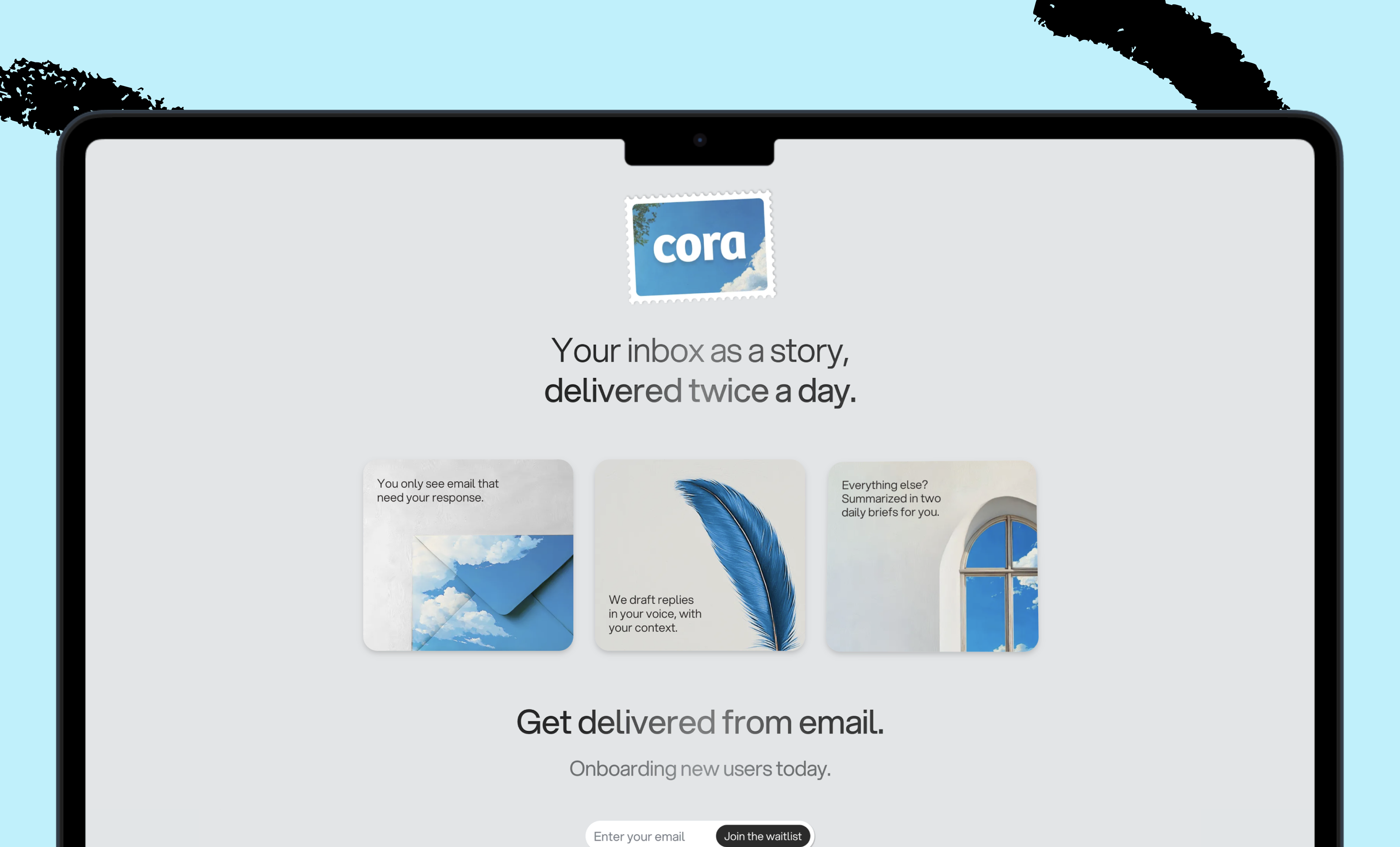
Honestly, that's how Kieran who runs Cora, our email app, that's how he codes. He just talked to it. And I think that the speech-to-text is like a really important input that I think a lot of kids use, but adults don't really use right now. But I think it will be way more important in like five years.
Nat Eliason (00:59:40)
Yeah. I got to use it more. Because I'm still old-school using my fingers.
Dan Shipper (00:59:50)
Yeah. Just typing away like an old man. Nat, this is awesome. I always love talking to you. Thanks for coming on.
Nat Eliason (00:59:59)
Thanks for having me on man.
Dan Shipper (01:00:00)
And best of luck with the course. I can't wait to see where it goes from here.
Nat Eliason (01:00:01)
Thanks dude. We'll talk soon.
Thanks to Scott Nover for editorial support.
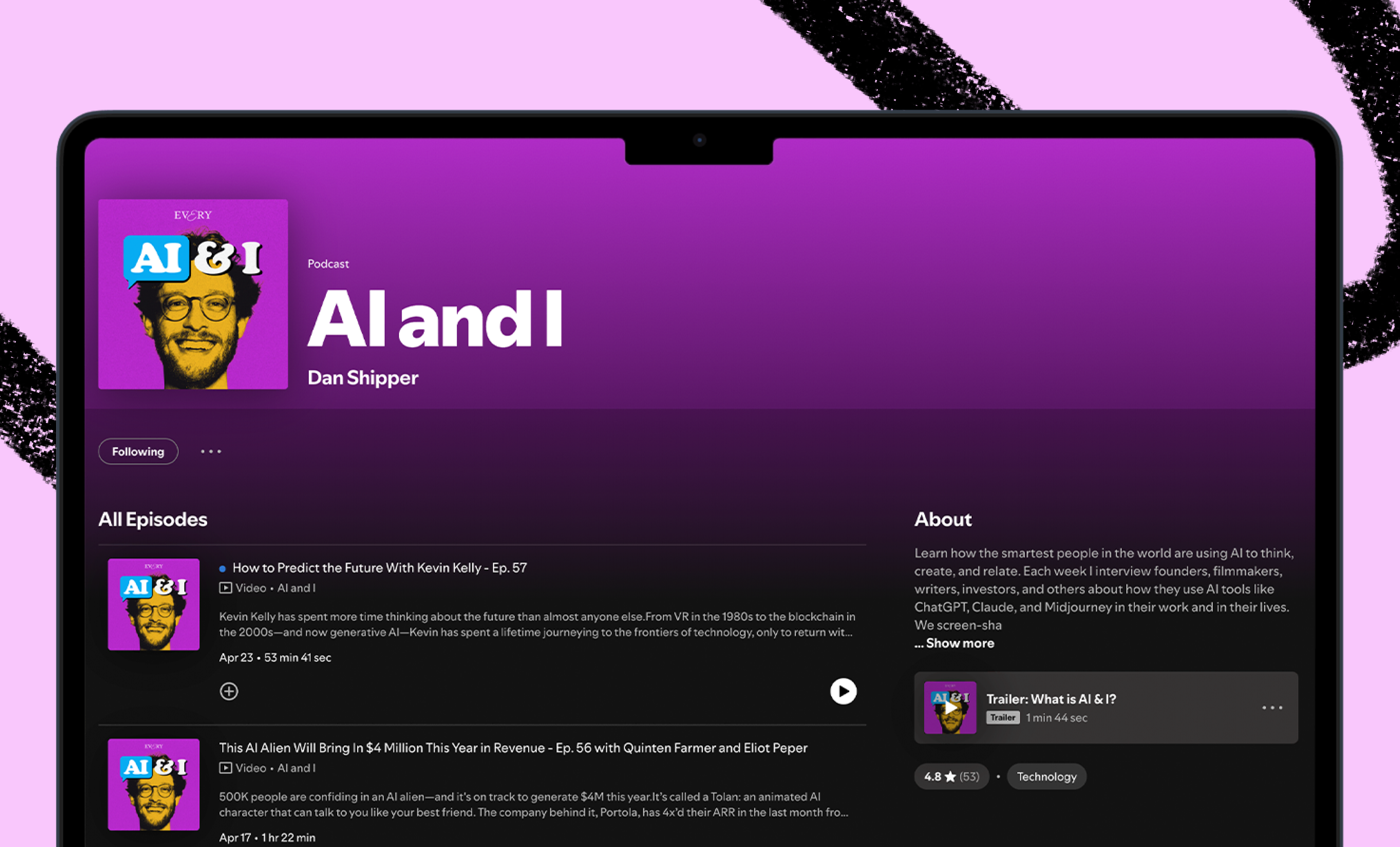
Dan Shipper is the cofounder and CEO of Every, where he writes the Chain of Thought column and hosts the podcast AI & I. You can follow him on X at @danshipper and on LinkedIn, and Every on X at @every and on LinkedIn.
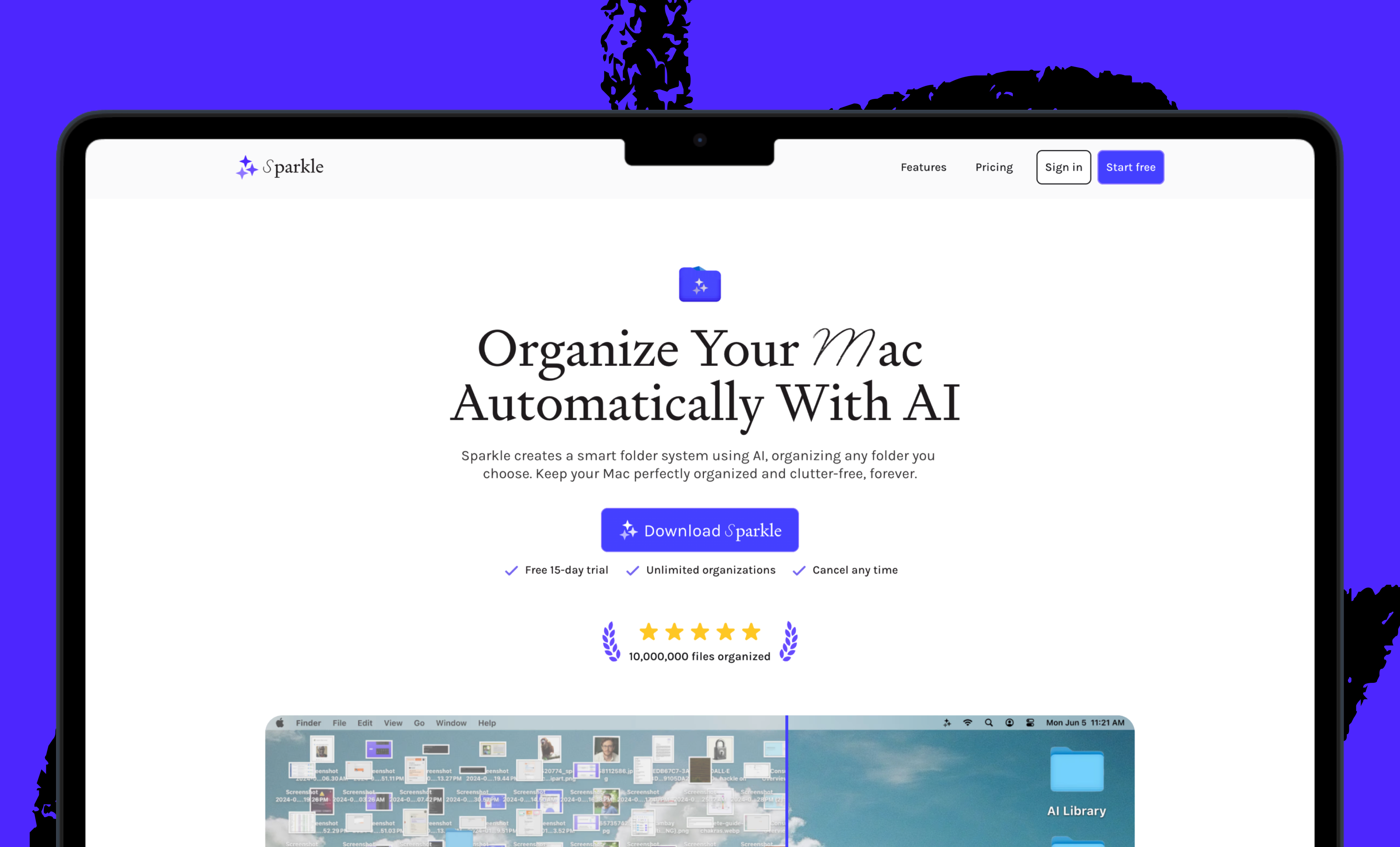
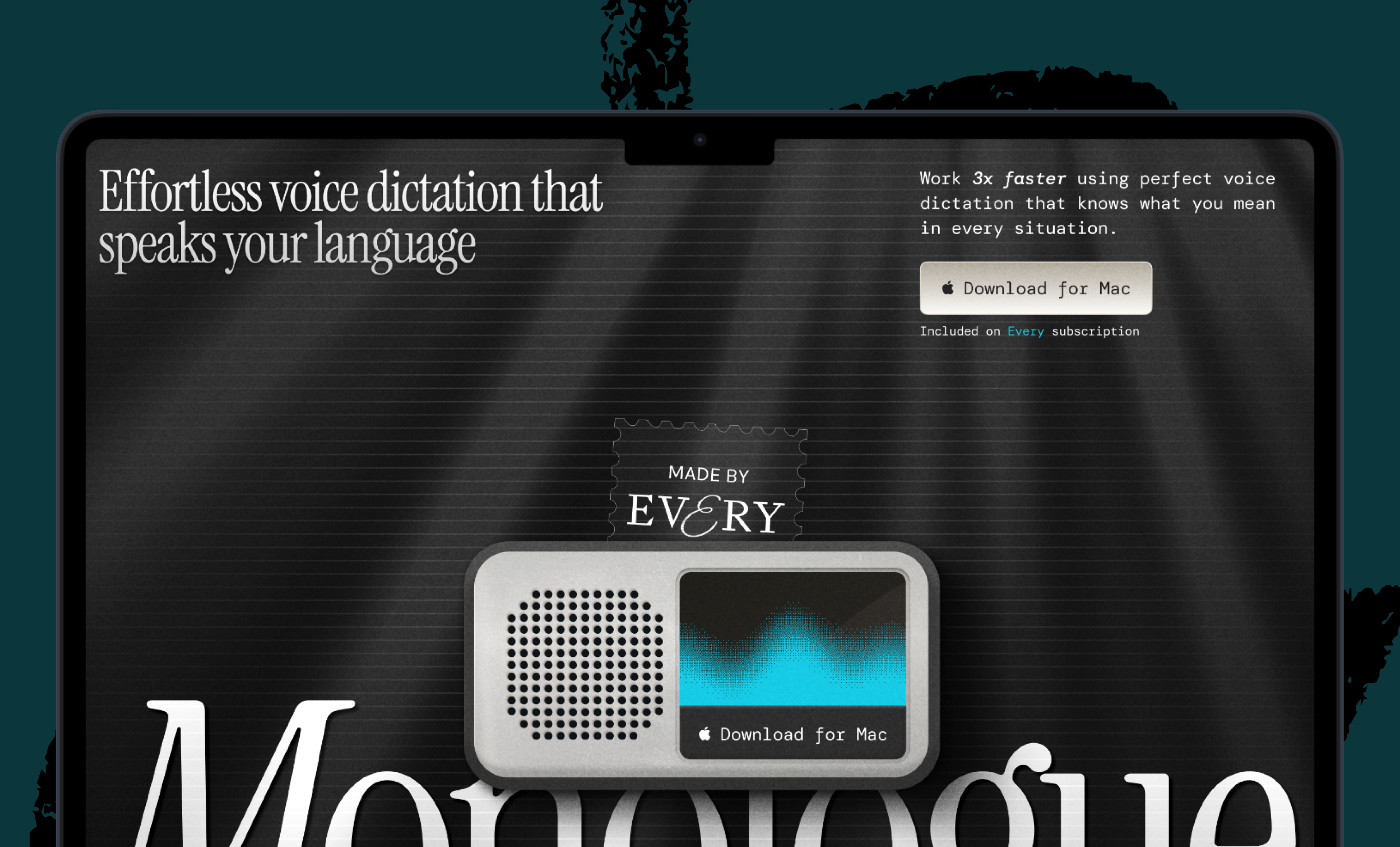
We build AI tools for readers like you. Automate repeat writing with Spiral. Organize files automatically with Sparkle. Write something great with Lex. Deliver yourself from email with Cora.
We also do AI training, adoption, and innovation for companies. Work with us to bring AI into your organization.
The Only Subscription
You Need to
Stay at the
Edge of AI
The essential toolkit for those shaping the future

"This might be the best value you
can get from an AI subscription."
- Jay S.
 Every Content
 AI&I Podcast
 Monologue
 Cora
Cora
 Sparkle
 Spiral
Join 100,000+ leaders, builders, and innovators

Email address

Already have an account? Sign in
What is included in a subscription?
Daily insights from AI pioneers + early access to powerful AI tools


 Front-row access to the future of AI
 In-depth reviews of new models on release day
Playbooks and guides for putting AI to work
Prompts and use cases for builders
In-depth reviews of new models on release day
Playbooks and guides for putting AI to work
Prompts and use cases for builders
In-depth reviews of new models on release day
Playbooks and guides for putting AI to work
Prompts and use cases for builders
In-depth reviews of new models on release day
Playbooks and guides for putting AI to work
Prompts and use cases for builders
 Bundle of AI software





 Dan Shipper
.png)
 Rhea Purohit

 Reviews of new AI models on release day
Comments
Don't have an account? Sign up!