


.png)


With AI & I on hiatus this month, we’re re-upping some of our best interviews. Today we're featuring a digest from three episodes in which Dan Shipper interviewed three of Silicon Valley's most influential venture capitalists—Sarah Tavel, Mike Maples, and Nabeel Hyatt. Their opinions vary, but they share a focus on founders who can see and capitalize on the paradigm shift that AI has brought about. Whether you're building, investing in, or simply curious about AI's trajectory, their insights prove essential.—Kate Lee
Was this newsletter forwarded to you? Sign up to get it in your inbox.
Sarah Tavel, Mike Maples, and Nabeel Hyatt have invested millions into the next generation of AI startups. Their bet isn’t on raw technology, though; it’s on products that feel magical, new business models, and solutions to wants people don’t even realize they have.
Over the first half of 2025, Dan Shipper interviewed the three on our podcast AI & I. Tavel is a venture partner at Benchmark; Maples is an iconic Silicon Valley investor who wrote early checks to Twitter, Twitch, and Lyft, and now invests through Floodgate, the fund he cofounded; and Hyatt is general partner of Spark Capital, who made early investments in Discord, video editor Descript, and, more recently, AI note-taking app Granola.
Read on for how Tavel, Maples, and Hyatt think about investing in AI. We cover:
- Their big ideas for the next chapter of AI
- The qualities of a remarkable founder
- The kind of startups they’re drawn to
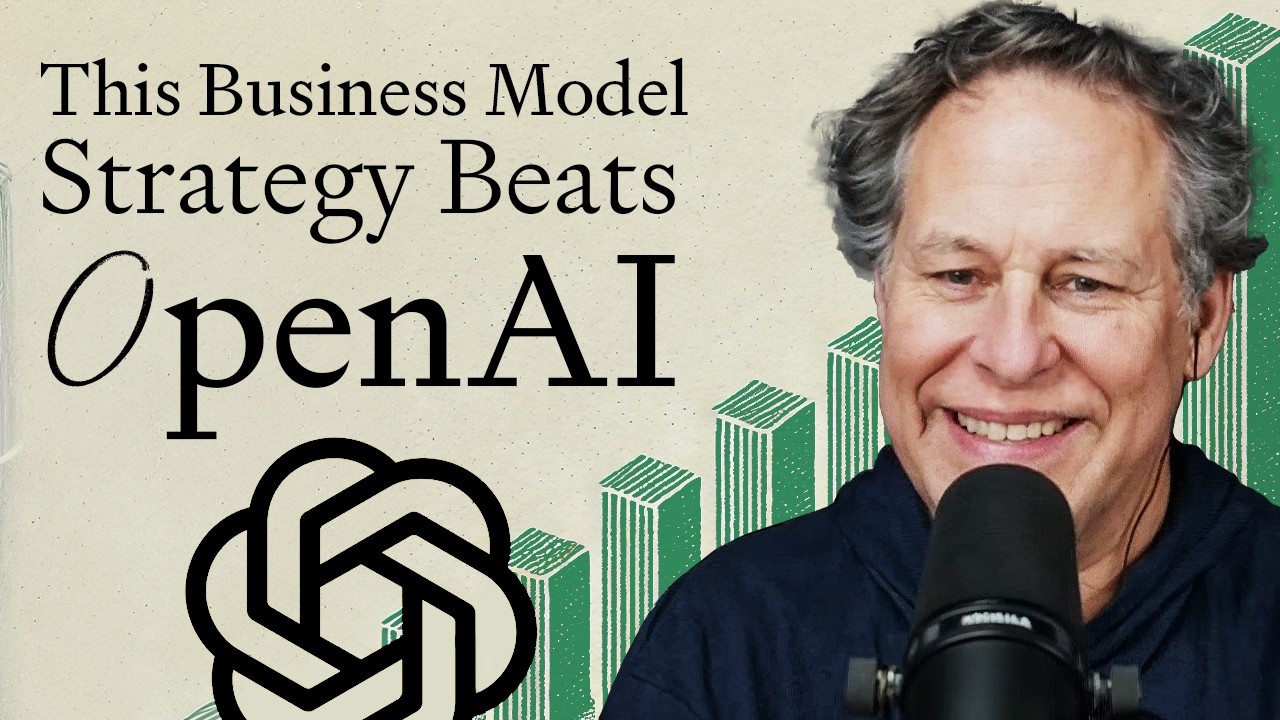
You can also check out the episodes in full here:



Tavel, Maples, and Hyatt on where we go next
As tech matures, the products get friendlier
Tavel believes the average person’s experience with AI could be far better. She gives a simple example: needing to manually add custom instructions in ChatGPT just to get it to ask clarifying questions instead of jumping straight to an answer. “It shouldn’t be this hard,” she says.

Make email your superpower
Not all emails are created equal—so why does our inbox treat them all the same? Cora is the most human way to email, turning your inbox into a story so you can focus on what matters and getting stuff done instead of on managing your inbox. Cora drafts responses to emails you need to respond to and briefs the rest.
As the technology matures, Tavel expects richer product experiences to emerge. She points to Google as an early example: One of the internet’s first consumer breakthroughs, it was built by a deeply technical team. Over time, the next wave of products—Facebook, Instagram, Snap, Pinterest (where Tavel was an early employee)—came from teams that were less technical, but deeply product-savvy.
She sees the same shift happening in AI. As the technical layer solidifies, the real differentiation will come from founders who can make intuitive, delightful user experiences. OpenAI’s recent move to launch GPT-5 inside ChatGPT with an “auto-switcher” is a step in that direction: It handles the complexity of model selection behind the scenes, sparing users from needing to remember which confusingly named model does what best.
Why the next wave of AI is multi-player
Tavel believes that one of the key product experiences coming to AI is a social layer. She recalls getting blood test results, then turning to Reddit to find a prompt that would help her use an LLM to analyze the results and adjust her supplements. “I just think someone’s going to create a UGC [user-generated content]-style community—people who are really, really good at this—who make it so much easier for the rest of us to take advantage of the technology,” she says.
In her view, the responsibility for using LLMs effectively is shifting from individual users to the companies building on top of them. She sees a future where learning from others, and sharing that knowledge easily, becomes central to using AI.
A heuristic to build better agents
Hyatt places coding agents on a spectrum defined by a simple question: “How long are they allowed to work before they ask for feedback?” Dan likens this to an extendable dog’s leash; the longer the leash, the more freedom the agent has before being reeled in.
Hyatt uses this question as a guiding heuristic when working with startups building AI agents. “For whatever problem you’re trying to solve, let’s try and think about what is the reasoning of our current SOTA [state-of-the-art] models… how long do you think you can leave them?” he says.
Internal evaluations, he notes, are key to answering that question. The better your evals, he says, the more confidently you can let the agent run. “And then let's set a mark. Are you letting this thing go for an hour? Four hours? Three days? One sentence?” This mental model has helped Hyatt and the startups he’s invested in surface new product ideas and approaches.
Why AI shouldn’t always give you the answer
Hyatt believes that AI shouldn’t default to one-shotting answers to user questions—helping the user navigate a space of possibilities can often be more valuable. He uses the example of asking ChatGPT to choose a restaurant: “I don't really trust [ChatGPT] to pick the restaurant for me… I want to talk about the theory of what kind of restaurant I want.”
That same principle applies across a wide range of decisions. For any given task, there may be several equally valid approaches. While Hyatt acknowledges that sometimes he just wants the model to pick one and move on, more often he prefers to be given a menu of options and choose for himself. “Just tell me the five different best practices for how this could be done and let me pick that versus your weirdly amalgamated LLM version of best practices all merged together,” he says.
How AI startups can outmaneuver incumbents
Maples believes that a paradigm shift is an opportune moment for newcomers to beat incumbents. He calls them “sea changes,” explaining that entirely new business models emerge in these times—creating openings for startups to counterposition themselves and win.
As an example, he brings up the rise of the personal computer in the 1990s. Once prohibitively expensive, computers became ubiquitous—and with that shift came a new kind of business model: software licensing. Companies like Oracle, Microsoft, and SAP built empires by capitalizing on it.
In the sea change of AI, Maples argues, an opportunity lies in recognizing how AI reshapes business models The key question, he says, is: “How can I as a startup exploit those new opportunities—not just inside my product, but some type of an insight in my business model [or] go-to-market strategy?” Startups, he adds, also have an edge because incumbents are typically sluggish to respond, and sometimes even disincentivized to copy them.
Tavel and Hyatt on what they look for in founders
It’s not enough to be interested—you have to be obsessed
Tavel says there are two kinds of founders: those who see it as a cool job, and those for whom it’s an affliction. The latter are the winners. “It’s a rash they just have to scratch,” she says. That kind of urgency—the drive to solve a problem no matter what—signals someone who will run through walls when they’re boxed in. These founders have also usually swum in the “mind maze” of their product, obsessing over it from every angle.
She also looks for what she calls “learning machines”: founders who can put their egos aside to build the best company possible. Being a founder is relentlessly demanding—it always asks more of you. The ones who struggle tend to chase the status of being a CEO, instead of doing the hard, often unglamorous work of becoming a great one.
Move fast while staying in tune
For Hyatt, founder quality exists on a spectrum. On one end are the highly sensitive founders—deeply attuned to every signal from their users, but prone to analysis paralysis and slow execution. On the other are the all-horsepower types, constantly charging ahead and breaking things, often because they’re uncomfortable with the ambiguity that real product discovery requires.
What Hyatt looks for is balance. Referring to Chris Pedregal from Granola and Andrew Mason from Descript, Hyatt says the best founders “move while still listening.”
The kind of startups Hyatt is hunting for
As someone who only invests in a couple of startups a year, Hyatt makes each choice with gravitas. He draws on a framework inspired by ad executive Rory Sutherland, which outlines three forms innovation can take in the real world: There's the “faster horses” type—doing something familiar, just more efficiently; “teleportation”—something radically new that people desire but haven’t been able to access; and “Japanese toilets”—surprising, delightful inventions that people didn’t know they wanted until they experienced them. “I’m wandering around and trying to find the Japanese toilets of AI,” he says.
What do you use AI for? Have you found any interesting or surprising use cases? We want to hear from you—and we might even interview you.
Miss an episode? Catch up on Dan’s recent conversations with founding executive editor of Wired Kevin Kelly, star podcaster Dwarkesh Patel, LinkedIn cofounder Reid Hoffman, former a16z Podcast host Steph Smith, economist Tyler Cowen, writer and entrepreneur David Perell, founder and newsletter operator Ben Tossell, and others, and learn how they use AI to think, create, and relate.
If you’re enjoying the podcast, here are a few things I recommend:
- Subscribe to Every
- Follow Dan on X
- Subscribe to Every’s YouTube channel
Rhea Purohit is a contributing writer for Every focused on research-driven storytelling in tech. You can follow her on X at @RheaPurohit1 and on LinkedIn, and Every on X at @every and on LinkedIn.
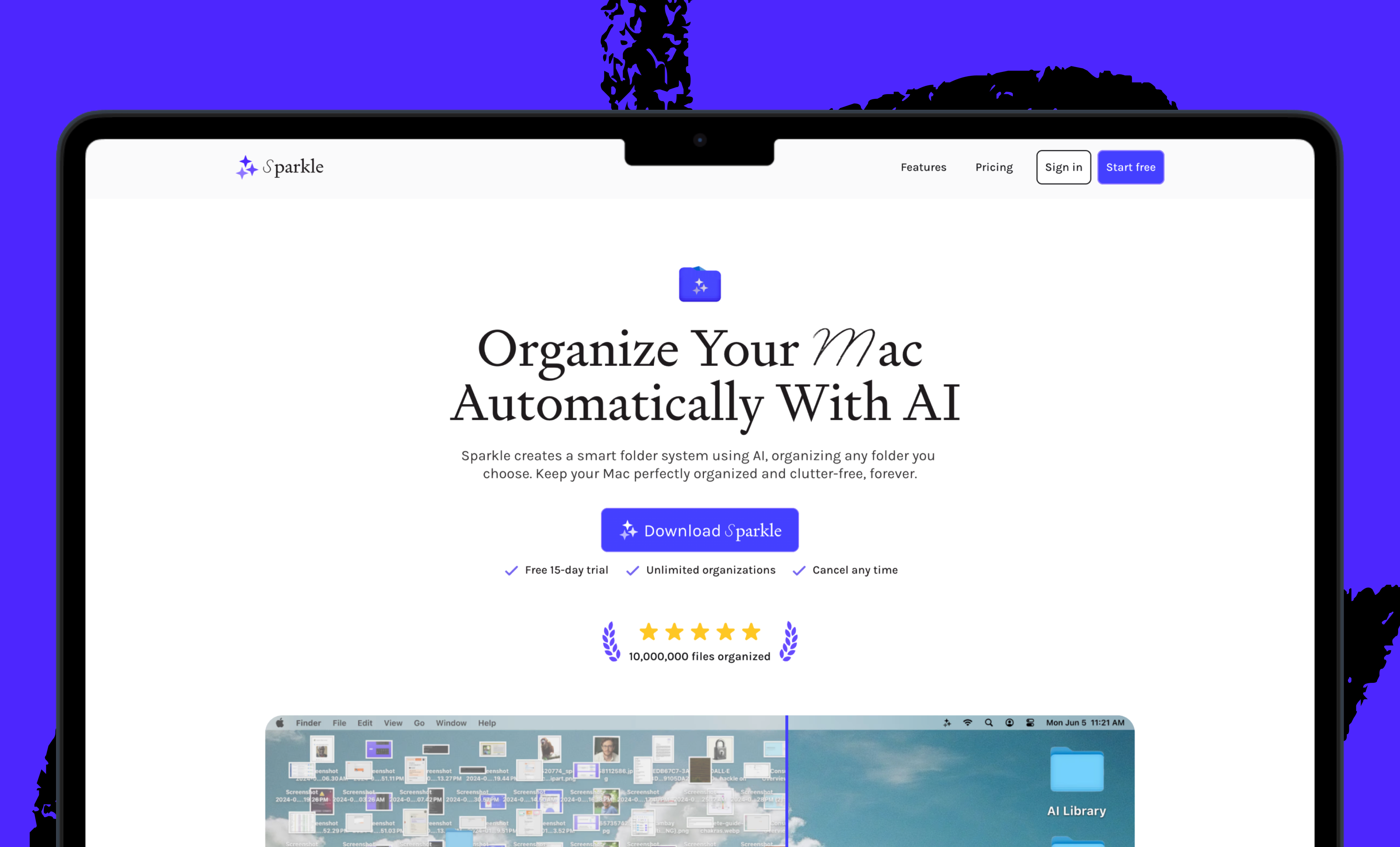
We build AI tools for readers like you. Write brilliantly with Spiral. Organize files automatically with Sparkle. Deliver yourself from email with Cora.
We also do AI training, adoption, and innovation for companies. Work with us to bring AI into your organization.
Get paid for sharing Every with your friends. Join our referral program.
The Only Subscription
You Need to
Stay at the
Edge of AI
The essential toolkit for those shaping the future

"This might be the best value you
can get from an AI subscription."
- Jay S.
 Every Content
 AI&I Podcast
 Monologue
 Cora
Cora
 Sparkle
 Spiral
Join 100,000+ leaders, builders, and innovators

Email address

Already have an account? Sign in
What is included in a subscription?
Daily insights from AI pioneers + early access to powerful AI tools




 Front-row access to the future of AI
 In-depth reviews of new models on release day
Playbooks and guides for putting AI to work
Prompts and use cases for builders
In-depth reviews of new models on release day
Playbooks and guides for putting AI to work
Prompts and use cases for builders
In-depth reviews of new models on release day
Playbooks and guides for putting AI to work
Prompts and use cases for builders
In-depth reviews of new models on release day
Playbooks and guides for putting AI to work
Prompts and use cases for builders
 Bundle of AI software




 Dan Shipper


 Reviews of new AI models on release day
Comments
Don't have an account? Sign up!