


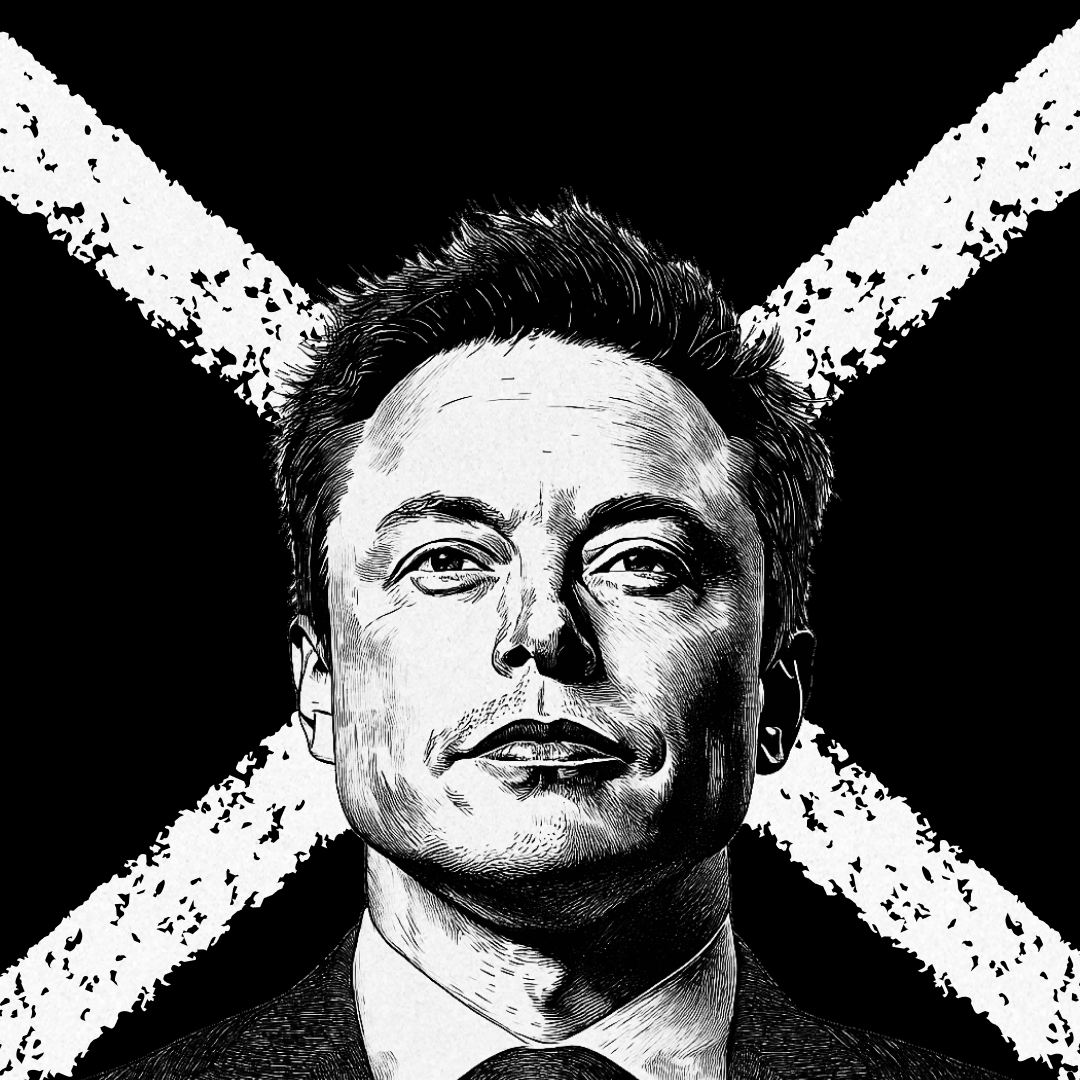


Elon Musk's rebranding of Twitter to X, a hoped-for "one-stop-shop" for finance and social media, may have seemed sudden to many. But for those familiar with Musk's history, it was a revival of a long-held dream. In this deep dive originally published one year ago, Every columnist Gareth Edwards uncovers the story of Musk's first attempt to build a financial "super-app" in the late 1990s. It's a tale of ambition, boardroom battles, and ultimate defeat that haunted Musk for over two decades. Gareth meticulously reconstructs the rise and fall of the original X.com, revealing how its collapse shaped Musk's approach to company control ever since. Read this to understand the historical context behind Musk's moves at X and gain insight into the relentless drive that has defined his career. It's a reminder that the past is nearly always prologue—and that some dreams never die.—Kate Lee
Was this newsletter forwarded to you? Sign up to get it in your inbox.
When Elon Musk announced that Twitter would become X—a “one-stop-shop” for finance and social media—many commentators were surprised. The idea seemed to come from nowhere. For those familiar with Musk’s history, however, both the name and the idea would have sounded familiar.
Musk is usually credited as one of the founders of PayPal. The story of the payments company’s rise and eventual sale to eBay for $1.5 billion is often elided in Musk’s own personal history. But behind that sale is a tale of obsession, ambition, and a series of brutal boardroom coups—one of which was sprung on him by Peter Thiel during his honeymoon—that, in Musk’s eyes, robbed him of both the company he originally founded and a chance to change the world.
That company was X, and the world-changing idea was to create a “global financial nexus,” as Musk would describe his vision. Throughout his career, it has remained the one great idea that he feels got away. Far from being a surprise, Musk’s Twitter pivot is an attempt to revive, and finally build, that dream.
To understand the future of X, then, it’s critical to understand its past. The rise and fall of X’s previous incarnation—and his first attempt to dominate fintech—has fallen out of his narrative. Though its history may read like an episode of Succession, it has defined Musk’s approach to company control and ownership ever since. Now it seems set to define the future of Twitter as well.
This is the story of X, based on contemporary articles, published videos and interviews with key players such as Elon Musk and Harris Fricker, and books (including The PayPal Wars by Eric M. Jackson and The Founders by Jimmy Soni).
‘The drive of a nuclear submarine’
In late 1998, Harris Fricker, a financial securities expert, received a call from Peter Nicholson, an old boss at ScotiaBank.
“‘I want you to meet this kid,’ [Nicholson] said,” Fricker told the C4K podcast many years later. “So I said, ‘Sure.’ I met the guy and he was incredible. Huge engine. Huge intellect. The drive of a nuclear submarine.”
The “kid” had also worked for Nicholson. As an intern, he had become frustrated that his ideas for high-risk, high-reward deals weren’t implemented by the bank. Although Nicholson hadn’t acted on these ideas, he was impressed with the intern’s drive and intellect, so they stayed in touch. That was almost 10 years ago, and things had changed. The kid, now 27, was about to become a dot-com millionaire for the first time, and he contacted Nicholson to say that he was already planning his next venture. For that he needed someone who knew finance, so Nicholson pointed him to Fricker.
The kid was Elon Musk.
Musk bombarded Fricker with details of his new plan. Zip2, the online classifieds firm he had founded with his brother, Kimbal, was about to sell, and sell big (in February 1999, Compaq bought it for $305 million). Musk’s share would be just over $20 million, and with it, he told Fricker, he intended to launch something even bigger and more ambitious. Something the world had never seen before.
As Fricker listened, Musk laid out his dream. He wanted to create something that would bring all the financial aspects of a person’s life into a single place, which he referred to as an “online financial superstore.” Here, users and businesses would hold and manage everything: checking and savings accounts. Mortgages. Stocks and shares. Loans. Insurance. It would be a global financial nexus—a mega-app that users would never have to leave.
Fricker was intrigued, but he was also reluctant to leave his multi-million-dollar job to help Musk chase his dream. Musk kept working on him, however, and after Compaq’s purchase of Zip2 was completed, Fricker found himself quitting his job in Canada and heading for Silicon Valley, where he became a co-founder of Musk’s new firm.
“Elon knew nothing about financial services,” Fricker later told C4K. “But with his audacity, and his ability to articulate a vision people would get behind, it was a pretty interesting combination.”
Interesting, it soon became clear, could be both good and bad. Fricker was surprised, for example, to discover that Musk had already become fixated on a name for the company. It would be called X.
Fricker and others expressed reservations. Banking was about trust and openness, and X hardly connoted either. Musk, however, was laser-focused on using it as the brand. He described x.com—one of the few single-letter domains registered before their use was blocked—as “the coolest URL on the internet” and informed Fricker that he’d already purchased it, giving its previous owner, Pittsburgh PowerComputer, 1.5 million shares of Series A stock in return. X marks the spot for treasure, he told a dubious Fricker and others. That’s how he saw it. That’s how others would, too. Also, it was short and easy to type, Musk said. His decision was final.
Musk’s ability to override the concerns of others at X was based not only on his position as CEO of the startup, but also on the investment he had made to get it going. Although later funding rounds would dilute his share, X began with an investment of $12.5 million of Musk’s own money. As a result, the firm’s culture and goals were almost entirely driven by Musk himself.
It wasn’t long before the relationship between Fricker and Musk began to break down. Fricker and the financial team he’d assembled became increasingly concerned about Musk’s attitude toward regulation and verification. Musk tended to see regulation as a barrier to be eluded, rather than as something through which he needed to carefully navigate, and he insisted that growth mattered much more than inserting impediments that would prevent users from accessing X’s services.
Over time, Fricker also grew concerned that for all of Musk’s talk to the media, investors, and X employees about his grand plan, the development of actual products seemed to be proceeding slowly. Musk and his developers rejected this suggestion, insisting that the financial side of the firm didn’t understand the rapid release-and-iterate approach they planned to take. But as they headed toward a 1999 debut, Fricker and Musk frequently argued over just what would be launching. By the time X opened its digital gates, in a blaze of publicity in December of that year, Fricker was gone. He arrived at work one morning to find his computer wiped and his access suspended. Musk had fired him.
Despite the turmoil behind the scenes, at its launch X promised some interesting possibilities to those brave enough to entrust their financial lives to the internet. Following Musk’s preference for using third-party software, code, and services wherever possible, X partnered with First Western Bank and Barclays. This enabled the company to offer a form of checking account at launch, complete with bank cards and checkbooks at Musk’s insistence and—via Barclays—investment fund access.
To encourage initial sign-ups, the company also tried something genuinely innovative for the sector: rather than investing heavily in advertising and marketing, it started paying customers to sign up. As Musk told CBS MarketWatch at the time: “It's a very clean, simple system. There are no minimum balances. You can open an account and receive a $20 promotional offer in your checking account. You can move $8 to your S&P fund, $3 each to your money market and bond fund, and be left with $6 in your checking.”
Musk’s thinking behind this strategy mirrored his approach to financial risk management: move fast, drive adoption, and worry about the consequences later. For all the concern this had caused Fricker and the financial teams within X, it worked. The company’s employees watched in satisfaction as the number of X account holders began to rapidly grow.
X wasn’t the only fintech startup in Silicon Valley that landed on this growth strategy. Another company—at one point based quite literally across the hall from X—was already doing the same thing. That company was Confinity.
The mobile wallet
Confinity was the brainchild of two men: CTO Max Levchin and CEO (and major investor) Peter Thiel. A Ukrainian who had come to the U.S. to study before being bitten by the Silicon Valley bug, Levchin was a talented programmer with an eye for security. He was fascinated with the growing handheld market, and saw a gap for software that would make security and communications between devices easier.
Thiel, meanwhile, was beginning to make a name for himself as a hedge fund manager and investor with an interest in technology. Levchin sought Thiel out, and the two men became friends. Levchin pitched a number of his ideas for PalmPilots—then the popular hand-held device among business users—at Thiel until eventually the investor heard one he liked. PalmPilots now came with an infrared port, which could be used to “talk” to other devices. Why not find a way to use that to send money around? Thiel, who had his own philosophical obsession with how money worked, saw promise in the idea of mobile wallets full of digital money—and the company that would become Confinity was born.
In July 1999, Confinity launched its money-sharing service, which it called PayPal. Members of the press were invited to a launch party where a representative of Nokia Ventures, the mobile company’s investment arm, “beamed” a $4.5 million investment from his own PalmPilot to Thiel’s live on stage. A TV producer, whose cameras had failed to capture the moment, asked them to do it again.
“No! We cannot do it again!” a frustrated Levchin told him from backstage. “It’s millions of dollars moving from one bank to the other.”
Most of the attending press, it turned out, assumed the whole thing had been staged. In reality, Levchin and his team had been working for 36 hours to make sure Thiel’s bit of fintech grandstanding would work. Levchin was so tired that he later fell asleep at a table in the middle of the party. The venue staff gently shook him awake in the morning, telling him that everyone had left, but that Thiel had pre-paid for his breakfast.
Like X, Confinity offered a financial incentive for prospective customers: if you signed up, you got $10 added to your mobile wallet. If you then persuaded a friend to sign up, they got $10, too. It wasn’t long before the number of accounts began to grow. Business circles in Silicon Valley became full of people pinging $1 transactions via PalmPilot to colleagues who had yet to register, in an effort to encourage them to sign up.
The killer app
While both X and Confinity fell under the category of financial services, neither firm initially saw the other as a direct competitor. Musk was ruthlessly focused on his goal of making X a one-stop-shop for all things financial. Confinity wanted to help people move and manage money on their hand-held devices. The situation changed, however, when both firms accidentally and independently created the same “killer” app—the ability to send payments from one email address to another.
At Confinity, the realization that this might be the future began to grow even before the product’s official launch. For a while, Thiel had been trying to persuade David Sacks, an ex-McKinsey consultant and friend, to join the company. Sacks asked what the product did, and Thiel explained the idea of “beaming” money. Sacks was lukewarm on the idea, believing the growth ceiling for such a product was low. Almost as an aside, Thiel mentioned that Levchin had also built a way for people to send money to another email address via the website, in case users had left their PalmPilot at work or home.
“Wait,” Sacks said. “That’s the product.” Intrigued, he joined the company on the condition that Confinity explore this avenue further.
Levchin, focused on PalmPilots, remained unconvinced. So did others at Confinity. But in April 1999, a single email triggered a tidal wave of change.
The email was from a power-seller on a hot startup auction site called eBay. The user explained that eBay did not have a native payment system, so they, and other sellers, had begun using PayPal for all their sales. The pay-by-email function made it so easy to transfer money, so to highlight it as an option and boost their sales, they wanted to include a PayPal logo on their listings. The image on the PayPal website was too big, though, and they didn’t know how to resize it. Was there any chance Confinity could send them a smaller one?
 Create a free account to continue reading
The Only Subscription
You Need to
Stay at the
Edge of AI
The essential toolkit for those shaping the future

"This might be the best value you
can get from an AI subscription."
- Jay S.
 Every Content
 AI&I Podcast
 Monologue
 Cora
Cora
 Sparkle
 Spiral
Join 100,000+ leaders, builders, and innovators

Email address

Already have an account? Sign in
What is included in a subscription?
Daily insights from AI pioneers + early access to powerful AI tools

 Front-row access to the future of AI
 In-depth reviews of new models on release day
Playbooks and guides for putting AI to work
Prompts and use cases for builders
In-depth reviews of new models on release day
Playbooks and guides for putting AI to work
Prompts and use cases for builders
In-depth reviews of new models on release day
Playbooks and guides for putting AI to work
Prompts and use cases for builders
In-depth reviews of new models on release day
Playbooks and guides for putting AI to work
Prompts and use cases for builders
 Bundle of AI software




 Reviews of new AI models on release day
Comments
Don't have an account? Sign up!
The definition of snatching defeat from the jaws of victory. Having been saved from his own stupidity, he is determined to pursue failure at his own hands. Genius.
Elon Musk’s return to his past strategies with Twitter is intriguing! Can’t wait to see where this leads. In the meantime, I’m exploring the latest car deals in Pakistan on https://www.gari.pk.
Great expose on Elon Musk, the man, the myth, the opportunist, the X-man. People associate him with creating PayPal. He tried to rewrite the code is all. Does his Asbergers affects his thinking? He is definitely not normal and a people person he is not.