


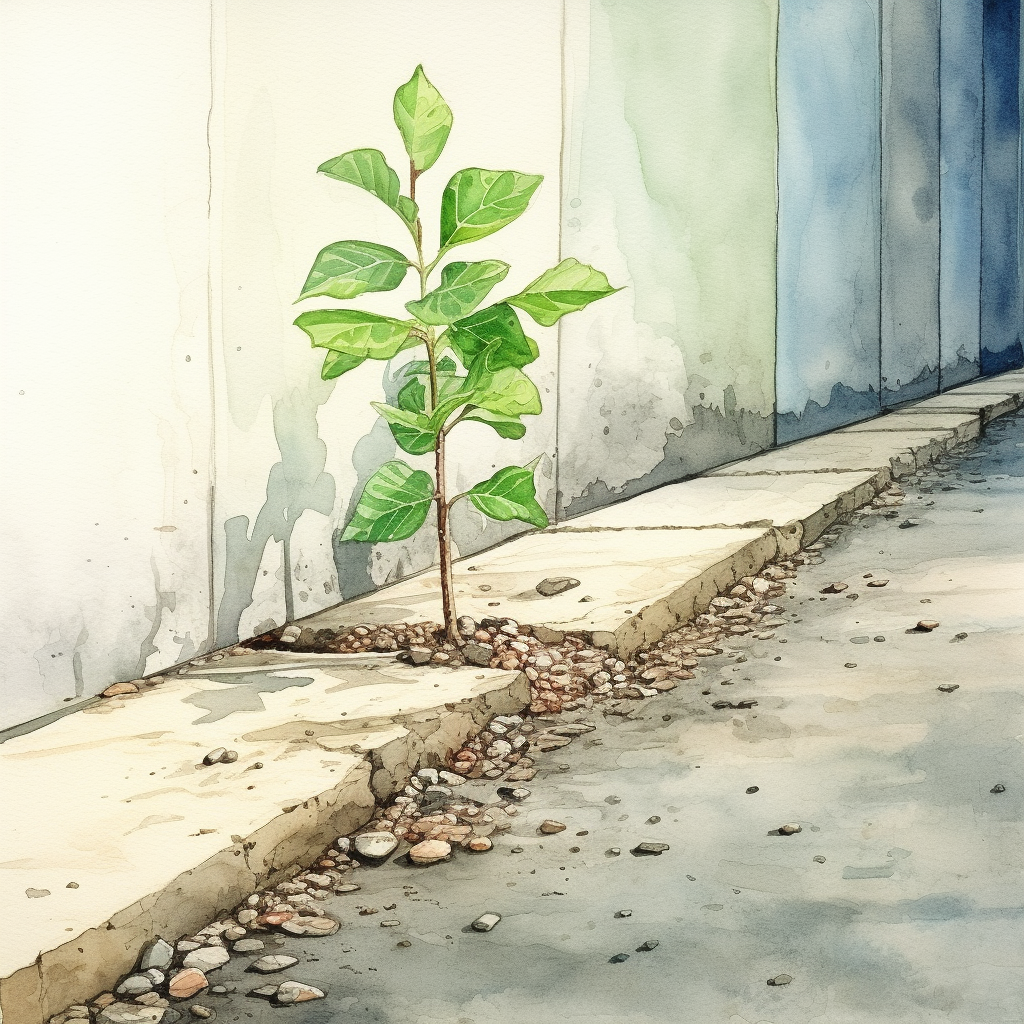


In the late 1980s, two researchers at the University of Pennsylvania observed an interesting phenomenon: in the vast majority of situations, healthy individuals and organizations do not rigidly resist change; rather, they adapt to it—but not in the way you might think. Instead of returning to the status quo, they create a new normal.
This observation is true whether it is an entire species responding to a shift in its habitat, an organization responding to the rise of artificial intelligence, or an individual getting married or divorced. Following disorder, living organisms crave stability, but they almost always achieve it somewhere new. The researchers, Peter Sterling and Joseph Eyer—a neuroscientist and a biologist, respectively—coined the term allostasis to describe this process, which they defined as “stability through change.”
At the time, this finding contradicted the conventional, centuries-old way of thinking about how living things change. Homeostasis states that following a disorder event, healthy systems return to equilibrium where they started: X to Y to X. But allostasis states that they achieve balance in a new way: X to Y to Z. Our ability to change effectively, to feel secure in growth, results from our ability to navigate this cycle. We are constantly going through cycles of order, disorder, and reorder.
It may seem like a paradox to exercise agency while also embracing something new. But our modern era is rife with accelerating and intensifying transitions—from geopolitics to pandemics to wars to artificial intelligence. Rugged flexibility is a new framework by which to reconcile and work through these rapid developments.
Rugged flexibility acknowledges that skillfully working with transformation requires strength and agency (ruggedness) and, at the same time, letting go of resistance, rigidity, and over-controlling (flexibility). In this piece, you’ll learn about this new mindset for navigating change and transformation, as well as how to apply it to circumstances in your personal and professional lives.
Achieving stability through disorder
Rugged flexibility recognizes that after disorder—a global pandemic, climate change, or the inevitable disruptions that we all face—there is no going back to the way things were. It accepts that we don’t need to look to the past to feel secure again. Instead, it teaches us to carry on its most useful lessons to what comes next, to take stock of our core values, resources, and skills—our sources of ruggedness—and then apply them flexibly.
Here are some simple and concrete examples that illustrate cycles of order, disorder, and reorder. Say you start lifting weights or gardening regularly. The skin on your hands will almost always become disturbed. Instead of futilely trying to stay smooth, eventually, it will develop calluses so it can better meet the challenge.
 Create a free account to continue reading
The Only Subscription
You Need to
Stay at the
Edge of AI
The essential toolkit for those shaping the future

"This might be the best value you
can get from an AI subscription."
- Jay S.
 Every Content
 AI&I Podcast
 Monologue
 Cora
Cora
 Sparkle
 Spiral
Join 100,000+ leaders, builders, and innovators

Email address

Already have an account? Sign in
What is included in a subscription?
Daily insights from AI pioneers + early access to powerful AI tools

 Front-row access to the future of AI
 In-depth reviews of new models on release day
Playbooks and guides for putting AI to work
Prompts and use cases for builders
In-depth reviews of new models on release day
Playbooks and guides for putting AI to work
Prompts and use cases for builders
In-depth reviews of new models on release day
Playbooks and guides for putting AI to work
Prompts and use cases for builders
In-depth reviews of new models on release day
Playbooks and guides for putting AI to work
Prompts and use cases for builders
 Bundle of AI software




 Reviews of new AI models on release day
Comments
Don't have an account? Sign up!
Good article, reminded me of Sam Harris at the end.
By the way, what sport were you out due to the injury?