




Sponsored By: Making Websites Win
This essay is brought to you by Making Websites Win, the extraordinary bestselling growth playbook that has fueled the success of companies like Amazon, Apple, Google, and Facebook to grow their conversion rate, revenue, and profit. Though it typically retails for $19.99, we're offering you a chance to claim your copy absolutely FREE today.
Everyone has a boss, and God, in his infinite appetite for cruelty, will almost certainly ensure that said individual is a dumbass. Maybe you spit on an Indian burial site and got cursed. Maybe low IQ is a prerequisite for VP titles or board seats. Who knows. Regardless, you are going to have to learn to deal with people more powerful than you. So learning how to navigate an organization is one of the most important skills for a career. Yes, it is trite and bleak and horrible, but I would prefer a colleague who can get the VP to agree with what our team wants over any other capability.
The need for this skill is especially acute for those of us who do analysis for a living. Whether you are tasked to build a financial model, a dashboard on user data, or a flowchart of workflows, if you are semi-regularly asked, “Can you figure that out?” this guide is for you.
These are hard-won lessons. Frankly, for most of my career I was atrocious at this. My analysis has always been good, but I sucked at translating the spreadsheets into company change. I (foolishly) thought that “data would prevail” or “management will do what the math says we should.”
But what data is, or what “right” even means, can be strongly skewed by incentives or bias. Even though most firms should base their decisions on analytical rigor and risk-adjusted investment, they end up doing so based on hubris.
So, after nearly a decade of doing this wrong, please learn from my mistakes. These skills should be used for good (improving the company’s chance of success) but are also applicable in a more Machievellian sense, if that’s your sort of thing. To make this feel more real, I’m going to walk you through a work of analysis I did here at Every. Using it as a framing device, I’ll share three ways to use narratives, psychology, and gotcha slides to win at work.
Toro, toro, toro
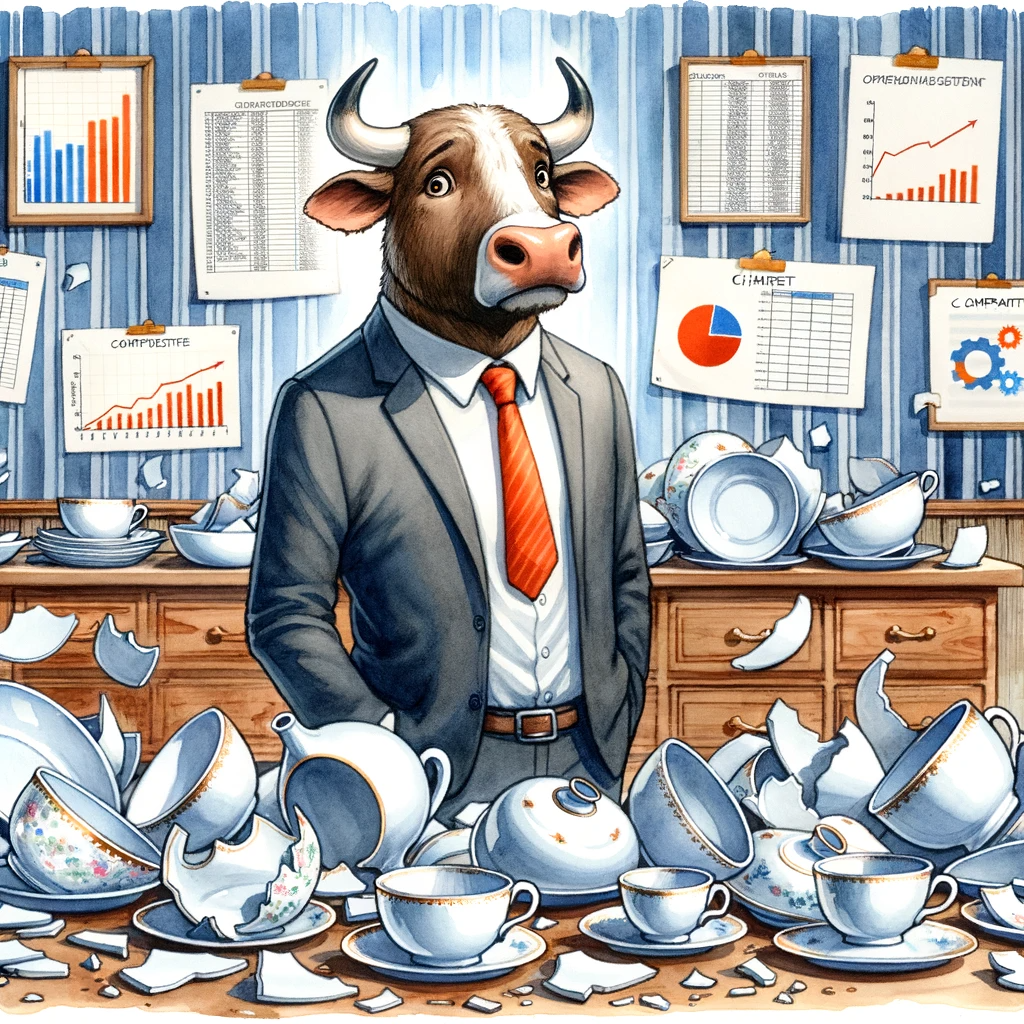
I think of founders and executives as bulls in the budget shop. They’re strong and powerful and ill-tempered and a smidge destructive. The skills that let them ascend to the top of an organizational structure very rarely include analytical rigor. Great founders and CEOs typically shine in their ability to understand and communicate stories. Their job is to rally investors and team members—with the most universal way to do so in charisma and charm.
These are the people you need to convince, so instead of trying to teach them how math works, adjust your math to their story.
Whenever I’m presenting an analysis, I like to start with the story of how we got to the need for this analysis to be with and why this math matters—fairly normal advice. However, I’ll take it a step further.
Rather than rattle off the numbers along with my suggested fix, I’ll wave three red story flags in front of the executive’s eyes. Each discrete work of analysis has an accompanying story to be told. Your job is to get the bull to pick which flag to charge at. Since founders are the bulls in the arena, you either give them a target or they will just rage about willy-nilly. As you get better, you’ll be able to present all three stories, but they’ll charge the one you want every time.
At Every, top of the funnel has always been our biggest concern. Our traffic mostly derived from people sharing our essays on social media—in particular, on Twitter. Unfortunately for us, Twitter was bought by Grime’s jilted ex-lover, who instituted algorithmic changes that have decimated one of our best sources of traffic. Since we need, like, customers, this is a business-is-on-fire situation.
I put a meeting on everyone’s calendar called “I got 99 growth problems and Twitter’s the biggest one.” When we met, I started off by showing the overall traffic decline to Every’s website. Then, I showed this chart of Twitter views volume.
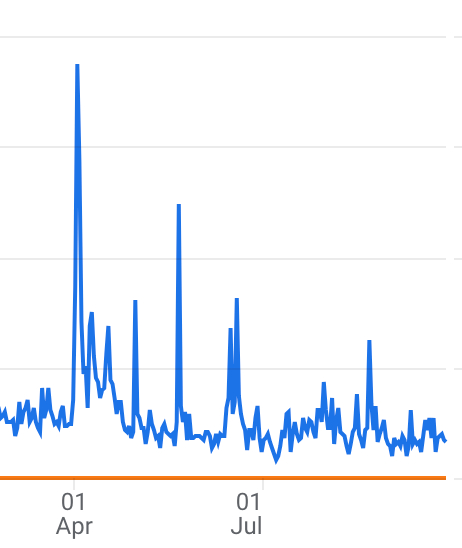
Source: Google Analytics (a product so abysmal that I can’t get the damn charts to do what I want or look how I want or show what I want. I hate I hate I hate).
I didn’t show this because Every CEO (and my boss) Dan doesn’t know that Twitter sucks now, but because I got him to focus by waving that red flag. He has a lot on his mind (note from Dan: "for example, my lead writer says unhinged things about me in this newsletter"), so getting him to dial in is important.
In my preparation for the meeting, I knew that I would need Dan to approve a few growth initiatives. I had done a bunch of math that showed which ones were most likely to work, but he needed to OK the new workflows. Thus, the red flags.
 Create a free account to continue reading
The Only Subscription
You Need to
Stay at the
Edge of AI
The essential toolkit for those shaping the future

"This might be the best value you
can get from an AI subscription."
- Jay S.
 Every Content
 AI&I Podcast
 Monologue
 Cora
Cora
 Sparkle
 Spiral
Join 100,000+ leaders, builders, and innovators

Email address

Already have an account? Sign in
What is included in a subscription?
Daily insights from AI pioneers + early access to powerful AI tools





 Front-row access to the future of AI
 In-depth reviews of new models on release day
Playbooks and guides for putting AI to work
Prompts and use cases for builders
In-depth reviews of new models on release day
Playbooks and guides for putting AI to work
Prompts and use cases for builders
In-depth reviews of new models on release day
Playbooks and guides for putting AI to work
Prompts and use cases for builders
In-depth reviews of new models on release day
Playbooks and guides for putting AI to work
Prompts and use cases for builders
 Bundle of AI software





 Evan Armstrong

.08.31_AM.png)

 Dan Shipper
 Reviews of new AI models on release day
Comments
Don't have an account? Sign up!
Killer writing, and spot-on insights I wish I'd had five years ago. Nailed it.
@bethadele Thanks Beth! It is wild how much of a difference the little things make
Great writing 👏
Great post--I'm both a Founder and analyst for many of my clients, and your framing on how to set-up and manage these types of meetings is spot on based on my 20 years doing this work. It's a must read for both analysts and C-Level!
@rob.silas appreciate it rob. The meta-game where everyone is trying to manipulate everyone is something for a latter post i think...
@ItsUrBoyEvan Ha! You mean the "my data is better than your data" post? That would be a great one I agree!
You have three good stories in this article. I think you have the experience to write them all. One story, coming from your lede is What Happens When You Become the Founder and You Are Your Own Boss. Another story is What Makes Dan Shipper The Most Fascinating Boss In My Career. The third story is Why Storytelling Skills Always Come Before Spreadsheets.
A backstory in your article can be why do the children of founders usually perform worse than the founder? There's a ton of data on that which says, founders are dreamers and raging visionaries. The next generation after them tend to go to college and think spreadsheets are important. That's why the pioneers kept moving and the settlers were the ones to stay, farm, and raise children. Big, big difference in the brain wiring of a founder and the brain of managers, maintenance, plodders, long-haul drivers.