





Sponsored By: Stacker Studio
If you love reading Napkin Math, you know how I hate big tech taking nearly 40% of money from advertising and acquisition costs.
Stacker Studio fixes that problem by helping companies win in organic search through the creation and distribution of authoritative content to America’s top news networks. Stacker develops newsworthy, data-driven stories for you and distributes them through 3,000+ authoritative channels, including SFGate, Chicago Tribune, NY MSN, and Newsweek. They get hundreds of high-quality/SEO-friendly earned pickups and dofollow backlinks pointing to your site, valuable reach into new audiences, and meaningful increases in traffic over a 6-month pilot.
For Napkin Math readers, Stacker Studio is extending 10% off their list price for any new partnerships before the end of March.
One of the ways that I knew crypto was in the midst of a stupid crazy, eye-popping, slap-ya-momma-silly type of bubble last year was by the amount of leverage available to retail investors. If you aren’t a degenerate gambling addict (aka a Robinhood user), you may be unaware of how leverage works. This is where traders will put down some money and then a third party will loan them some multiple of that. When it works, it means you get to capture lots of profit on a larger position than you had the initial cash for. The formula is simple:
Outcome = (amount of money required to open a position) x (% price movement) x (leverage)
Basically, you are required to put down a certain percentage of an asset’s value, then the third party will give you some money to cover the rest of the position, and then you pray to God that the numbers go up. Trading using leverage acts as an outcome multiplier. Little moves in asset prices can mean big investment outcomes in either direction. Win big, lose big. Traders use this tool because it allows them to magnify smaller price movements (e.g., a 2% swing can be a big deal if you are levered up enough), but they also use it because it allows for an outsized impact. Investing is a scale sport, and if you don’t have lots of cash, using leverage allows you to trade as if you do.
In a simplified example, imagine having $1,000 to invest in a stock, then borrowing $100K to amplify your investment. If the stock goes up 5%, your gain is $5K instead of $50—but if it goes down 5%, your loss is also $5K instead of $50.
In a regulated, normal-world security market, the U.S. government enforces a 2x leverage limit. In contrast, crypto exchanges regularly offer up to 100x leverage. It is super, super dangerous to play with and at scale can lead to horrendous societal outcomes. The market crash of 1929 was partially driven by the rampant use of unregulated margin trades. There are numerous horror stories on Reddit of people losing millions over the course of several months using similar tools. Or as Warren Buffet said in 2010,
"It gets down to leverage overall…I've always said, ‘If you're smart, you don't need it; and if you're dumb, you shouldn't be using it.’"
Note: My finance professor at BYU once called Wall Street “Las Vegas for Mormons.” The faith of my forebearers famously prohibits gambling but you’ll still find my clean-cut Mormon brethren populating every major bank in the world, happily gambling away guilt-free on the stock market. I wonder what percentage of crypto trades are done by Diet Coke-shotgunning former missionaries?
That unsophisticated investors have 50 times more leverage available in crypto versus stock markets is, to me, a clear indicator of an asset class that is so wildly volatile that it obviously hasn’t settled into the more understandable rhythm of traditional investments. You could argue that this craziness is the result of ponzi schemes, lack of inherent value, early market jitters, or whatever, but I think a part of it is the result of an undiscussed power of the internet—leveraged thoughts.
The formula I described above is by necessity translated into the terms of single security purchases. However, I propose that is there is another somewhat fuzzy version of this formula for leveraged thoughts. The formula would look something like this:
Power Output = (An Idea) x (Number of People Who Believe It) x (The Power of The People Who Believe)
Let’s walk through each term in this equation, and note how it is similar to the equation for leveraged trades:
- Power Output = The resulting actions, fiscal or otherwise, that come from an idea. For today we will mostly discuss finance/business thinking because, well, that is what I write about. But it holds true for all sorts of ideas! Much of social change and improvements in government can be traced to ideas that were leveraged. Thomas Paine’s Common Sense was a mass-distributed pamphlet by an anonymous author that helped catalyze the American Revolution. The power output could be measured in revolutions or returns, but the key component is that the output is much bigger then if some thinker just used the idea on their own.
- The “Idea” = What you bring to the table. Ideas on the internet can be anything from a meme to naming an important new category of business. This concept is similar to the first term in the leveraged stock trade equation (“amount of money required to open a position” or % purchase price of a security covered by cash or collateral). Ideas qualify because the only capital they require is intellectual and reputational—all you are risking is that your idea will be wrong. There is no financial requirement.
- Number of People Who Believe It = “% price movement” in the original leverage formula. Like I said, this is a somewhat fuzzy equation! But in the first formula, small movements in the price have large impacts. Leverage provides scale and thus juices returns. Similarly, we continually underestimate the scale of eyeballs that accompany publishing on the internet. The internet is the ultimate attention leverage ever conceived. A relatively minor change spread out over tens of thousands of people results in massive real-world implications.
- Power of the People Who Believe = Leverage. Ultimately, the bigger the concentration of power that accompanies an idea, the more impact it will have. If the audience that receives an idea is truly powerful (whether via capital, politics, or otherwise), they can magnify the idea. Similarly, the more leverage that accompanies a trade, the more outsized the outcomes will be. To optimize idea leverage, individuals will want to target an audience that has the power to effect the change they are advocating.
The internet is beautiful because it is rooted in an ideological egalitarianism, an environment that allows for a free exchange of ideas. Whether President or pole dancer, everyone types in the same URL and hits enter. This means that ideas can go both further, in terms of reaching more people, and deeper, in that they can penetrate powerful elite institutions. If you write something well enough, and it somehow reaches the right person, an idea can suddenly take on a life of its own. Essentially, you can be loaned power on margin by means of the size and power of an audience you publish to. You provide the initial intellectual capital, and the idea takes a life of its own from there.
Crypto is one of the most prominent examples of the leverage that occurs with the internet. Digitally native currency that works without third party approval is immensely, scarily powerful on its own. Couple that with tens of millions of believers that have capital to burn, and the result is a highly leveraged idea. Part of the reason crypto has such wild price swings and so much leverage available is because of the volume and power of its believers.
 Create a free account to continue reading
The Only Subscription
You Need to
Stay at the
Edge of AI
The essential toolkit for those shaping the future

"This might be the best value you
can get from an AI subscription."
- Jay S.
 Every Content
 AI&I Podcast
 Monologue
 Cora
Cora
 Sparkle
 Spiral
Join 100,000+ leaders, builders, and innovators

Email address

Already have an account? Sign in
What is included in a subscription?
Daily insights from AI pioneers + early access to powerful AI tools
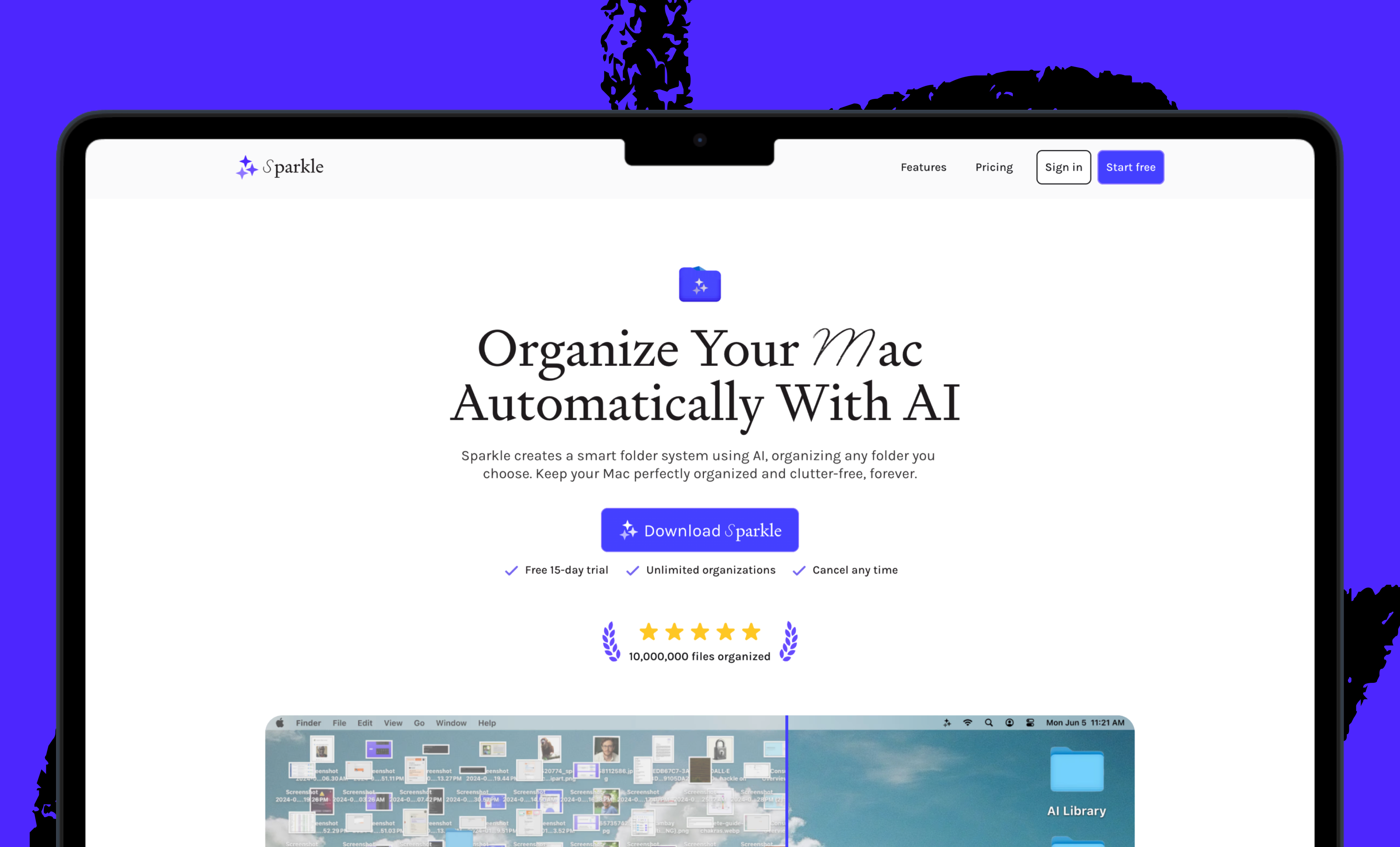

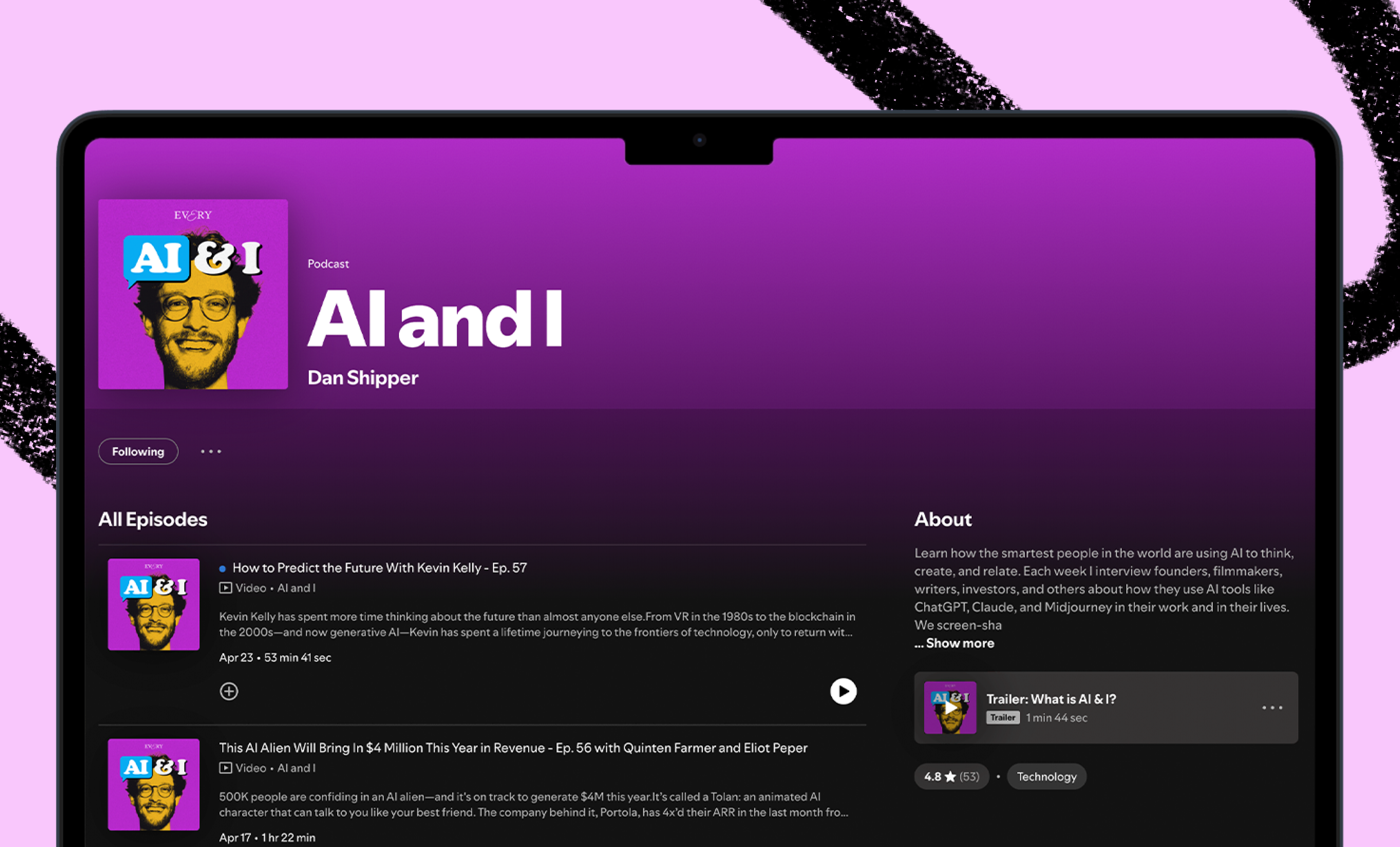

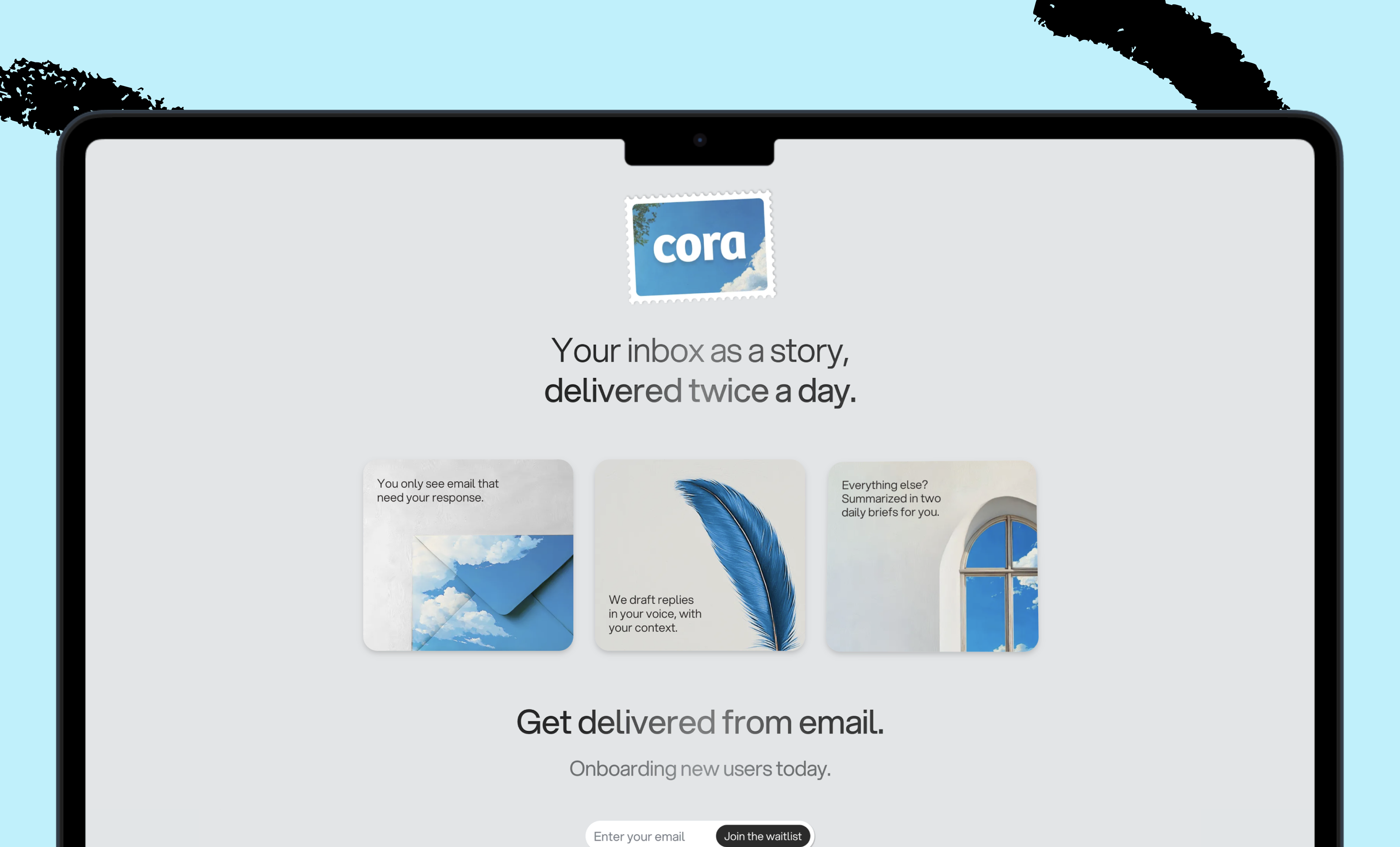
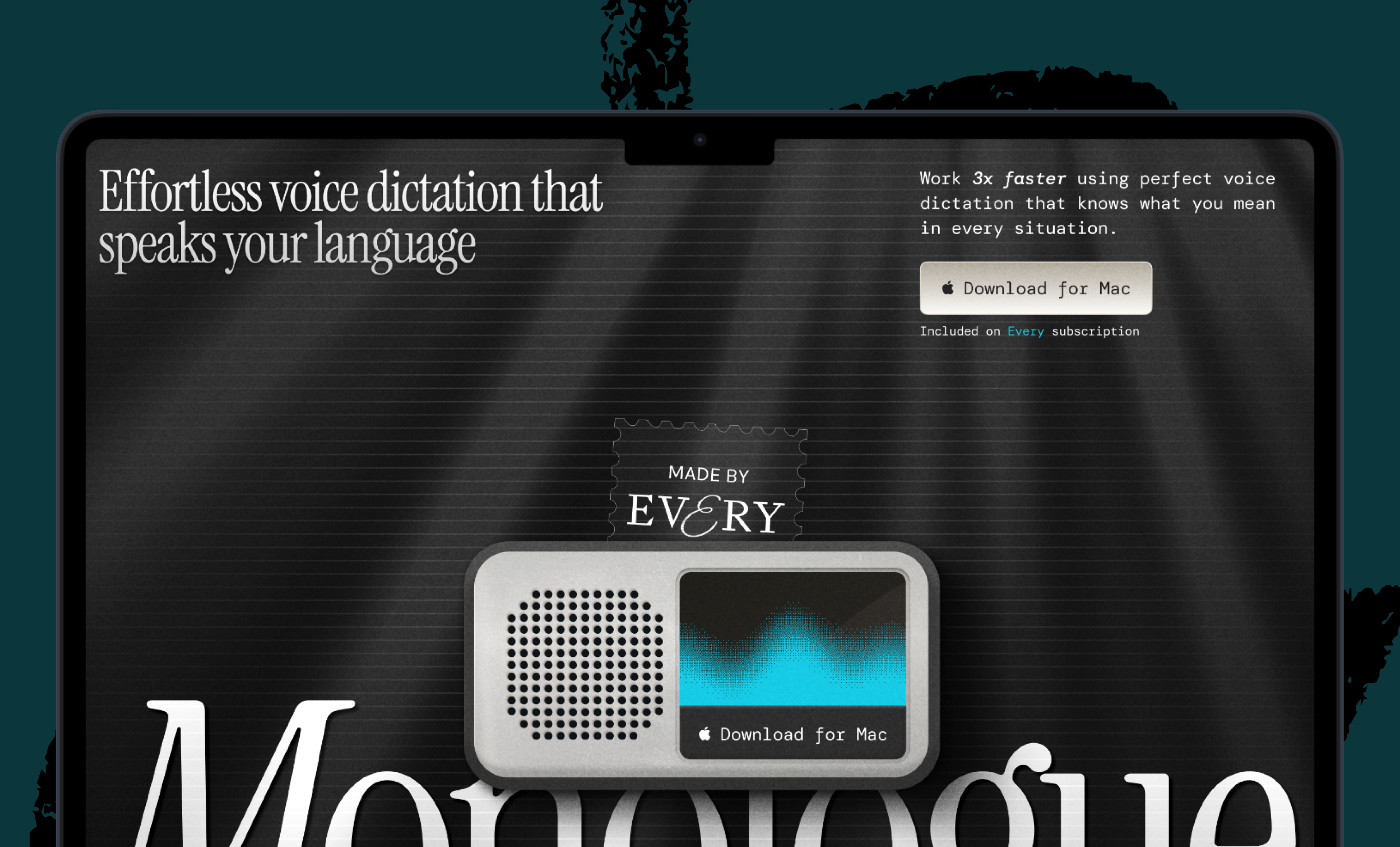
 Front-row access to the future of AI
 In-depth reviews of new models on release day
Playbooks and guides for putting AI to work
Prompts and use cases for builders
In-depth reviews of new models on release day
Playbooks and guides for putting AI to work
Prompts and use cases for builders
In-depth reviews of new models on release day
Playbooks and guides for putting AI to work
Prompts and use cases for builders
In-depth reviews of new models on release day
Playbooks and guides for putting AI to work
Prompts and use cases for builders
 Bundle of AI software




 Evan Armstrong


 Dan Shipper
 Reviews of new AI models on release day
Comments
Don't have an account? Sign up!