




Sponsored By: Brilliant
This article is brought to you by Brilliant, the app that helps you master core concepts behind AI, neural networks, and more in minutes a day.
Somewhere deep in the bowels of Apple Park, there almost certainly exists a secret team of designers working day and night to answer one question:
How should we update iOS to take advantage of AI?
Apple is smart. It knows we’re living through a Cambrian Explosion of technology thanks to AI. It knows user habits and expectations are changing. And it definitely knows that no product category will be spared. Today it may seem like just Google Search is at risk of disruption thanks to products like ChatGPT, but that is just the beginning. Smartphone operating systems will be forced to change, too.
The stakes for Apple couldn’t be higher. The iPhone is the cornerstone of its entire $2.6 trillion dollar empire. Just counting iPhone hardware sales, it makes up half of Apple’s nearly $400 billion in annual revenue. But much of the other half—App Store revenue, AirPods, Apple Watch, etc—directly depend on the success of the iPhone.
In the next few years, there are only two options for the iPhone: adapt, or die. Of course, it will take time for the consequences to fully play out—the iPhone is not going to die anytime soon. Apple’s moat means it doesn’t necessarily need to be the first mover. But it will need to move quickly—and the next few years will be pivotal.
I’ve been an obsessive iPhone user since the day it came out in 2007, so I can’t help but wonder how this product that is such a big part of my life will evolve in the face of perhaps the biggest technology shift I have ever seen.
I’m sure you could come up with all sorts of completely new designs that totally reinvent the user interface, but I am hopelessly pragmatic. Radical new concepts that would never work in practice don’t interest me. In the real world, you can’t change everything about a product that’s as established as the iPhone and expect it to work. People’s habits and expectations are an important part of why iPhones keep selling year after year. This is a specific example of the more general principle of path dependency: the future depends on (and has to emerge from) the past and present. Real, working systems don’t get totally reinvented. They incrementally evolve.
In a few months, WWDC is happening. Hopefully we’ll see some early glances at what Apple has in store for us as they unveil iOS 17. My guess is that not much will change. But I think it’s entirely possible that over the next two or three years they will make bigger changes than they have in the past twelve.
So let’s walk through how the iPhone might evolve going forward as AI becomes a more useful and important part of our computing lives. What needs to change? What role will Siri play? What is the simplest path forward? Let’s start at the beginning.
The Lock Screen
This is what you see when you first pick up your phone. It has not changed much since 2007:
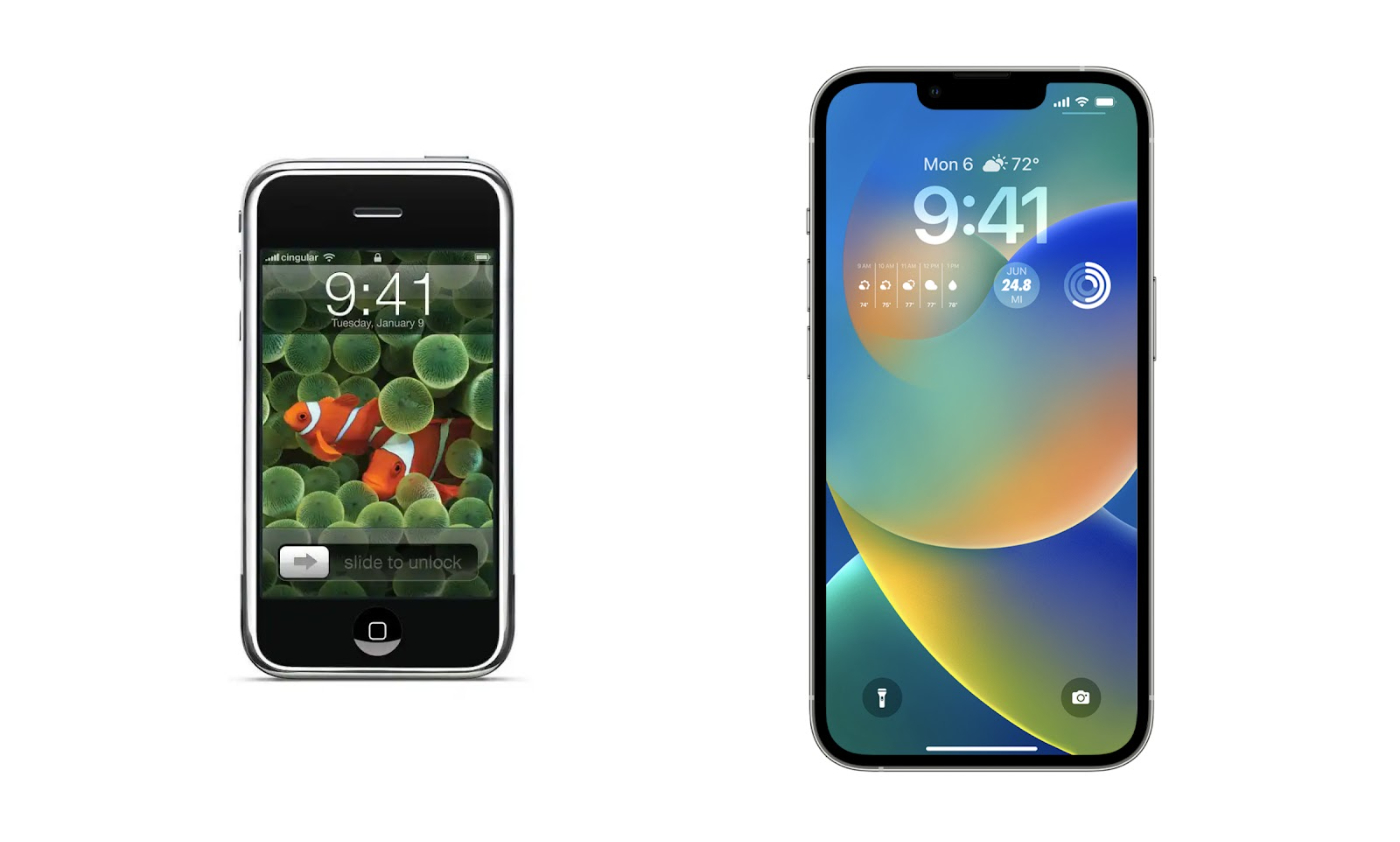
- You swipe up from the bottom to unlock the phone
- There are two buttons at the bottom for functions you need in a hurry: the flashlight and camera
- At the top there are now widgets to show you quick bits of information
- More visual customizations
So how should this screen incorporate AI? I see two main ways.
The first is about having a faster, more obvious way to access Siri. Siri should become much more useful and important in the coming years, so I wouldn’t be surprised if we see a new button to launch Siri at the bottom of this screen:
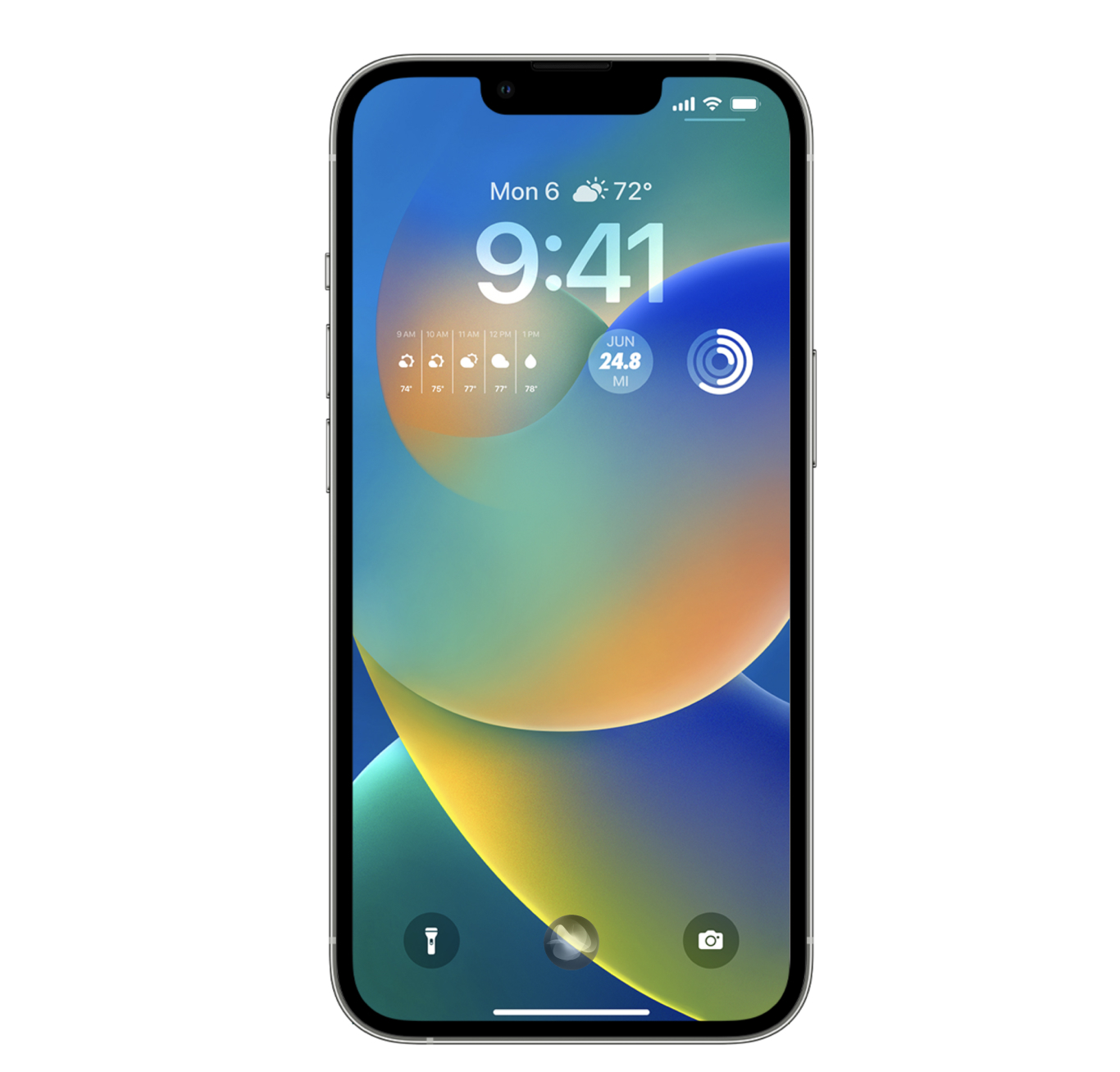
You can currently access Siri from this screen by holding down the lock button on the right side of the phone while you speak a command. But I don’t think this design is going to work in the future, for two reasons:
- I can’t always speak out loud to an AI. Sometimes I want to type.
- Holding down an unlabeled button is not an obvious action. A lot of users will miss it or forget to do it. This is fine today, but it would become a problem if Siri became more important.
 Create a free account to continue reading
The Only Subscription
You Need to
Stay at the
Edge of AI
The essential toolkit for those shaping the future

"This might be the best value you
can get from an AI subscription."
- Jay S.
 Every Content
 AI&I Podcast
 Monologue
 Cora
Cora
 Sparkle
 Spiral
Join 100,000+ leaders, builders, and innovators

Email address

Already have an account? Sign in
What is included in a subscription?
Daily insights from AI pioneers + early access to powerful AI tools
 Front-row access to the future of AI
 In-depth reviews of new models on release day
Playbooks and guides for putting AI to work
Prompts and use cases for builders
In-depth reviews of new models on release day
Playbooks and guides for putting AI to work
Prompts and use cases for builders
In-depth reviews of new models on release day
Playbooks and guides for putting AI to work
Prompts and use cases for builders
In-depth reviews of new models on release day
Playbooks and guides for putting AI to work
Prompts and use cases for builders
 Bundle of AI software




 Evan Armstrong
 Dan Shipper
 Reviews of new AI models on release day
Comments
Don't have an account? Sign up!
Great stuff.
All great proposals but I’m not holding my breath. The more success a company is, the less it innovates. Apple has barely produced anything new since Steve Jobs passed away. It’s even less likely to do so now.