





Sponsor Every!
Every is now accepting select sponsors. We’re looking for companies who want to bring new tools, systems, and technology to our audience of 45,000+ founders, investors, and operators in tech.
Interested?
1
In the Spring of 2018 I got invited by the CEO of Substack to come to Toronto for a couple days to hang out with the whole team—which at the time was just the three co-founders—so we could all get to know each other. They had just finished Y Combinator, raised a seed round, and were looking to grow the team. I was auditioning for the role of employee #1.
They wanted a general-purpose product builder who could come up with good ideas and take them from beginning to end without much supervision. Most importantly, this had to be someone who was on the same page philosophically, and grokked the founding vision.
On my end, I was looking for something exciting to build from the ground up at the intersection of media and technology. I needed it. I was less than a year past my startup failing, and a few weeks past losing my job as “Head of Product” at Gimlet, the podcasting network that would go on to be acquired by Spotify, because the company decided to stick to content and not build some of the tech ideas they had flirted with when they brought me on 9 months prior. I still remember the day I walked into a conference room for my regular weekly 1:1 with my boss. I knew something was up because he was usually completely relaxed, and treated me more like a co-conspirator than a direct report. But the mood was different that day when he said something like, “from the beginning you’ve been very clear you want to build something that could fundamentally transform Gimlet, but we’ve realized that’s not the path the company wants to take.”
The taste of defeat was still in my mouth when I flew to Toronto to try and wash it down with a little poutine, a lot of beer, and a healthy dose of the wild, uncomplicated optimism that’s only possible in the earliest days of a new venture. On that front, I got even more than I anticipated.
The atmosphere with Chris, Hamish, and Jairaj couldn’t have been more different from my old environment. I had teleported from the living embodiment of the “messy middle”—the grind of a mid-stage startup that’s doing objectively well but bearing the weight of complex execution challenges and massive expectations—to the early hours of a fever dream depicting a revolutionary new model for publishing. It was thrilling! I was already bought in on the vision before that trip, but spending three nights and days bullshitting with the founders made me somehow even more certain that this dream would come true, and that I could play a part in it.
The thing I didn’t understand going into it was that Substack wasn’t just about an economic trend of power flowing to individual writers thanks to the leverage technology gives them—it was about creating a morally superior playing field that could help heal our minds from the damage done by social networks. The Substack model wasn’t just a business strategy, it was a political philosophy, and I loved it.
I got the part.
2
Not many people know this, but the origins of Substack can be traced back to an essay that Chris, the CEO, wanted to write. (Appropriate, for a publishing platform!)
It was early 2017, and he had just wrapped up an 8-year run as the CTO of Kik, the company he founded as a college student. He had some newfound time on his hands, and the world was falling apart. This was the very beginning of the Trump presidency, the Scaramucci era, the “Obama wiretapped me” era, the “alternative facts” era—perhaps the most ridiculous era in American history. I don’t know if this context was specifically on Chris’s mind as he sat down to write, but I do know this: around this same time, Chris decided to write an essay about the problems created by the systems that control human attention.
He got to work, and then reached out to someone he thought would be able to help: Hamish, a journalist who worked with Kik as an editorial advisor. When Hamish read a draft, he said, “Yeah you’re right about all the problems created by advertising and social media, but everybody already knows this. The question is: what can be done? What is the solution?”
They kept working on the essay together, and in the process decided to start a company that could enact the ideology outlined in it. Philosophy first, company second. The essay was published on July 17, 2017, and is the first entry in the official Substack company newsletter.
The whole thing is worth reading, but to give you the quick TL;DR, basically it traces the history of modern publishing back to the decision in 1833 of a guy named Benjamin Day to offer his newspaper, The New York Sun, for a sixth the price of his competition. His strategy was to focus on sensational journalism to get broad reach, and make up for the losses in subscription revenue through advertising. That model has dominated media to this day, except it’s now broken, because Facebook and Google and Craigslist took all the advertising revenue. The answer is to build a new ecosystem where individual writers or small teams offer hyper-focused subscription products that add genuine value to readers' lives, rather than merely trying to trick them into clicking.
And then comes the key paragraph:
“We believe that journalistic content has intrinsic value and that it doesn’t have to be given away for free. We believe that what you read matters. And we believe that there has never been a better time to bolster and protect those ideals. Now, more than ever, publishers of news and similar content can be profitable through direct payments from readers. In fact, we are so convinced by this notion that we have started a company to accelerate the advent of what we are convinced will be a new golden age for publishing. The company is called Substack.”
Here the ideology motivated the business—not the other way around, with a pretty story painted on later to help employees to feel like they’re doing something other than enriching their bosses, as is the case with so many startups.
A year later Chris published a post about his love-hate relationship with Twitter, which took the ideology a step further:
“Twitter makes money from your attention, so they need to compel your attention. Sometimes that leads to good things, like connecting you to people and ideas that matter. But it also means that the addiction, abuse, and outrage that thrive on Twitter and other social platforms may be impossible to eradicate. So what’s left to do? You can change the rules. That’s why we started Substack: when readers pay writers directly, it’s a whole new game.”
In 2021 he got even more aggressive:
“Social media giants gave us rekindled friendships, family photos, even the occasional uplifting story or useful insight. But too much of what we’ve received has been toxic gruel, tube-fed (through aptly named “feeds”) by sophisticated algorithms designed to exploit our worst impulses and keep us agitated, excited, engaged.”
Agitated, indeed!
3
 Create a free account to continue reading
The Only Subscription
You Need to
Stay at the
Edge of AI
The essential toolkit for those shaping the future

"This might be the best value you
can get from an AI subscription."
- Jay S.
 Every Content
 AI&I Podcast
 Monologue
 Cora
Cora
 Sparkle
 Spiral
Join 100,000+ leaders, builders, and innovators

Email address

Already have an account? Sign in
What is included in a subscription?
Daily insights from AI pioneers + early access to powerful AI tools
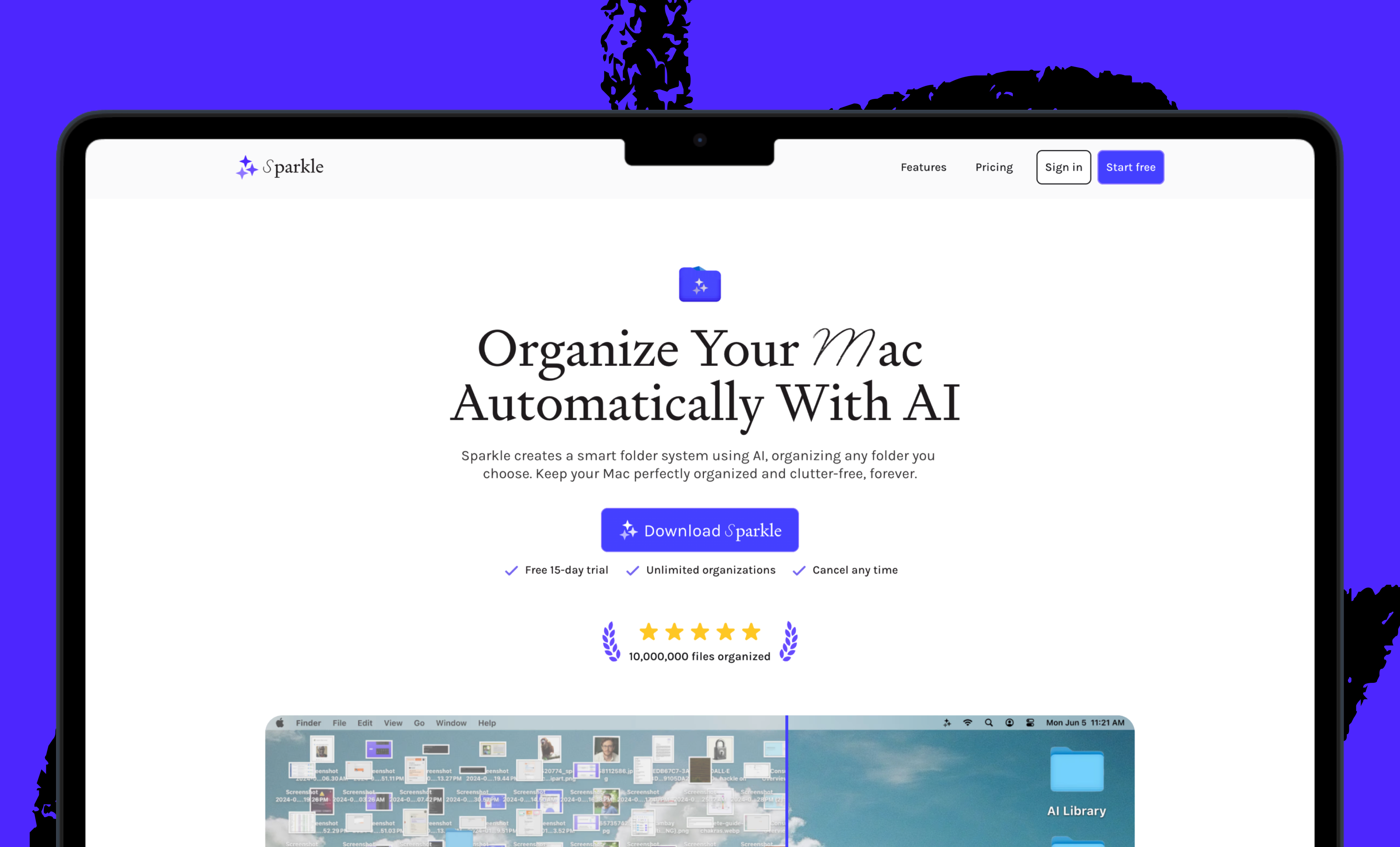
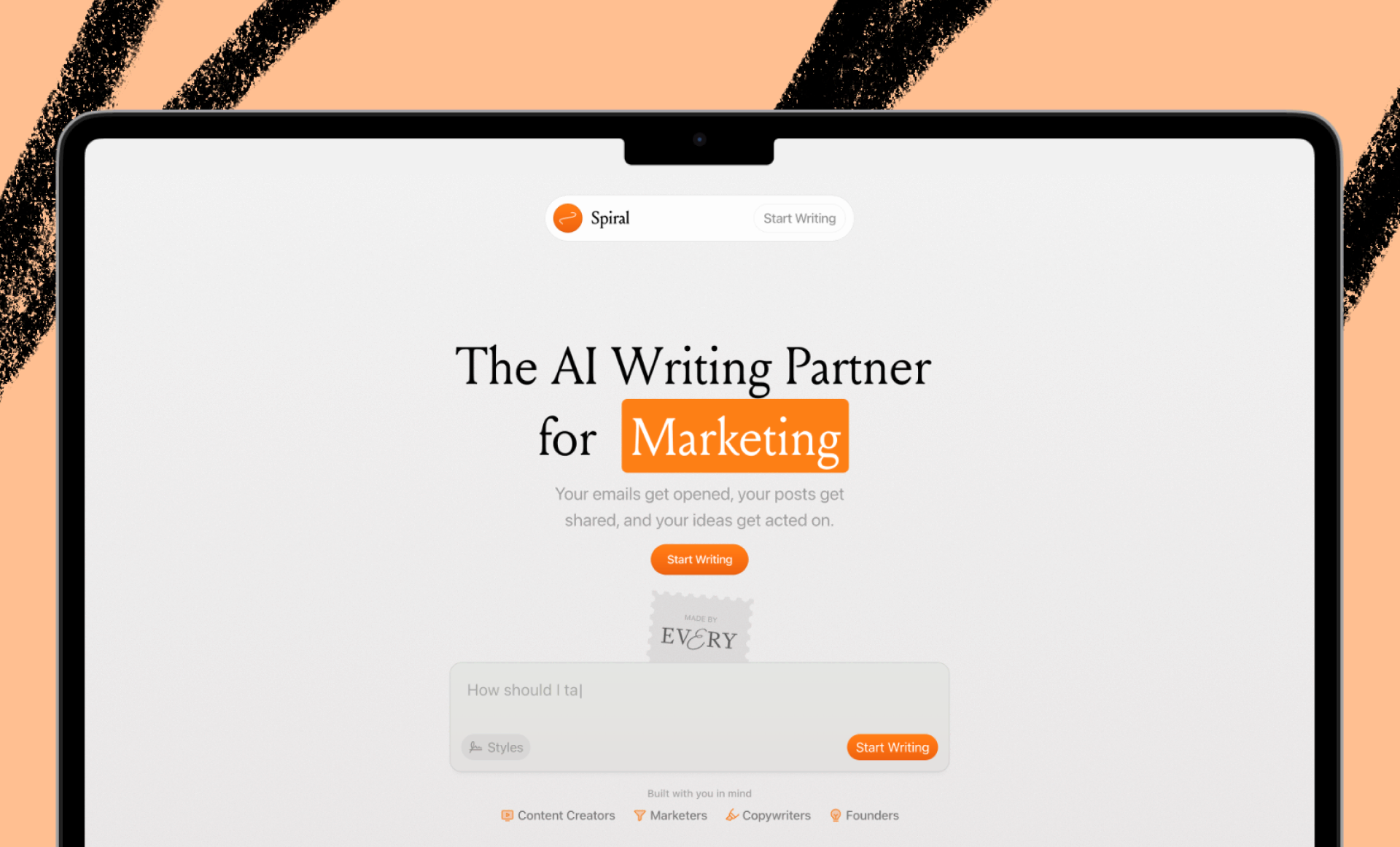
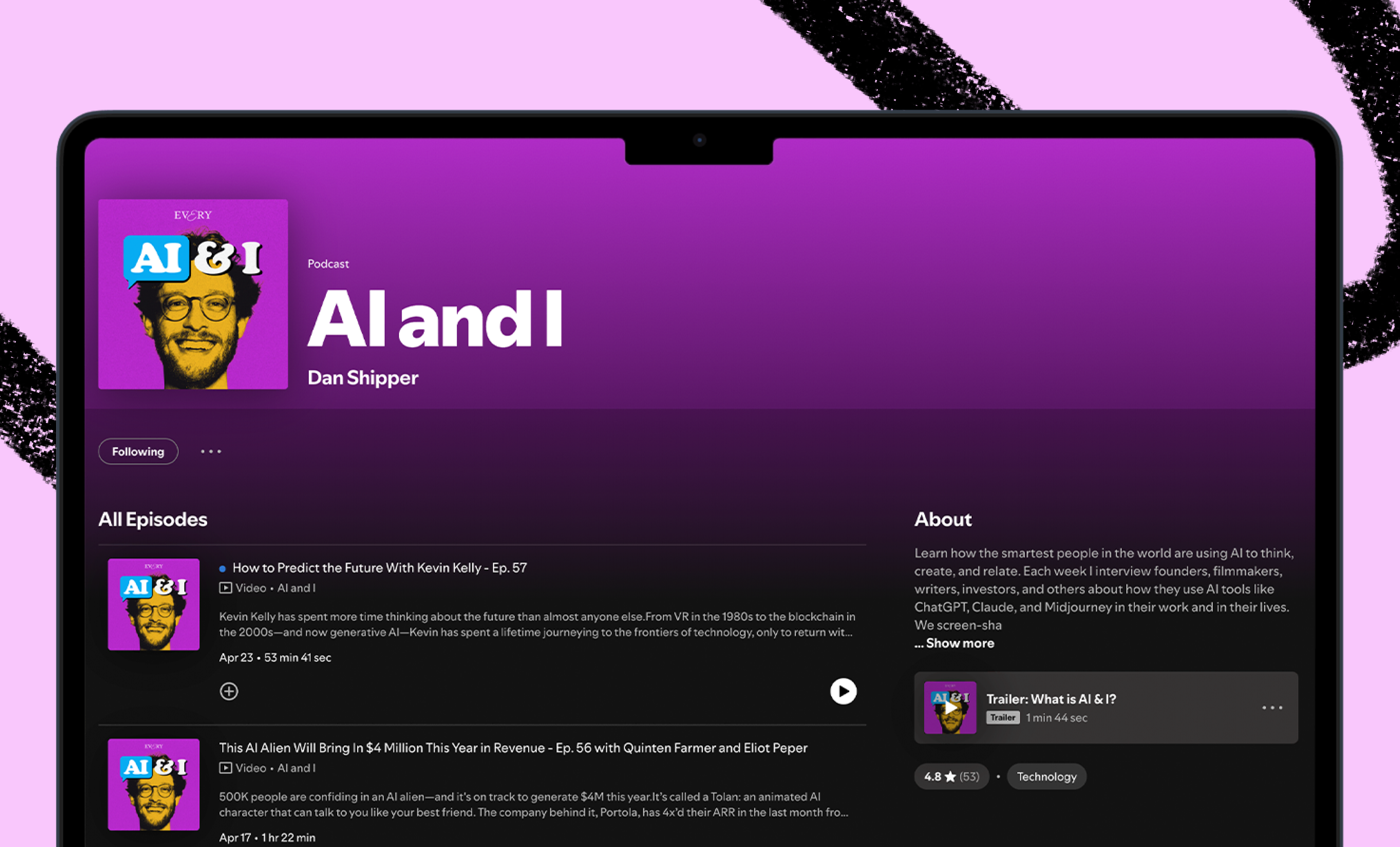
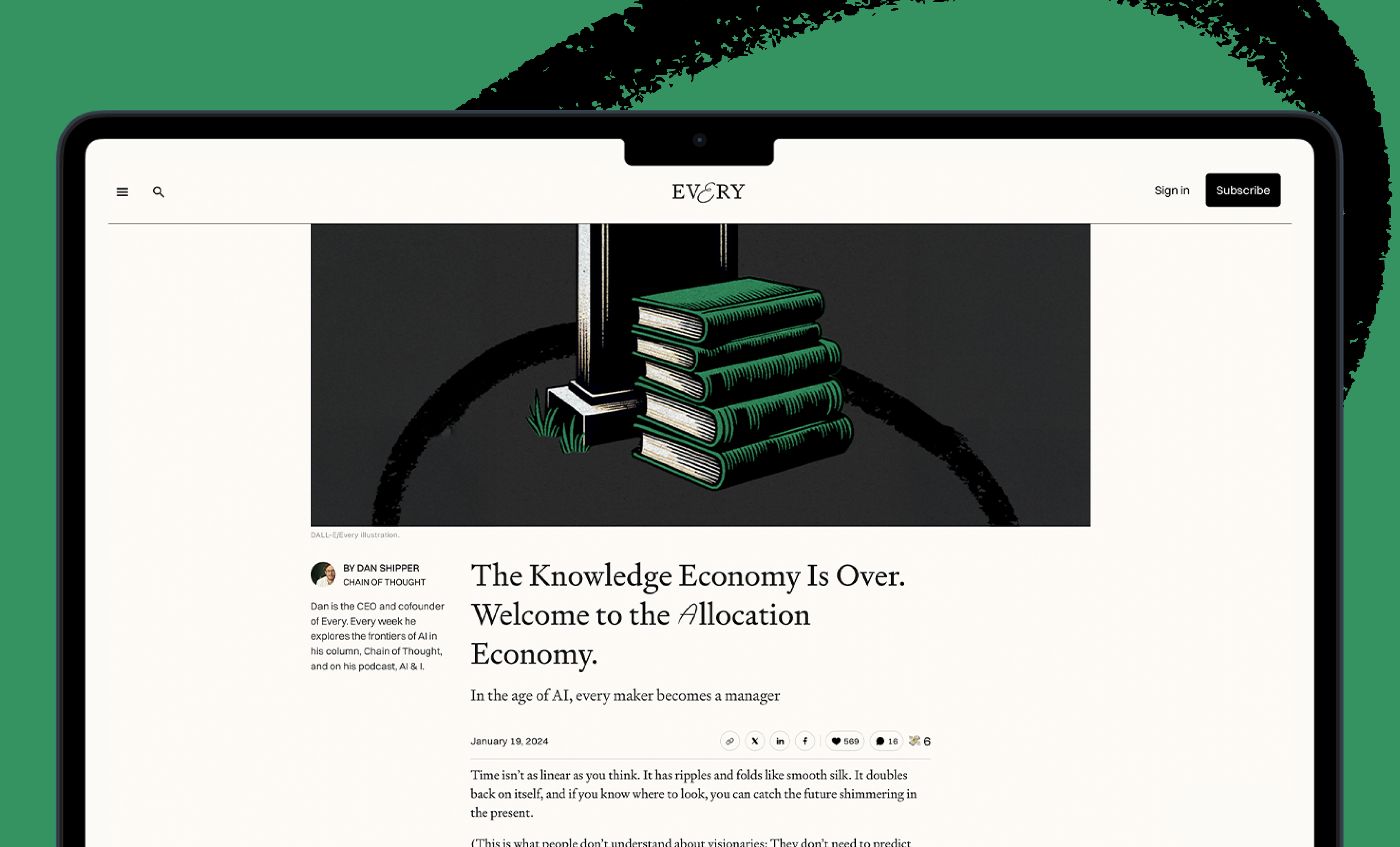
 Front-row access to the future of AI
 In-depth reviews of new models on release day
Playbooks and guides for putting AI to work
Prompts and use cases for builders
In-depth reviews of new models on release day
Playbooks and guides for putting AI to work
Prompts and use cases for builders
In-depth reviews of new models on release day
Playbooks and guides for putting AI to work
Prompts and use cases for builders
In-depth reviews of new models on release day
Playbooks and guides for putting AI to work
Prompts and use cases for builders
 Bundle of AI software




 Evan Armstrong
 Dan Shipper
 Reviews of new AI models on release day
Comments
Don't have an account? Sign up!
I never thought about Substack and the ideology behind it in such a way. Thank you for this insightful piece of writing. It helped me to broaden my perspective.
Great post. I liked your personal story... and it makes me wonder if you've ever written down more of the story of your journey from substack to where you are now?
Also, I found myself wanting to reply during the part about notifications. I personally feel that push notifications are significantly worse than email at getting people to come into an app to read something potentially long and time consuming. I usually get push notifications while checking out at the grocery story or explaining to a kid why they can't have the thing they're begging for. And the problem with that is I swipe them away and they're gone forever. At least in email I can leave something unread if I want to come back to it (a dangerous and slippery slope if I want to retain inbox zero I know). I'll definitely go back to my inbox because I have to, but I haven't been able to make a habit of going to the substack app in the same way I have of burning 5 (ok 15) minutes on Tik Tok.