


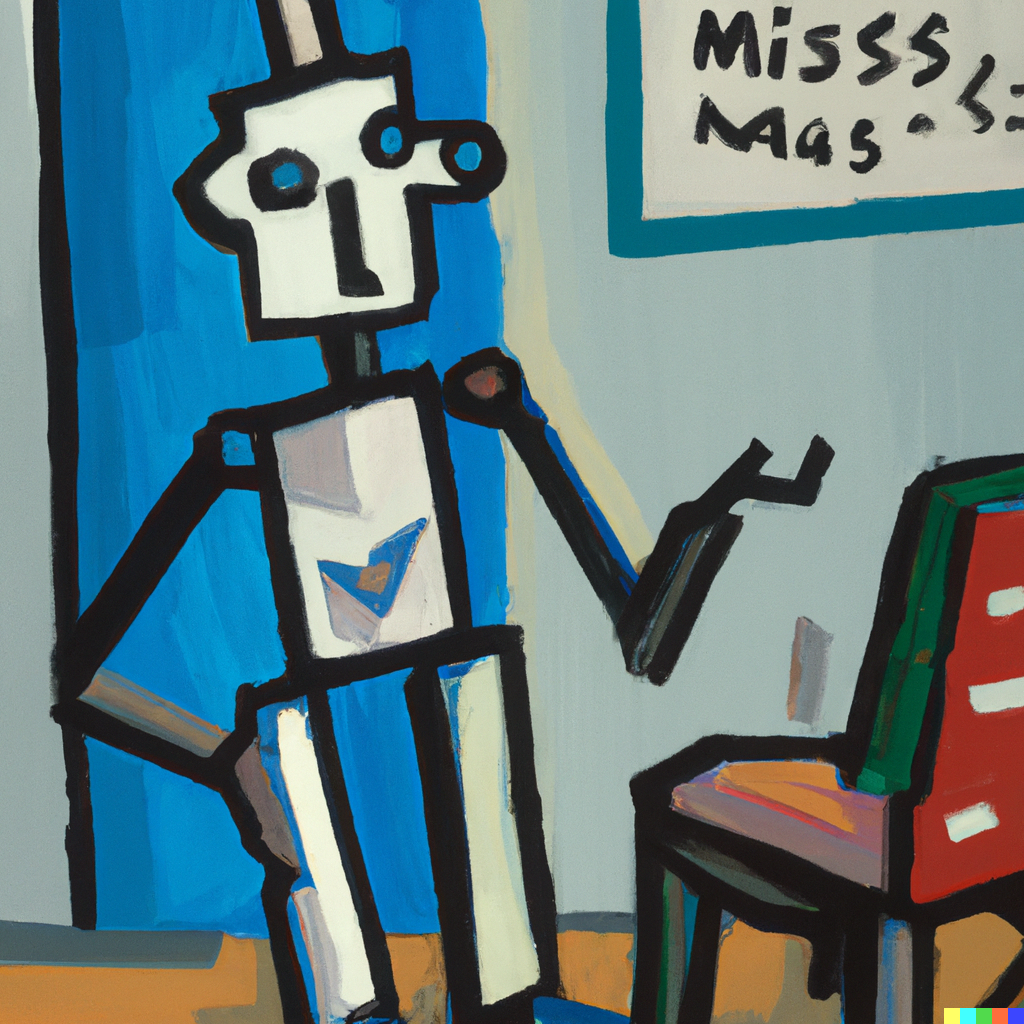


You know a tweet is a banger when the replies are split evenly between sheer disgust and fervent praise. Even better when there’s genuine confusion about whether it’s supposed to be serious or not.
Last week one such tweet caught my eye. It is, without a doubt, the pinnacle of the form:

Here is a representative sample of the replies:
- “This is freaking awesome”
- “most stupid person in the world”
- “Holy shit I retweeted this earlier thinking it was irony. Can’t believe this guy is actually serious lol”
- “At some point we just deserve the pandemic to wipe us all out because what the fuck is this”
- “I love this story ❤️”
The wildly divergent reactions to a guy using ChatGPT to create a running habit are hilarious, but also, they point towards an important mystery. This tweet captures it well:

It’s true: advice coming from AI really does seem to hit differently for a lot of people than if the same advice came from a book or a blog. It’s great that this guy was able to use ChatGPT to get into running, but if you look at the actual advice the AI gave him, it’s just the standard advice most people already know: start with tiny steps like putting your running shoes out by the door, go on easy runs to start, and gradually work your way up towards longer runs as you gain strength and stamina. Nothing groundbreaking. And yet it worked!
If you start looking, you see different versions of this story pop up all over the place. People are using ChatGPT to create meal plans, give dating advice, make travel plans, and more. It’s impressive that a computer can do all this, but is the text it generates really that different from what you’d find in books or on the web? The people dunking on the running tweet above would argue the answer is “no,” and therefore people who use ChatGPT or other AI products are just suckers getting caught up in the latest technology fad.
For sure, some of the hype around AI is just temporary. Maybe even the guy behind the running thread did that experiment mainly because he wanted to build an audience—his Twitter bio says “I write a newsletter that provides a weekly summary on AI.” But is the idea that there’s nothing more to AI-generated advice than what you could get in books or websites really a fair assessment? Or is there more to the robo-coach phenomenon than meets the eye?
 Create a free account to continue reading
The Only Subscription
You Need to
Stay at the
Edge of AI
The essential toolkit for those shaping the future

"This might be the best value you
can get from an AI subscription."
- Jay S.
 Every Content
 AI&I Podcast
 Monologue
 Cora
Cora
 Sparkle
 Spiral
Join 100,000+ leaders, builders, and innovators

Email address

Already have an account? Sign in
What is included in a subscription?
Daily insights from AI pioneers + early access to powerful AI tools


 Front-row access to the future of AI
 In-depth reviews of new models on release day
Playbooks and guides for putting AI to work
Prompts and use cases for builders
In-depth reviews of new models on release day
Playbooks and guides for putting AI to work
Prompts and use cases for builders
In-depth reviews of new models on release day
Playbooks and guides for putting AI to work
Prompts and use cases for builders
In-depth reviews of new models on release day
Playbooks and guides for putting AI to work
Prompts and use cases for builders
 Bundle of AI software





 Evan Armstrong
 Dan Shipper
 Reviews of new AI models on release day
Comments
Don't have an account? Sign up!
Would be interesting to be able to "load" coaches with knowledge from particular sources & books.
Might be as simple as prompting, but I'd love to see the ability to e.g. have a relationship coach know all of the Gottmans' or Hendricks' work and then coach according to their methods.
You could test out distinct programs this way or even create a curated blend
Or author your own
Nice