





Author’s note: Last weekend Every held a conference in New York called Thesis. I gave a talk called “Narratives Have Network Effects,” but it was limited to 10 minutes, and I had a lot more to say. Plus, I had many conversations with folks at the event that made me want to go even deeper. So I decided to expand it into a full essay, which you are now reading.
Every product we buy, every job we take, every relationship we have, and all the decisions we make are based on narratives—stories that explain how the world works and what’s going on in it. The narratives we believe determine our actions.
A few examples:
- You heard AI is going to change everything, so you quit your job to build a startup using GPT-3.
- You heard countless stories about true love in movies and books, so you broke up with your girlfriend because it didn’t feel the way you thought it should.
- You heard carbs are bad, so you started eating salads for lunch.
If we want to accomplish our goals, we need the narratives driving our actions to be accurate and useful. We also need other people to buy the narratives we believe in if we want to attract customers, investors, employees, or any other kind of partner. So it’s worth understanding where they come from and how they grow.
We all have at least a hazy intuition that narratives have network effects, i.e., popular stories tend to get more popular. But why that is, and what practical advice we can derive from it, is a topic I’ve rarely seen discussed. This is a huge missed opportunity.
If you just want to get by in life, it’s fine to rely on the default set of narratives that saturate your culture. But the more original and ambitious your goals are, the more you need world-class narrative skills: both on the buy and the sell side.
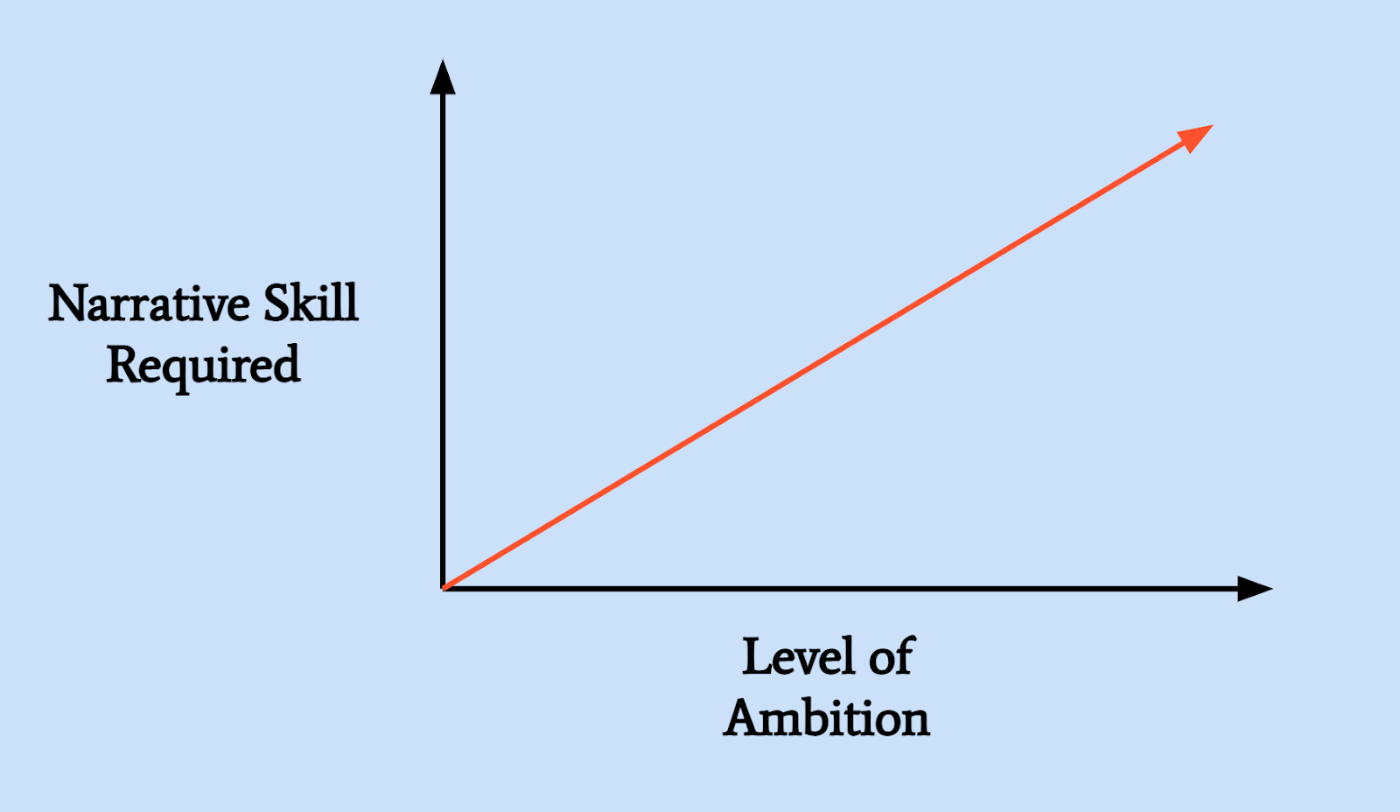
Of course everybody here already knows that. That’s why you read Every! So given that we’re already narrative aficionados, what else can we do to improve? I would argue that it’s worth it to spend time thinking about the meta question of how narratives themselves emerge and spread. By doing this, we can see more clearly how the ideas surrounding us tend to perpetuate themselves even if they aren’t useful, and we’ll learn how to solve the cold start problem and get our narratives to spread and build network effects of their own.
The first thing that probably comes to mind when you hear the term “network effect” is communication technologies like Facebook or the telephone.
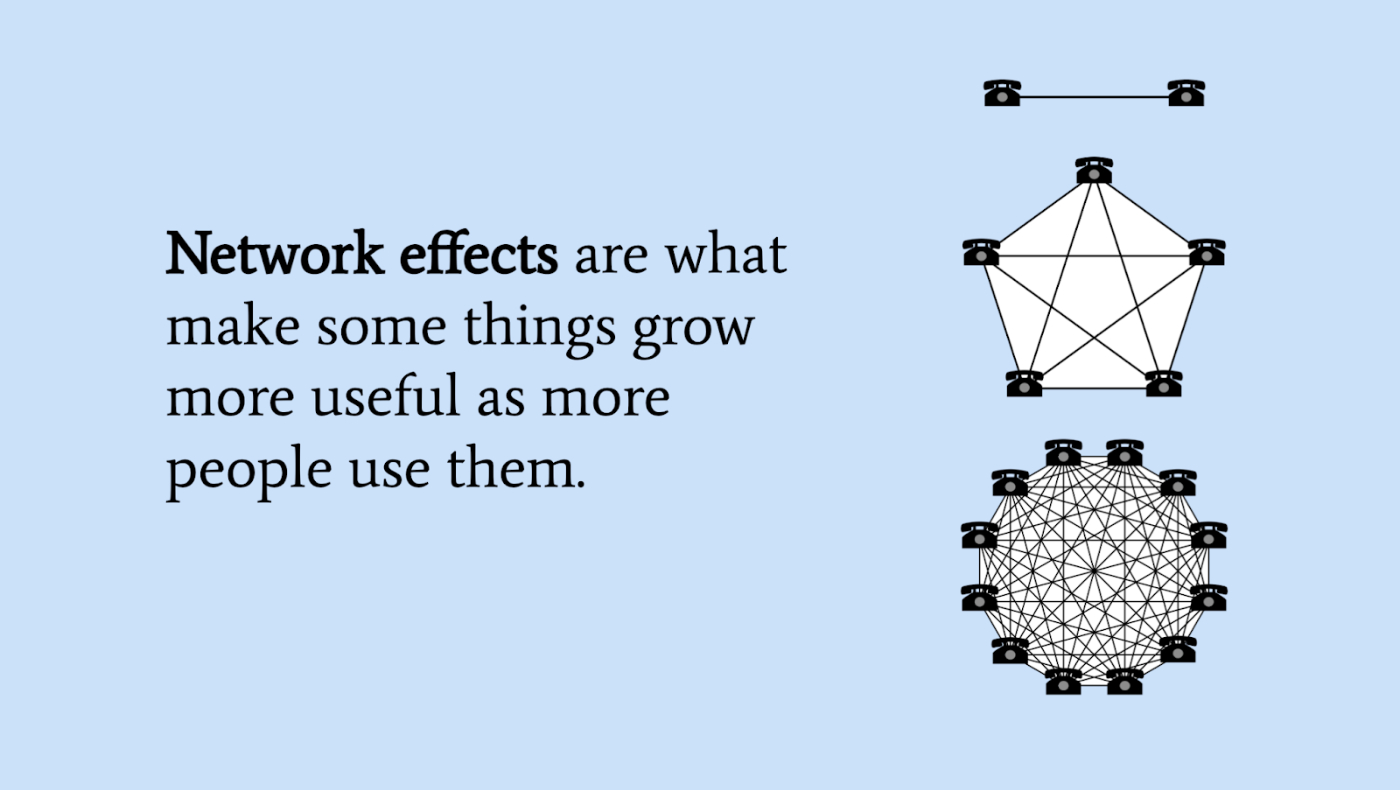
The idea is that the value of the network to any single user is equal to the number of other users they can communicate with through it. Therefore the total value of the network is equal to the number of users, squared. Of course no simple formula can capture the dynamic complexity of the value that gets created by networks, but the basic idea is that some things get superlinearly more useful as more people use them.
So, how do network effects apply to narratives? Let me illustrate it with three examples.
Example 1: “AI will change everything”
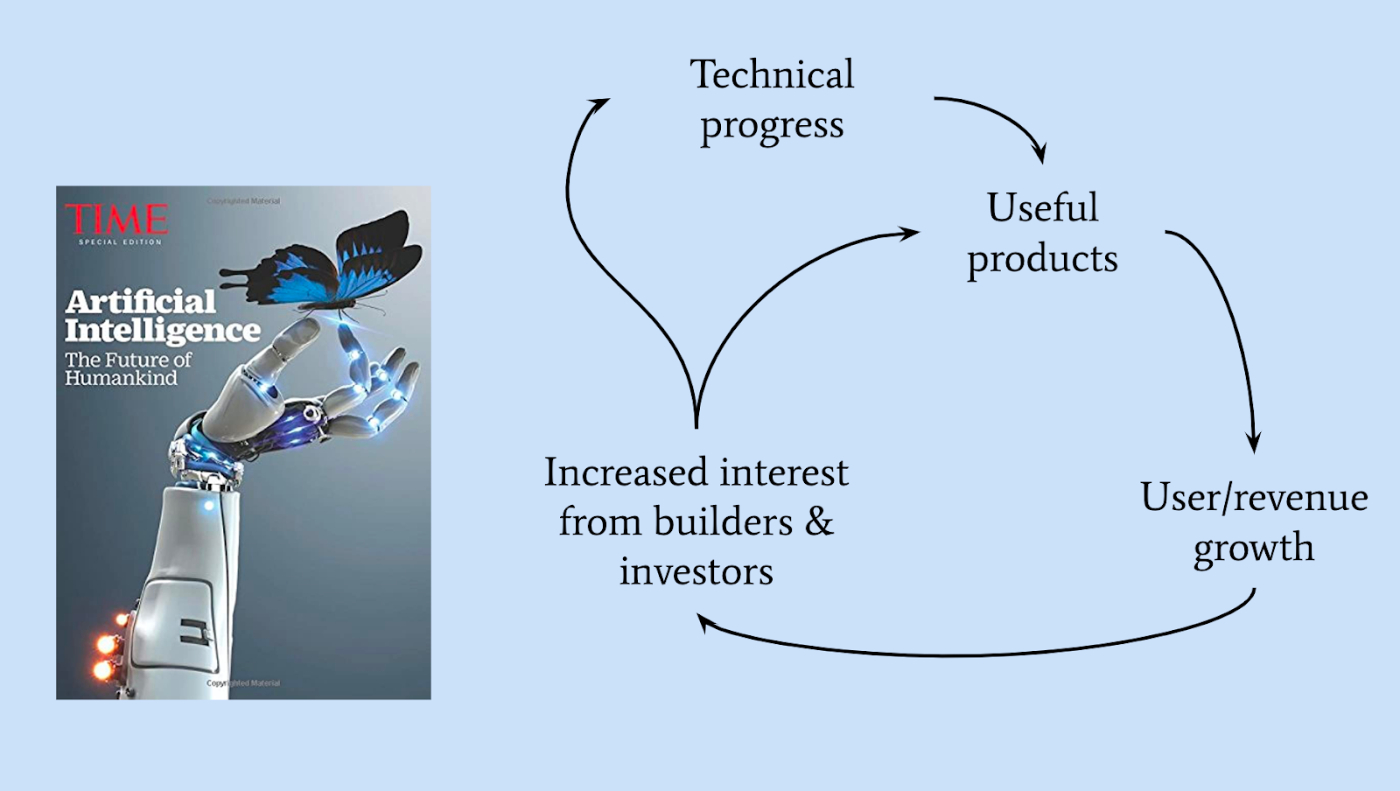
The amount of hype and attention AI is getting right now is about 1,000x greater than it was this time last year, but the technology itself is maybe around 2–3x better than it was, at most. That’s a lot better! Real technical progress is an essential part of the story here. But narrative network effects are also crucial. When more people see AI as promising, more people start using it, investing in it, talking about it, and, most importantly, building it, which makes AI become more promising.
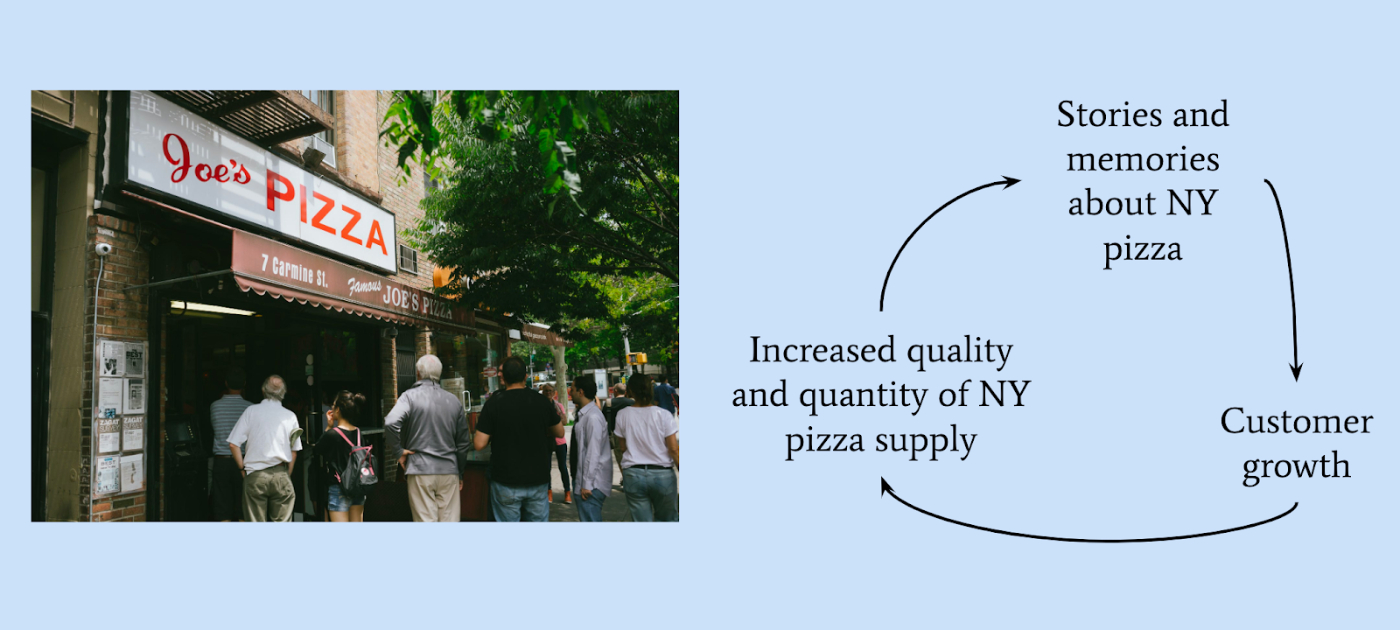
Example 2: “New York has great pizza”
 Create a free account to continue reading
The Only Subscription
You Need to
Stay at the
Edge of AI
The essential toolkit for those shaping the future

"This might be the best value you
can get from an AI subscription."
- Jay S.
 Every Content
 AI&I Podcast
 Monologue
 Cora
Cora
 Sparkle
 Spiral
Join 100,000+ leaders, builders, and innovators

Email address

Already have an account? Sign in
What is included in a subscription?
Daily insights from AI pioneers + early access to powerful AI tools




 Front-row access to the future of AI
 In-depth reviews of new models on release day
Playbooks and guides for putting AI to work
Prompts and use cases for builders
In-depth reviews of new models on release day
Playbooks and guides for putting AI to work
Prompts and use cases for builders
In-depth reviews of new models on release day
Playbooks and guides for putting AI to work
Prompts and use cases for builders
In-depth reviews of new models on release day
Playbooks and guides for putting AI to work
Prompts and use cases for builders
 Bundle of AI software





 Evan Armstrong
 Dan Shipper
 Reviews of new AI models on release day
Comments
Don't have an account? Sign up!
Brilliant!