




Sponsor Every
Want to reach AI early-adopters? Every is the premier place for 80,000+ founders, operators, and investors to read about business, AI, and personal development.
We're currently accepting sponsors for Q3! If you're interested in reaching our audience, learn more:
When Jose Briones immigrated to the United States in 2010 at age 15, he was met with a technological shock. In Nicaragua, where he was born, smartphones had yet to become widespread. They were expensive luxury items or reserved for emergencies, with minutes purchased in advance to make phone calls. His childhood was largely spent offline. In America, he got his first smartphone—a Huawei device with unlimited talk, text, and data—and relished the freedom to quickly look up soccer scores, listen to music on Pandora, and access information in seconds.
But as he moved from adolescence to adulthood, his enthusiasm for technology turned to obligation, then oppression. Throughout his years in college and in the working world, he felt tethered to his devices and stuck to a screen. Distraction plagued his waking hours, resulting in a painful period of procrastination while obtaining his Master’s degree. In 2019, he decided he needed a break—the notifications, the constant texting, the binging of TV shows and social media and news—and made a change. Today, Briones has relinquished his smartphone outside of working hours, and is an advocate and evangelist for digital minimalism.
He’s not alone. Briones is part of a growing movement of people who believe we benefit as individuals and a collective by unplugging from internet-enabled technology. “People are tired of feeling a lack of control over their lives. It physically makes a difference in our lives when we are tethered, in our eyesight and the way we feel,” says Briones. “Especially knowledge workers, you're in front of a computer all day. You're sitting down. There's no movement [or] physical engagement with anything.”
A 2021 survey from Pew Research Center found that 31% of U.S. adults report they are online “almost constantly.” U.S. teenagers age 13-17, similarly, feel a stronger pull to be online—in another 2022 survey from Pew Research Center, nearly half of teens say they use the internet “almost constantly,” 36% say they spend “too much” time on social media, with 54% of teens admitting it would be hard to give up social media. Excessive internet use has led to a slew of proposed solutions—digital detoxes and disconnection retreats, 24-hour tech relief in the form of a (somewhat dubious) “digital Shabbat,” and 12-step programs for internet and technology addiction. Boot camps intended to rehabilitate the internet-addicted have been around since the aughts.
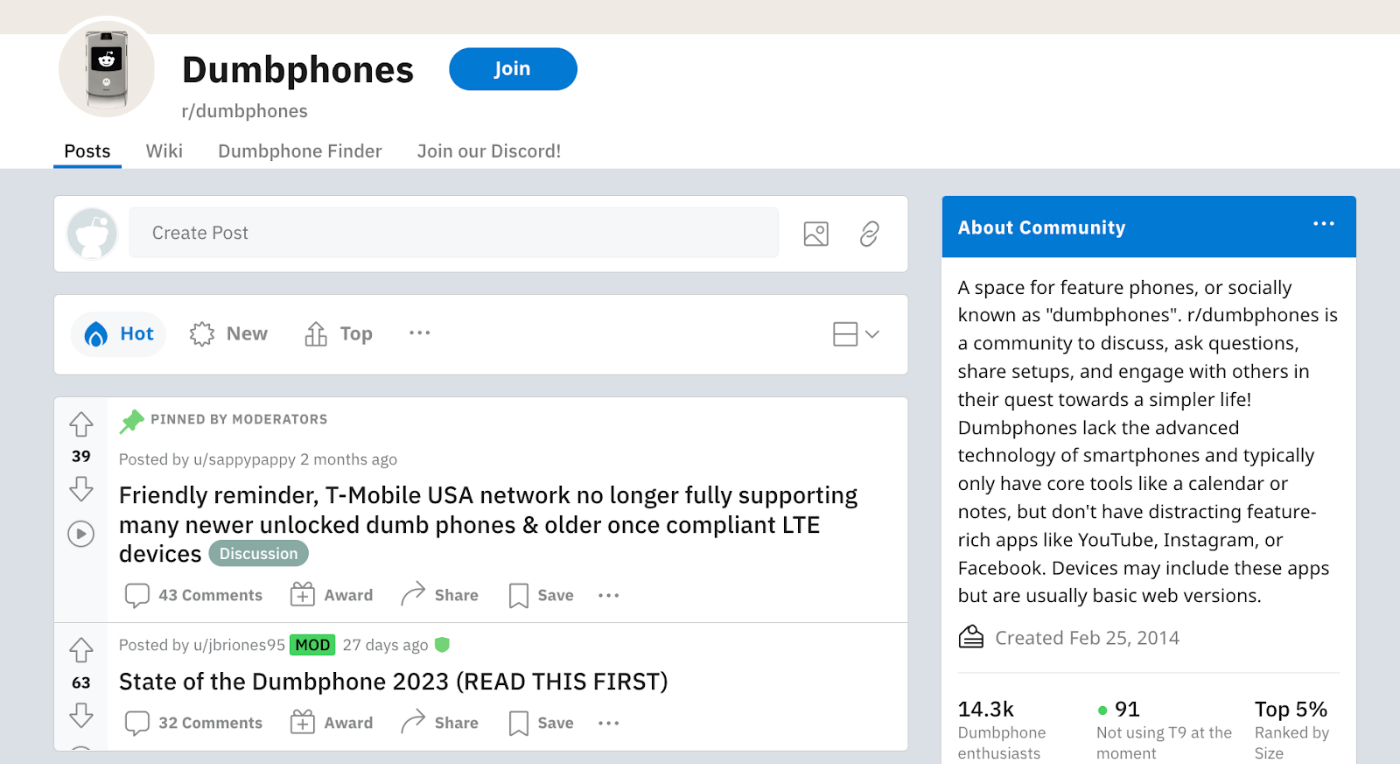
The “why” behind excessive internet use—from social isolation to addictive algorithms—varies depending on who you ask. But some see a clear culprit for our distraction-prone era: the smartphone. This is the case for over 14,000 Reddit users in r/dumbphones, a subreddit in the top 5% of communities on the platform. Briones, a dumbphone user himself, is one of the community’s moderators and also runs the website Dumbphone Finder. He suggests that making a transition to a dumphone—simple talk-and-text devices—is challenging, but ultimately worthwhile. “Learning to live an ‘inconvenient life’ is difficult,” says Briones. “In the beginning, there's a lot of friction, but it's rewarding if you adapt it to your lifestyle.”
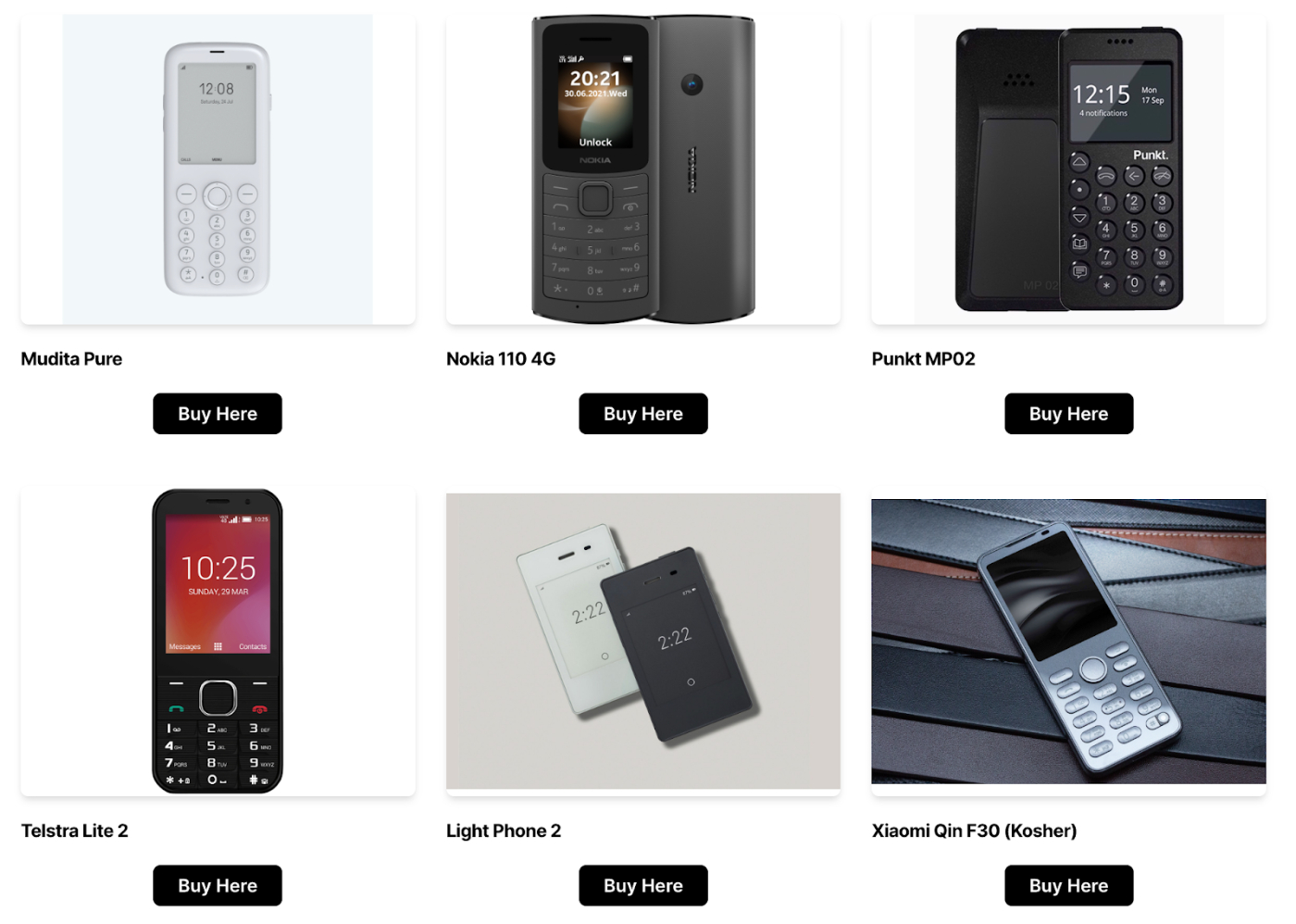
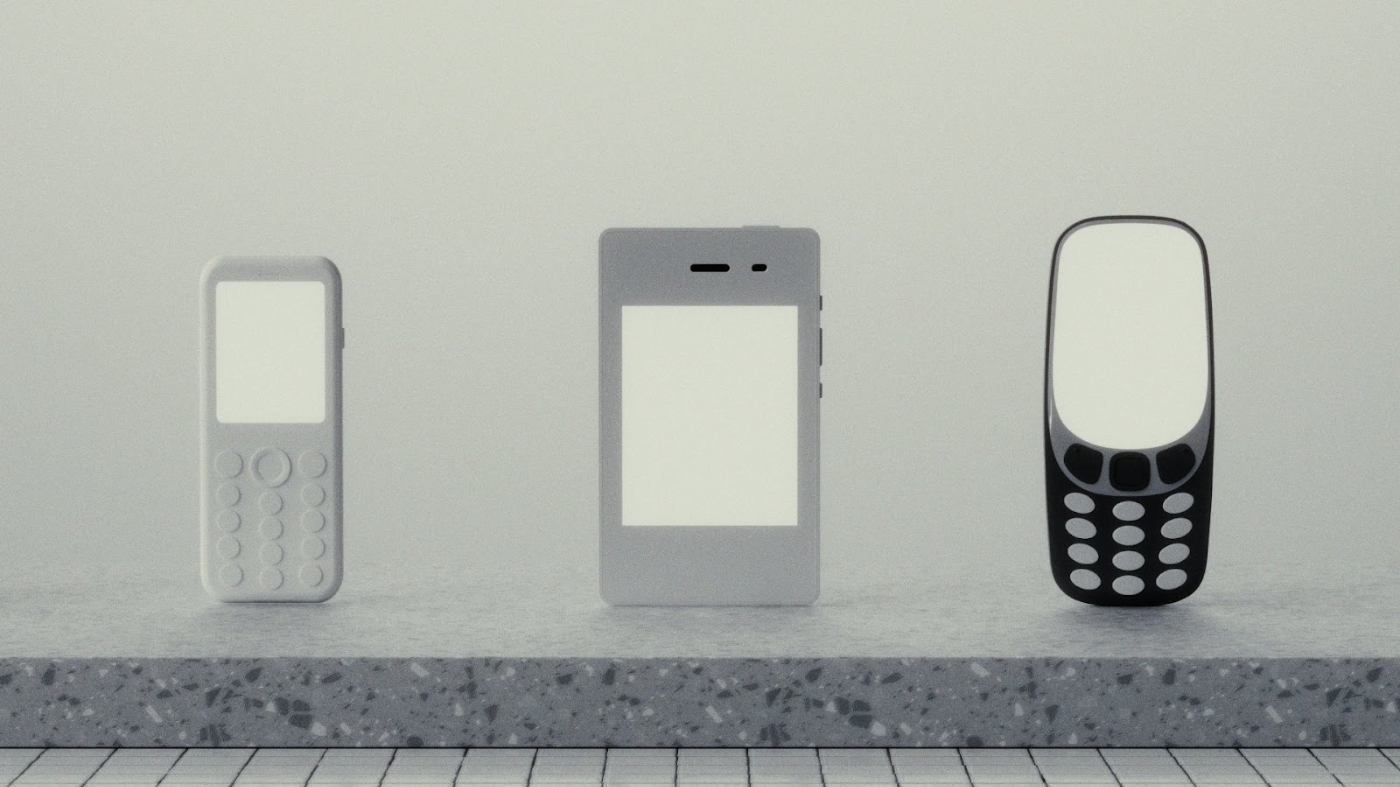
Many of the community's members are keen to take on the challenge, giving up smartphones they feel are a gateway to distraction and addiction. The community defines dumbphones as devices that “lack the advanced technology of smartphones” and note that they lack “distracting feature-rich apps like YouTube, Instagram, or Facebook.” Some opt for flip phones with tiny screens and buttons instead of touch screens, like the Nokia 3310, while others explore a new breed of minimalist devices like the Light Phone II. The aim of the community is clear: “the quest towards a simpler life.”
Swapping smartphones for ‘dumbphones’
Long gone are the days of mainstream talk-and-text devices and paying for minutes. For nearly 20 years, the phone industry has been on a mission to fit the most advanced computer into pocket-sized machinery. The last Apple event in September 2022 saw the release of the iPhone 14 Plus, touted as its “most innovative lineup yet” with features like Always-On display (keep your home screen dimmed but accessible while locked), Cinematic 4K24 (automatic focal point switching while shooting video), and a Photonic Engine (a technology to enhance low-light photos)—not to mention 1.8 million apps at your fingertips. But those on r/dumbphones are seeking out another kind of experience entirely: a phone that does next to nothing.
According to the subreddit’s analytics, r/dumbphones saw 408,587 page views (14.1% of which were unique) and gained 971 members in November 2022 alone. Some members are digital minimalists, some are privacy enthusiasts, some enjoy the aesthetic of a minimalist phone, and some are “self-diagnosed internet addict[s].” All are on the quest for a quieter phone experience free from the pull of algorithmic feeds. Browse through the conversations and you’ll find users sharing their experiences with phones like the Alcatel Go Flip or the Nokia 8110. Others ask for advice on maintaining a dumbphone for life but a smartphone for work—needing the advanced security features like two-factor authentication and work apps like a calendar to perform their roles on the latter.
The ethos of the community isn’t anti-tech, but tech-critical. The smartphone is viewed as a rabbit hole leading towards hours of scrolling; some discuss the “constant IV stream of social media” as their motivation for making the switch. For years we’ve had options to make the smartphone less distracting: switch to grayscale, turn off notifications, use an app blocker. But these solutions are meant to affect your habits, not your lifestyle. For the r/dumbphones community, a simpler life requires a simpler phone. Disconnection isn’t within reach if you still have unmitigated access to a bright phone with dark UX patterns that aim to keep us hooked.
When Ashton Womack, an online creator and the entrepreneur behind the stationary brand Virgo and Paper, watched the 2020 Netflix documentary The Social Dilemma, she resolved to change her relationship to technology. A business owner, she had felt compelled to use Instagram as a growth tool, to connect to customers and promote her work. It took around six months for her to decide on switching to a dumbphone—a simple Nokia 225 flip phone. She reflected on the year-long experiment in a series of YouTube videos, including a Q&A on her year without a smartphone and a discussion on lessons learned.
It wasn’t until after the experiment that Womack realized how attached to her phone she had been. Before a Nokia flip phone replaced her iPhone, she was spending countless hours online, losing presence in the world outside her device. Her ability to get from place to place was limited, because she had relied on the GPS on her smartphone for directions. “I didn't think at that time that I had a smartphone addiction, or that I was spending too much time on my phone. But after going without it for a year, I realized maybe I actually really do have a dependency on it,” said Womack to me over Zoom. “I was spending a lot of time on it back then. But at the time, it seemed normal, because everyone else is doing the same exact thing.”
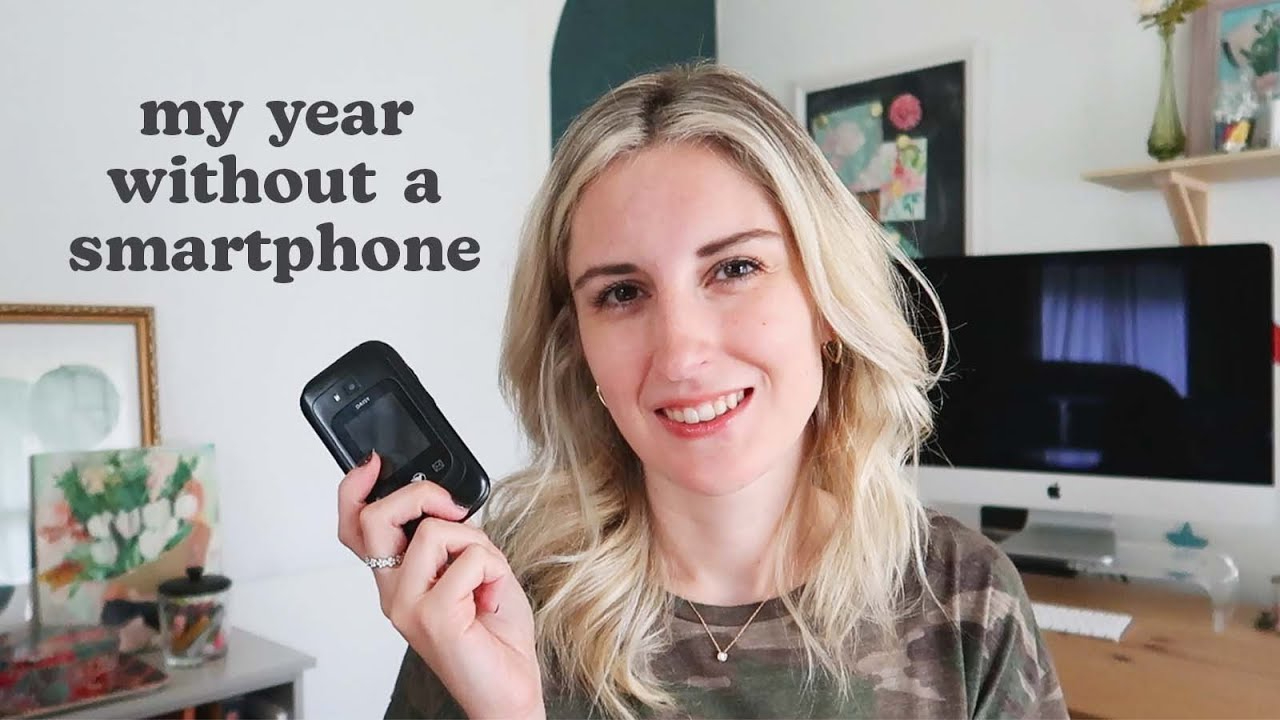
Missing the ability to take high-quality photographs, Womack has since returned to using a smartphone, but her relationship with technology has permanently shifted. She has just eight apps on her homescreen, and now considers herself a digital minimalist. Rather than scrolling on her phone, she spends time offline in nature and with friends and family, sparking a creative boon as an artist that she’s funneled into her stationary business. Perhaps most important was Womack’s realization that she didn’t need a smartphone, or an Instagram presence, for her business to thrive. Free from all the time she’d spent trying to guess what the algorithm would think of her posts, she could focus on the fundamentals of business—a great product and impeccable customer service. “Going into this experiment, I thought that you had to have a smartphone to survive in today's world, especially as a business owner,” says Womack. “I just thought having a smartphone is essential, and there's no way to live without it. And I've proven that that's not the case.”
The realization that we don’t need our smartphones as much as we think is the “eureka” moment shared again and again in the r/dumbphones community. “I feel free because I am not tethered to my screen [for] 50% of my day,” says one user. “You don't realize how your smartphone can really overwhelm you until it's gone,” notes another. But the forum isn’t simply a space to romanticize the early 2000s. Wade through and you’ll find an exploration of the trade-offs necessary to living in a smartphone-powered world without one.
Most dumbphones lack GPS, so users need to plan ahead, looking up directions at the start of their day and being intentional about planning out their route. Most also lack a camera, which means no photos, but also the inability to use QR codes to enter concerts or access restaurant menus. They’re incompatible with modern apps, leaving users without access to rideshare and food delivery with Uber, podcasts on Spotify, or international calls with friends and family on WhatsApp. Most have individual texting, but no group texting capabilities to trade memes and memories with friends and family.
Not everyone is convinced that dumbphones are the answer to our compulsive smartphone use. Nir Eyal documented his own unsuccessful experiment with giving up his smartphone for an “old-school phone” without email, Instagram, or Twitter in his latest book, Indistractable: How to Control Your Attention and Choose Your Life. Given his own experience—and research about drastic anti-tech measures—he doesn’t view dumbphones as a long-term solution for most people, partially because they’re giving up too much. “I don't think that for most people, that's a great solution. It's also giving up so much,” says Eyal over email. “It's giving up GPS, it's giving up audiobooks, it's giving up a lot of things that could be great.”
Rather than external distraction triggers—smartphones, laptops, email—he suggests turning towards internal triggers instead. “If turning to a reduced-feature phone is a good idea for you, and you don't want those features, and they're not according to your values, great,” says Eyal. “[But] thinking that just getting rid of technology is the solution is false—it's a mirage.”
Briones has experienced his own adjustments using a dumbphone, and notes that unplugging from technology is beyond the concept of mere “willpower.” For him, leaving smartphones behind has meant asking for paper menus at restaurants with QR codes, printing tickets for public transit and concerts, and carrying around index cards with appointments in place of a digital calendar. When members share their frustrations on r/dumbphones, the stories of lost convenience are repetitive. Indeed, the phones are just a little too “dumb” to work with the expectations of a modern lifestyle. Briones says dumbphone users need to dig deep to move past inconvenience and get the true rewards of life without a smartphone. Inevitably, some of the dumbphone-curious will eventually open their laptops to order the next “most innovative” phone and re-enter Apple’s universe. Others will find the benefits outweigh the setbacks—that the setbacks are actually the point. “Learn to live with the inconvenience—learn to even be an inconvenience,” he says. “It takes a lot of time for the adjustment to be made. I'm still making the adjustments for my life. But I enjoy seeing where it’s taking me.”
The anatomy of a dumbphone
After working in product design and development in the mobile phone industry for over a decade, Kai Tang was looking for something new. “I quit the job of designing and making smartphones for Motorola, Nokia, [and] Blackberry,” says Tang. “Primarily, because I just don't see the point of making another smartphone every other month because of a slightly faster chip set or a slightly better camera.” His search led him to a Google incubator for designers where he met his co-founder, Joe Hollier. Both men longed to make a product where they could make money without monetizing customers’ time, attention, and data—a rejection of the attention economy. In February 2015, they went on to found Light, the creators of the popular “premium, minimal” phone Light Phone II.
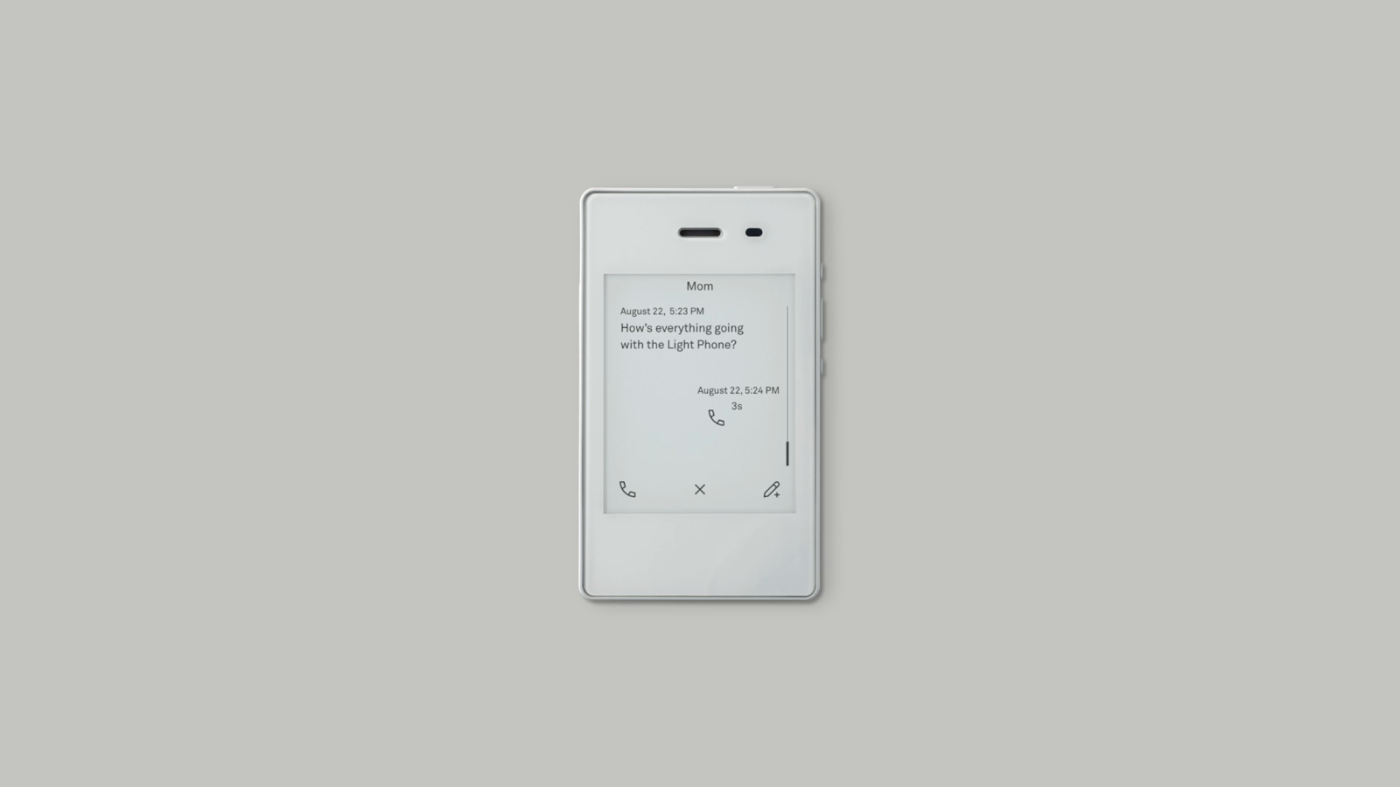
The device has a clear value proposition to digital minimalists everywhere: “designed to be used as little as possible.” The phone is as small as a deck of cards with a simple electronic paper screen. It comes in black and white and has limited features including texts, calls, alarms, and the ability to set up a digital hotspot. You can customize the phone to add native tools like a calculator, music player, podcast tool, notes, and directions. Tang notes that tens of thousands of customers have purchased a Light Phone II.
Watch the bevy of video reviews of the Light Phone II online and you’ll also find people who want more. They want a calendar. Apps like Spotify and Uber. A camera. Balancing these demands with the stated goal of the phone—minimalism—is a design challenge that the founders have embraced, guided by a handful of key product development tenants that they are unwilling to compromise.
“I have three principles,” says Tang. “One, there will never be advertisement in any of the tools that we create. Number two, we will never have infinite feeds. Nothing for you to swipe, nothing for you to browse. Number three, every action that a user takes has a clear ending. We're never going to have emails because that's a black hole. We have no media, no fees, no games, just utility.”
Not all dumbphones are built the same. Briones, who has a Light Phone II, recently reflected on three years of using the device in a video on his YouTube channel. He’s also tested and reviewed the growing number of dumbphones on the market. His Dumbphone Awards 2022 video assesses popular options—like the popular Jelly 2E, which is essentially a small version of a smartphone with all the apps you’re accustomed to; or the CAT S22 Flip, a flip phone with throwback buttons instead of a touch screen that also allows for the use of apps from the Android Play store. Taken together, these devices are proof that not everyone wants a mini-computer in their pocket.
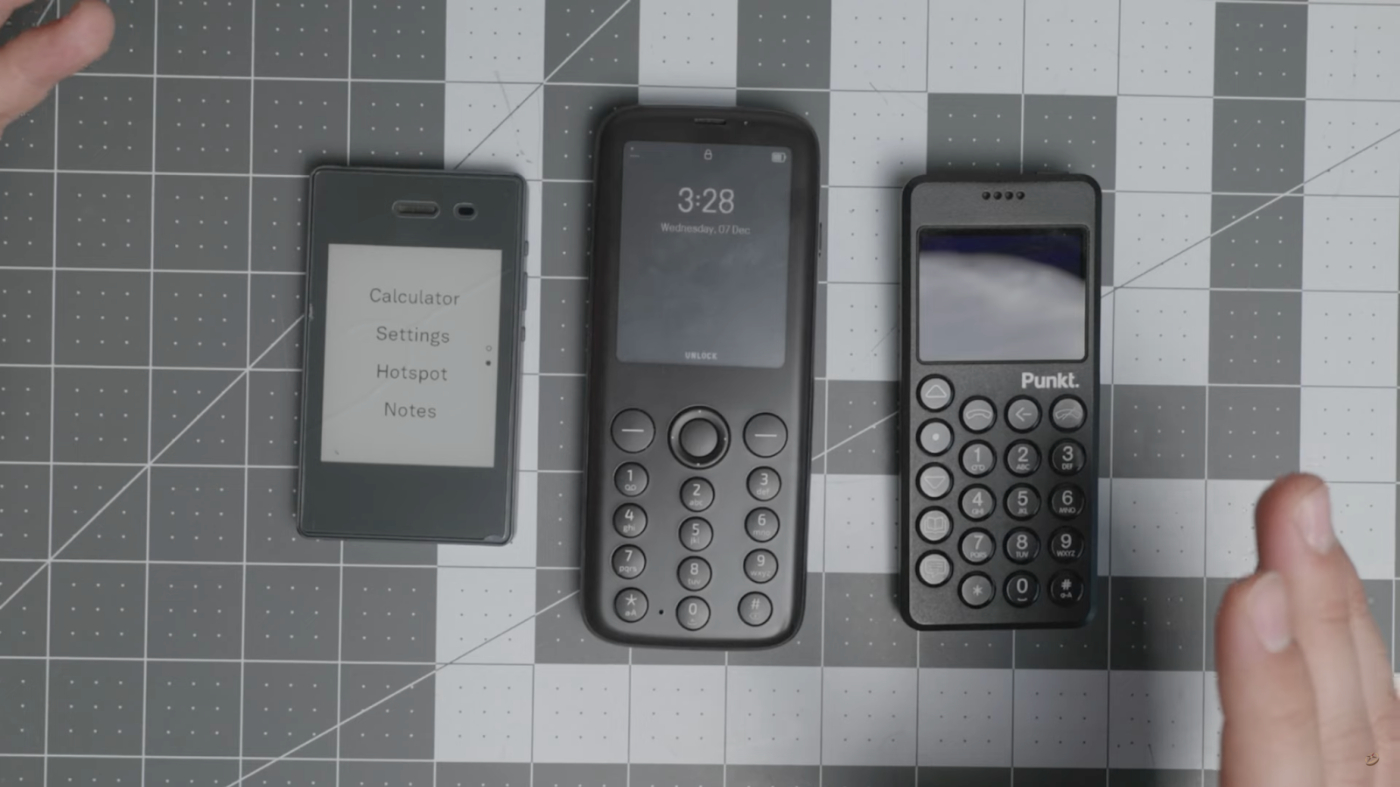
What they do want is something the manufacturers and users are still learning. Much of the rise of dumbphones isn’t about having a phone with the least features, but instead what such an arrangement enables. Tang and his team at Light have yet to complete a study into screen time on the Light Phone II. But they have completed surveys and frequently speak to users who tell them that their time on mobile has plummeted. Tang puts this reduction at about an average 90-95% less screen time as compared to a smartphone. But his team is also focused on some intangible benefits. “So many users have been telling us that they feel less anxious, they feel less stressed, they sleep better,” says Tang. “They feel like they have a better relationship with [their] families and loved ones because they are mostly without a smartphone.”
Though there is little data to study at this point, anecdotally users are finding that even some time away from their smartphones can have long-lasting positive effects. In 2022, according to a story in the Wall Street Journal, the administration at a Massachusetts boarding school noticed its academic community eroding. Students exhibited antisocial behavior and treated the internet as their preferred world, while teachers acted as “gadget police,” punishing distracted pupils. After a physical altercation between students was broadcast online, the school banned smartphones and ordered Light Phones for teachers and students for “essential communication.” Though there was initial pushback—both from students and parents—the experiment went surprisingly well. Teachers reported that students were more engaged in class, and students reported building deeper friendships and having less attachment to their smartphones once they were returned.
After returning to her minimally-enabled smartphone, Ashton Womack noticed the same lasting benefits of her time away. “I honestly feel like [during] my time without a smartphone, I felt more connected to people,” she says. “I really treasured and focused on those connections, because they weren't just the surface-level relationships of social media. They were real, deep relationships.”
With the extra time that Briones now has, detached from his devices, he’s been inspired by the 80,000 hours project that asks people to consider the impact they can have on the world through the totality of hours they will spend on their careers. For him, this has meant a budding passion for reforming public transit. “I don't think digital minimalism is just about getting rid of the devices, but reorienting your life towards something that you actually want to do. I want to make a good impact in society,” he says. “Now that you have time, now that you have regained time, what are you going to do with it?”
These stories reveal more about what digital minimalists really want—time, focus, and connection. Can a society bent on controlling how you spend your time, where you focus your energy, and how you connect tolerate the growing numbers of this movement?
The rise of the digital minimalism movement
It’s a running joke on the internet that we can’t log off, no matter how desperately we want to. The discourse is “cursed.” The algorithm is “polarizing.” The platforms (and people) are “toxic.” And yet, our eyes remain fixed on the screen.
Proponents of digital minimalism don’t find the joke that funny at all. In 2019, author Eyal published his book Indistractable, about our current “crisis of distraction” and how to find focus in the attention economy—which was itself a follow-up to his bestselling book Hooked that outlined the habit-forming mechanisms and hidden psychology that companies use to keep us online. The same year, Cal Newport released Digital Minimalism (coining the term in the process), a call to unplug from technology—the distractions of social media, the call of email, the pull of our phones—to live more meaningful lives. Two months later, Jenny Odell released How to Do Nothing: Resisting the Attention Economy, a rejection of the cult of capitalist productivity and a call to deepen our attention to physical place. A year later, Tristan Harris starred in The Social Dilemma, bringing his work with the Center for Humane Technology to a mainstream audience in the Netflix documentary.
They all pull at a similar string, but their theses and solutions vary. Ask Eyal, and our distractions begin from within, called forth by instant gratification triggers that we can resolve through tactics like planning ahead, finding purposeful things to do, and creating personal “pacts.”
Ask Newport, and the online tools we use “have a way of cultivating behavioral addictions” that we can circumvent by stepping away from online activity for 30 days and reconfiguring our relationship to technology thereafter.
Ask Odell, and it’s the power of commercial social media and its incentive to “keep us in a profitable state of anxiety, envy, and distraction” that we must resist by engaging meaningfully with our environments.
Ask Harris, and it’s persuasive technology that modifies behavior which has turned the internet into a Las Vegas slot machine that needs to be reformed through ethical design. Regardless of “why,” the “what” is that we’re in the midst of a modern problem.
But as nearly as long as the internet has existed, there have been discussions about “internet addiction.” As far back as 1996, research started on the concept of internet addiction. Dr. Kimberly Young is widely cited as the first researcher to complete an empirical study on the condition and mentions side effects including “academic, social, and occupational impairment.” Research on the topic has also been conducted across the world, in China, Japan, and South Korea in particular. China was the first country to diagnose “online addiction disorder” in 2008, and as early as 1997, internet addiction camps sprung up in the country (after reports of death and electroshock therapy, a ban on these facilities was proposed). Today there are screen time limits for minors under the age of 18. A 2000 piece said of internet addiction, “it’s no joke,” citing “compulsive email checking” and “denying that you spend too much time online when people confront you.”


Today, while much academic literature exists about the phenomenon, “internet addiction” as a disorder—and its offshoots—remains in dispute amongst researchers. In the book Behavioral Addictions: Conceptual, Clinical, Assessment, and Treatment Approaches, individual chapters explore the literature and evidence for addiction to social media, gaming, smartphones, and the internet. On smartphone addiction—or “problematic smartphone use” and “smart-phone use disorder”—researchers note that while the true prevalence of these disorders is unclear, “excessive smartphone use has been found to be correlated with depression and anxiety, as well as loss of productivity at work and school.”
Proponents and practitioners of digital minimalism are aiming to circumvent these ills of technology use. They’re satisfied being ignorant of the daily discourse, opting out of all-day group chats, and finding ways to cultivate connections without the internet. The desire to unplug has made way for an entire market, selling focus and technological detachment. R/dumbphone and the rise of low-tech phones are part of a wider phenomenon that includes the use of site blockers, lock boxes for your phone, and other online movements like no surf. These movements—and these markets—are small. You’re unlikely to meet someone who has a dumbphone, and the market for “feature phones” (old-school tech that doesn’t have the capability of smartphones) is projected to continue declining. But it’s probable you know someone—or are someone—who wants to spend less time on their phone, disconnecting in a world full of distraction.
Regardless of our concerns about what the Internet is doing to our brains, the expansion of the online world into our lives (and minds and bodies) shows no signs of stopping. The quest to develop the so-called metaverse presses on, and new apps are always competing for our collective attention. It will be up to individuals whether they stay engaged in the online world, find a balance through moderate use, or decide to opt out entirely. Despite adding new enthusiasts, it’s more likely than not that the digital minimalism movement will remain small—as common as those who opt for vinyl records over Spotify playlists or wall planners instead of Google calendars. But for the interest of those it piques, they’ll live in a radically different world than the rest of us—one where they’re spending a lot more time looking up.
Disclosure: Every co-founder and CEO Dan Shipper is an investor in Light.
The Only Subscription
You Need to
Stay at the
Edge of AI
The essential toolkit for those shaping the future

"This might be the best value you
can get from an AI subscription."
- Jay S.
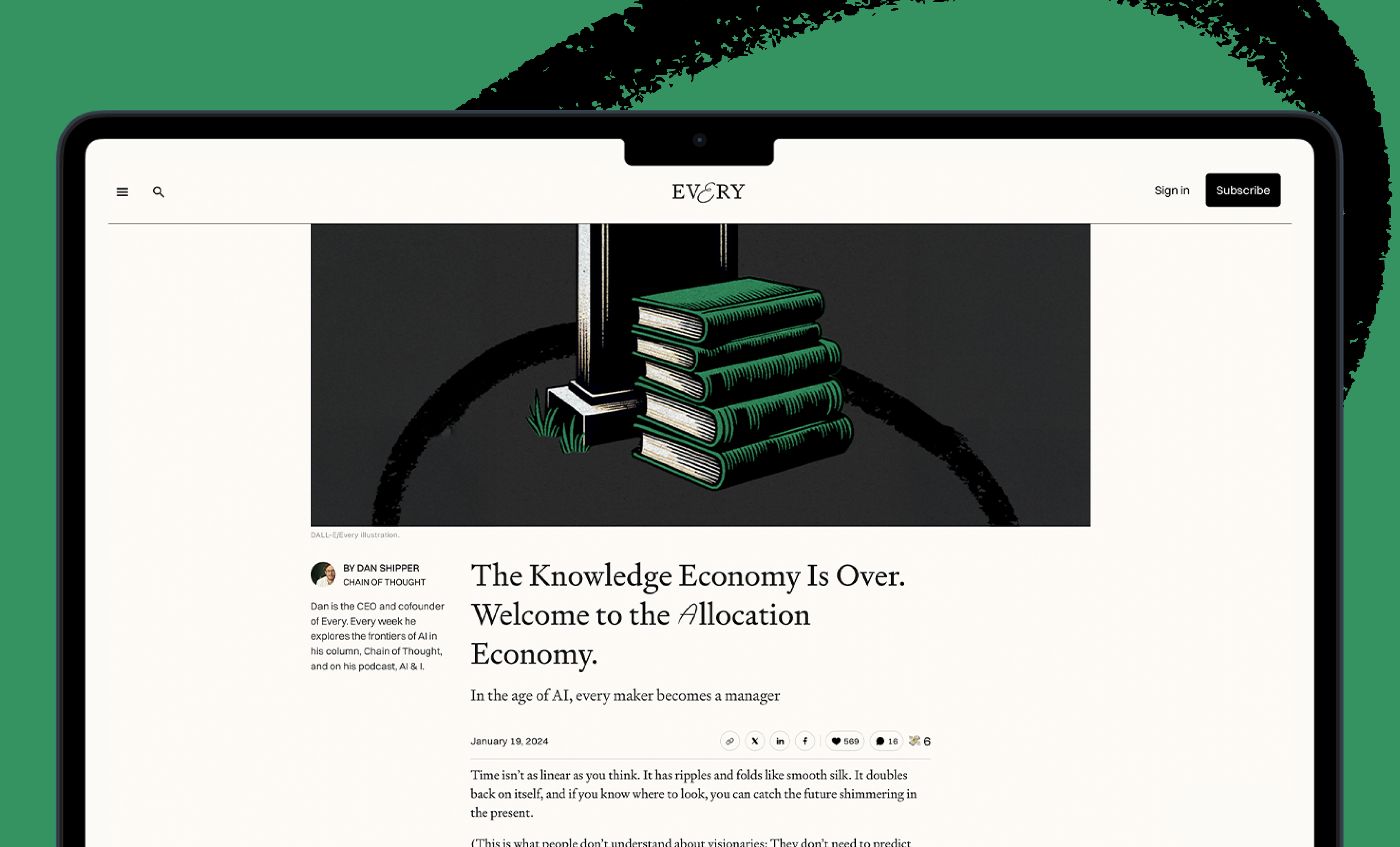
 Every Content
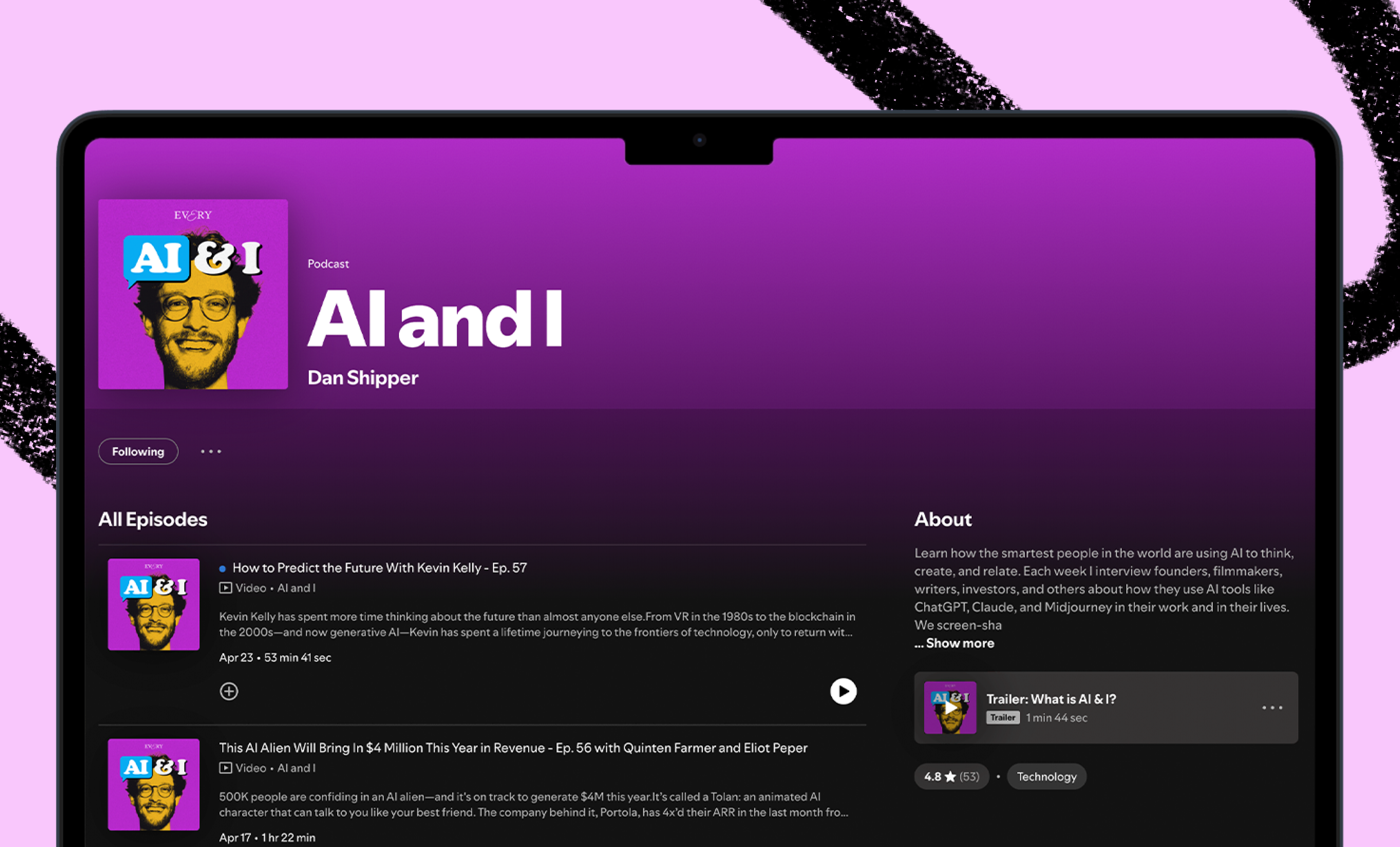
 AI&I Podcast
 Monologue
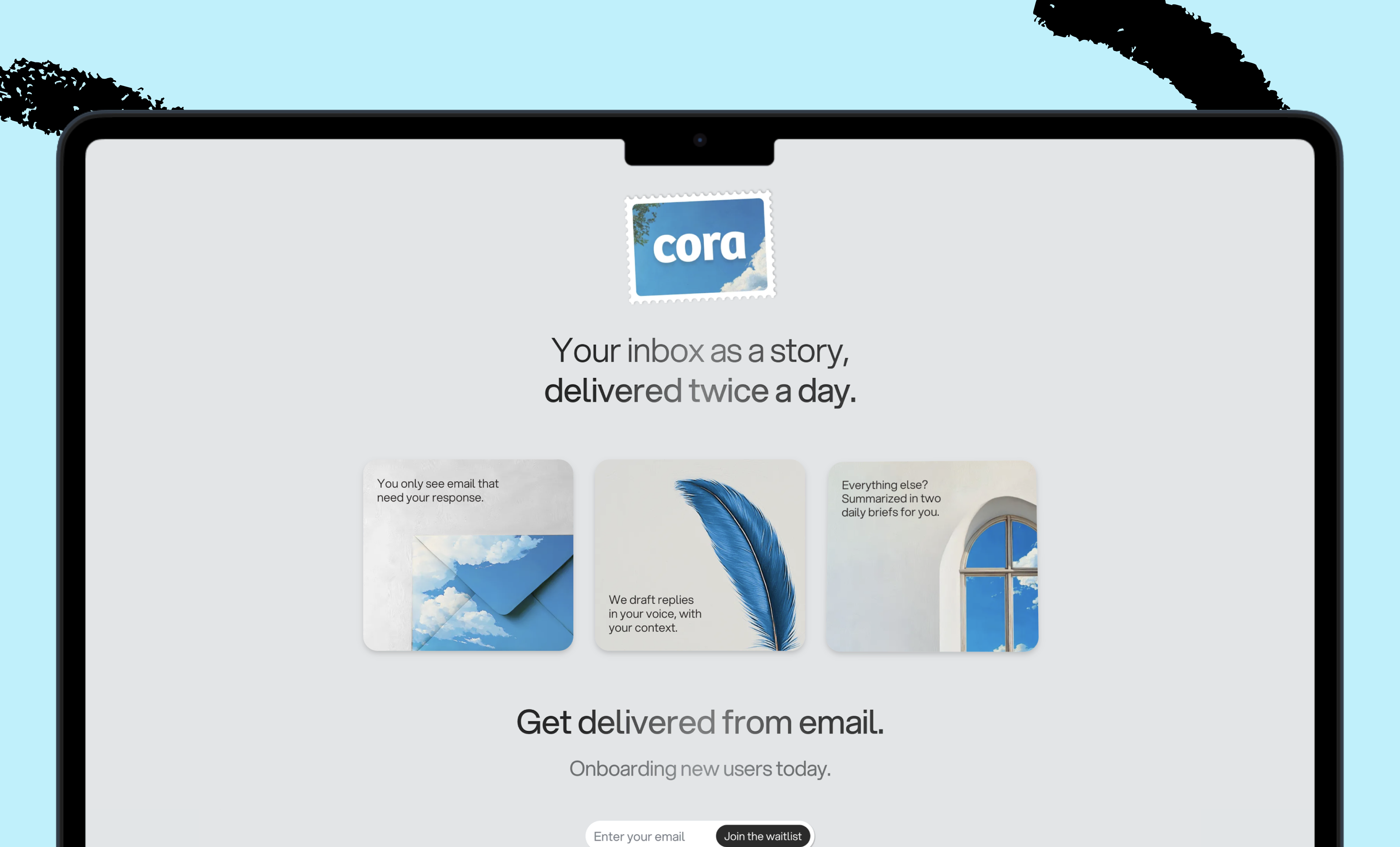
 Cora
Cora
 Sparkle
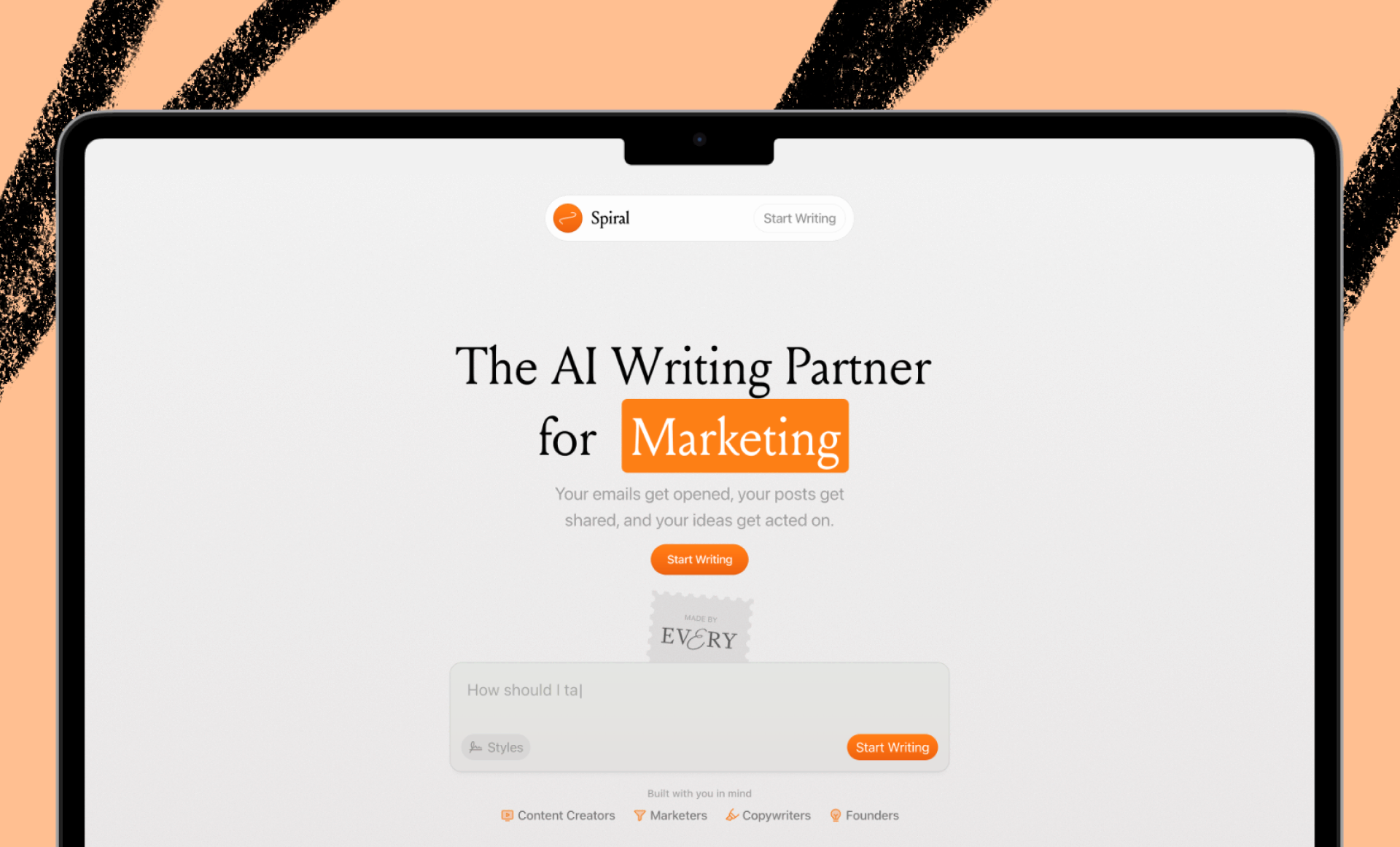
 Spiral
Join 100,000+ leaders, builders, and innovators

Email address

Already have an account? Sign in
What is included in a subscription?
Daily insights from AI pioneers + early access to powerful AI tools
 Front-row access to the future of AI
 In-depth reviews of new models on release day
Playbooks and guides for putting AI to work
Prompts and use cases for builders
In-depth reviews of new models on release day
Playbooks and guides for putting AI to work
Prompts and use cases for builders
In-depth reviews of new models on release day
Playbooks and guides for putting AI to work
Prompts and use cases for builders
In-depth reviews of new models on release day
Playbooks and guides for putting AI to work
Prompts and use cases for builders
 Bundle of AI software



 Evan Armstrong
 Dan Shipper
 Reviews of new AI models on release day
Comments
Don't have an account? Sign up!