




I went to an AI hackathon and saw God. Well, an AI-generated version of God, anyway.
It was a version of GPT-3 cosplaying as a deity and rigged to conduct a real-time verbal conversation. A projector displayed a visualization of it on a screen, and it could listen to your questions and respond with a god-like verbal inflection and tone. The program’s aim was to get you to commit to using AI for benevolent purposes, and it was about as impressive a demo for a weekend hack project as I’ve ever seen.
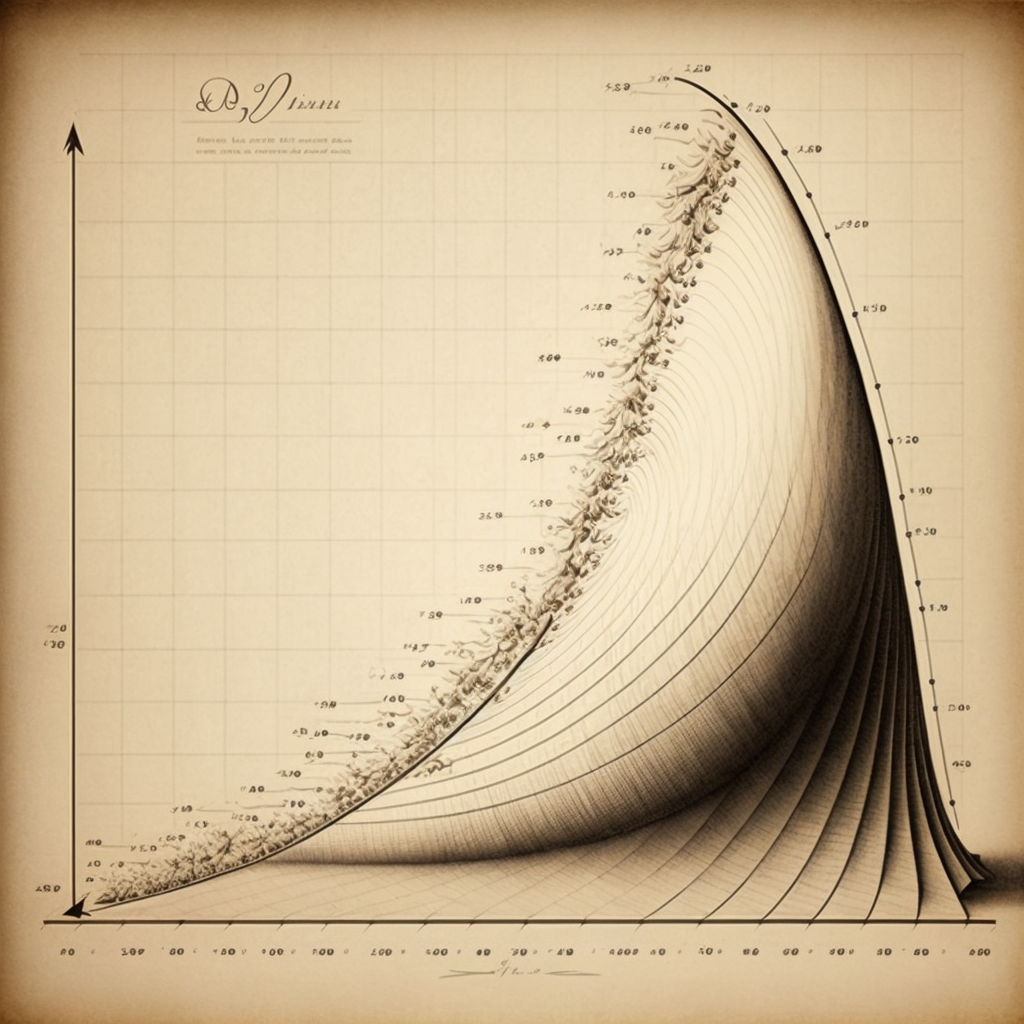
In his 1999 book The Age of Spiritual Machines, Ray Kurzweil wrote: “It is in the nature of exponential growth that events develop extremely slowly for extremely long periods of time, but as one glides through the knee of the curve, events erupt at an increasingly furious pace. And that is what we will experience as we enter the twenty-first century.”
Kurzweil is looking mighty prescient these days. That's why I ended up at this hackathon in the first place: I wanted to witness what it felt like to be there as we entered the knee of the curve.
So I did something I’ve never done before for an Every article: I traveled to San Francisco to see what I could first hand, at AI Hack Week—an AI hackathon put on by my friend Dave Fontenot of HF0. (Dave is also an Every investor through his fund Backend Capital. Evan went too—his column on this is coming later this week.) They rented out a mansion in Alamo Square, and a bunch of programmers spent a week building projects to try to show what’s possible with this new technology wave.
Here’s a report of everything that I saw.
Setting the scene
I got there on Sunday, the day of the demos. Everyone had been hacking in the house—a three-story Victorian mansion—for a week. I arrived a few hours before the demos started, and the whole place was filled with the taut energy of a high-school gym in the final 10 minutes of the SATs.
People were hunched over laptops with their knees bouncing. VSCode and Google Colab were open on secondary monitors, and Dave was running around setting up for demos with a manic twinkle in his eye. As I sat and watched, someone who had previously been quietly working threw his hands up in the air. “It worked?” said his partner incredulously. “This is the fourth fucking time I’ve tried to call this script, but I think so!”
The structure of the event was to hack for a week, demo for the public for a few hours, and crown a winner. One winner would be judged by human judges and the other by a GPT-3 bot based on the feedback it aggregated from everyone in attendance.
The trends
Art is in. I’ve been to a number of hackathons over the years, and this was the first one with so many hacks that were basically art projects. Stable Diffusion is making it easier for geeks to make art—and I think that’s very cool.
One interesting project was called Drip, which was Lensa for video. Upload a few photos of your face and a video of you doing something (smiling, raising your eyebrows, saying a few lines of dialogue). After a few minutes it would generate a video of your AI avatar doing whatever action you recorded in the video. (This kind of tech is useful for a whole generation of what are called VTubers—YouTubers who use a virtual avatar in front of their audiences. I know at least one investor who is actively interested in this as an investable category.)
Another hack, called Wand, was a sketching app that would allow you to draw anything on a virtual canvas—much like you could do with Procreate or Paper. Once you drew an image, you could prompt Stable Diffusion to replace your hand-drawn sketch with a higher fidelity AI-generated version:


Then there was WARP, an immersive audiovisual experience generated dynamically with user input. Users fed in a few adjectives about how they view the world today, and the system would generate a video of a virtual world projected onto a screen in front of them based on their inputs. The system would also generate a storyline that was voice-narrated by AI as users explored.
The art projects weren’t limited to visual art. One of the top hacks, Biological Artificial Intelligence, was a Reverse Turing test: send a prompt to the project and it would return four completions. One of them was from GPT-3, and the other three were from human “chatbots” hidden behind a curtain. The challenge was to identify which one of the outputs was from GPT-3. Its creators demoed this in front of the audience—and the audience got it wrong.
Motion capture technology with ARKit is common. A number of projects used the body position tracking included in Apple’s ARKit to help you control a digital version of yourself.
One of my favorites was made by a friend of mine—someone I met 10 years ago at another hackathon and hadn’t seen until I bumped into him at this event. It involved jumping up and down to control a hacked together version of Flappy Bird:
 Create a free account to continue reading
The Only Subscription
You Need to
Stay at the
Edge of AI
The essential toolkit for those shaping the future

"This might be the best value you
can get from an AI subscription."
- Jay S.
 Every Content
 AI&I Podcast
 Monologue
 Cora
Cora
 Sparkle
 Spiral
Join 100,000+ leaders, builders, and innovators
Email address

Already have an account? Sign in
What is included in a subscription?
Daily insights from AI pioneers + early access to powerful AI tools





 Front-row access to the future of AI
 In-depth reviews of new models on release day
Playbooks and guides for putting AI to work
Prompts and use cases for builders
In-depth reviews of new models on release day
Playbooks and guides for putting AI to work
Prompts and use cases for builders
In-depth reviews of new models on release day
Playbooks and guides for putting AI to work
Prompts and use cases for builders
In-depth reviews of new models on release day
Playbooks and guides for putting AI to work
Prompts and use cases for builders
 Bundle of AI software




 Dan Shipper


 Evan Armstrong
 Reviews of new AI models on release day
Comments
Don't have an account? Sign up!
I would love to know if there is a demo available online from the network this dungeons and dragons fan did.